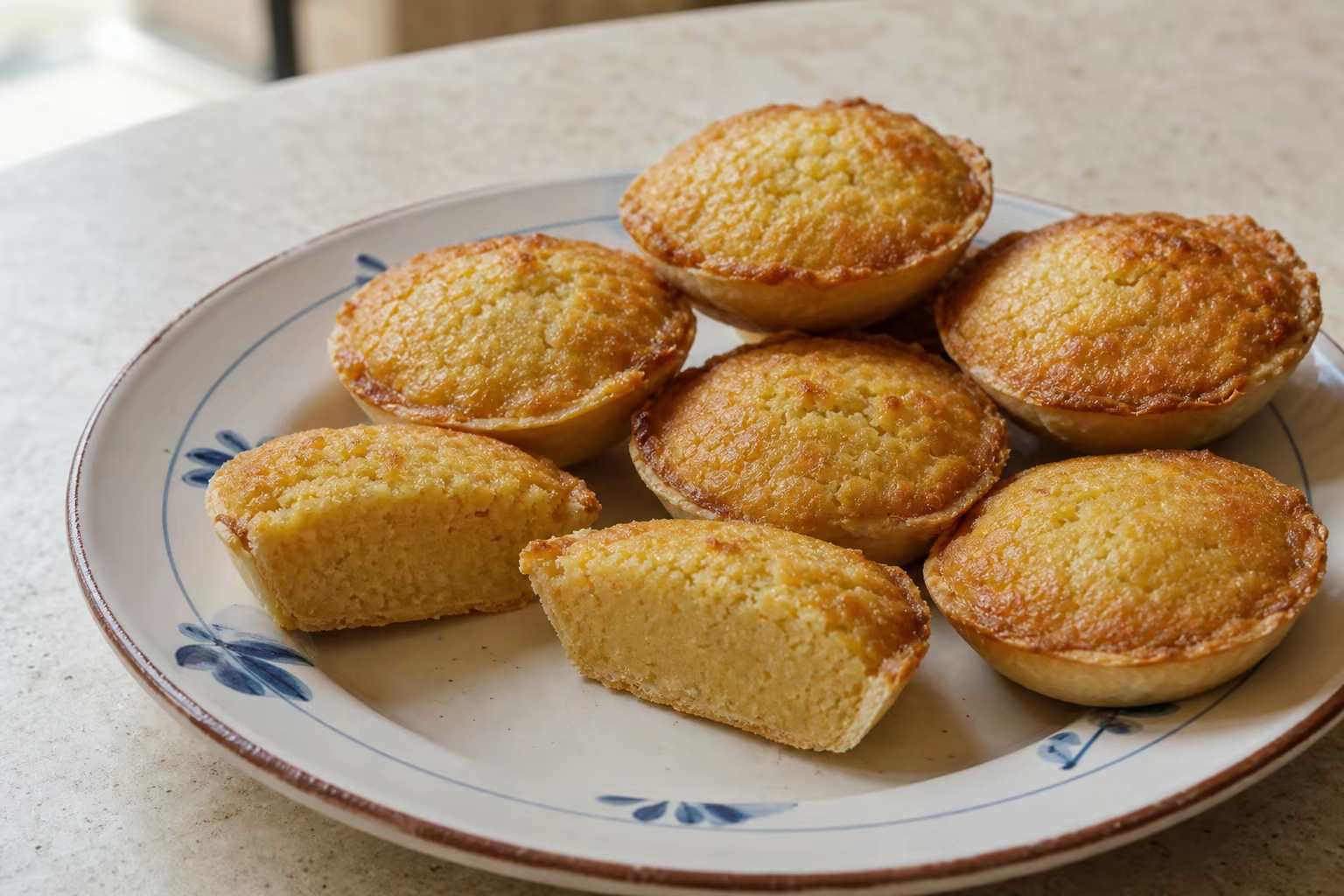
Bean Tartlet
Also known as: Bean tart of Torres Vedras · Bean pastries
The unlikely marriage of white beans, almonds and egg yolk in a thin pastry shell.
- Origin
- Torres Vedras, Oeste region — manufacture documented since 1840
- Place
- Torres Vedras
- Region
- The West
- Category
- Convent Sweets
- Season
- Year-round
- Evidence
- Well documented
The Pastel de Feijão of Torres Vedras is one of those Portuguese marvels that disarms suspicion: no one would guess that the velvety, sweet cream filling this thin pastry shell is built on white beans. Yet it is — beans of the variety locals fondly call "fidalgo" (the noble bean), pureed and melted together with almond, sugar and egg yolk until they vanish completely, leaving only body, silkiness and a faint savour no one can quite place.
It is a small tart, about the size of a cupped palm, with a glossy golden interior set into a pastry locals call the "forra," "capa" or "lençol" (the sheet) — short, unassuming, made purely to hold. Since January 2025 it has carried Protected Geographical Indication (PGI) status, Europe's acknowledgement that this is a sweet of place, inseparable from the town that gave it life.
First-timers are usually torn between pleasure and curiosity — and pleasure almost always wins.
- White beans ("fidalgo")
- Peeled almonds
- Egg yolks
- Sugar
- Water
- Wheat flour (pastry)
- Butter or vegetable shortening (pastry)
- Salt (pastry)
The filling — locally called the "espécie" — is dense and creamy without being heavy, intensely sweet yet balanced by the almond and by a faint, almost imperceptible earthiness the beans lend it. The surrounding pastry is thin and short, deliberately neutral, ceding the whole stage to the golden cream. The contrast between dry shell and soft centre is half the pleasure.
Within Torres Vedras the variations are mostly a matter of hand: more or less almond, more or fewer yolks, a finer or more rustic pastry. Beyond the town, things sold as "pastel de feijão" often drift closer to a custard tart or a plain almond sweet, sometimes dropping the bean altogether — but only the Torres Vedras version, with its fidalgo-bean "espécie," is entitled to the PGI seal.
Go to Torres Vedras and seek out the pastry shops and confeitarias of the town, where the tart is baked and sold fresh daily; many local houses make it their specialty and display the PGI reference. For freshness's sake, eat it the same day. Beware of bean-free imitations sold outside the region.
It calls for a short, strong Portuguese espresso to cut the sweetness. For a more leisurely late afternoon, it pairs beautifully with a small glass of Moscatel or a sweet wine from the Oeste region.
A conventual origin is traditionally inferred from its character — the lavish use of sugar, egg yolk and almond is the classic signature of Portugal's convent pastry-making — but no firm evidence ties it to any specific monastery, and the official IGP documentation itself admits the uncertainty. What is well established is its manufacture in Torres Vedras from at least 1840, with local newspapers presenting it as a town specialty from 1894.
Its reputation grew early: in 1896 it featured among thirty-eight "characteristic regional sweets" sent to the Portuguese Ethnographic Exhibition, held as part of the celebrations for the fourth centenary of Vasco da Gama's voyage to India. Local tradition credits the pastry to a maker named Joaquina Rodrigues, active in the late 19th century, whose recipe is said to have passed to relatives and acquaintances who later sold it commercially — the step that carried its fame well beyond Torres Vedras. These attribution details, however, are not part of the official record and should be read as tradition.
Well documented
Identity supported by institutional, specialist or corroborating sources.
- tradicional.dgadr.gov.pt/pt/cat/doces-e-produtos-de-pastelaria/1143-pastel-de-feijao-de-torres-vedras-igp (opens in a new tab)
- cm-tvedras.pt/turismo/gastronomia/pastel-de-feijao-2/ (opens in a new tab)
- cm-tvedras.pt/artigos/detalhes/pastel-de-feijao-de-torres-vedras-integra-registo-europeu-de-indicacoes-geograficas (opens in a new tab)
- dgadr.gov.pt/images/docs/val/dop_igp_etg/Valor/CE_2022_pastel_feijao_Torres_Vedras_IGP.pdf (opens in a new tab)
- saltofportugal.com/2025/08/25/the-bean-pastries-of-torres-vedras/ (opens in a new tab)
Pastries from here — The West
 Catalogue image
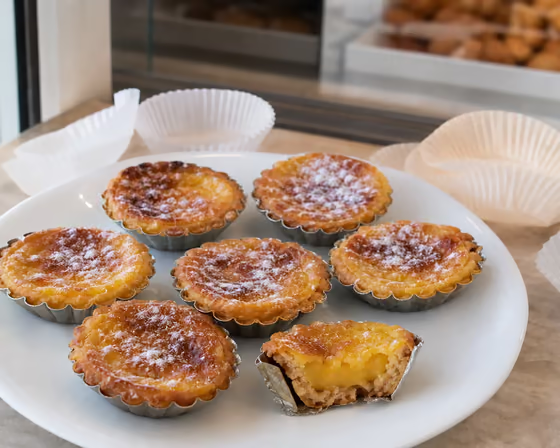
 Friends of Peniche
The sweet named after friends you should not trust.
The West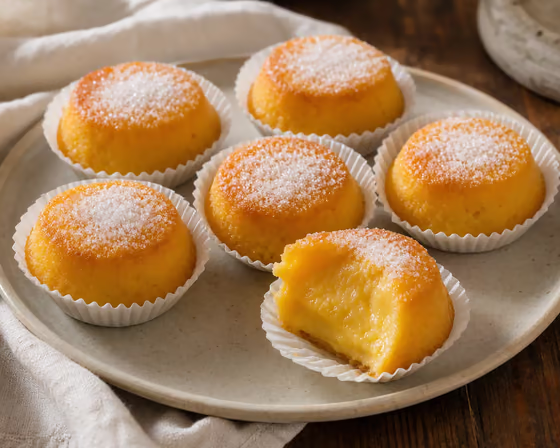 Catalogue image
 Areias Brancas
Small yolk-and-almond pudding cakes, named by the coast and covered with white sugar.
The West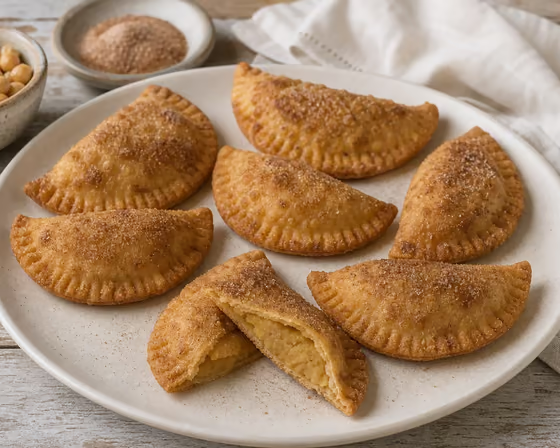 Catalogue image
 Peniche Chickpea Azevias
Thin fried half-moons with a sweet, creamy chickpea, almond and egg-yolk filling.
The West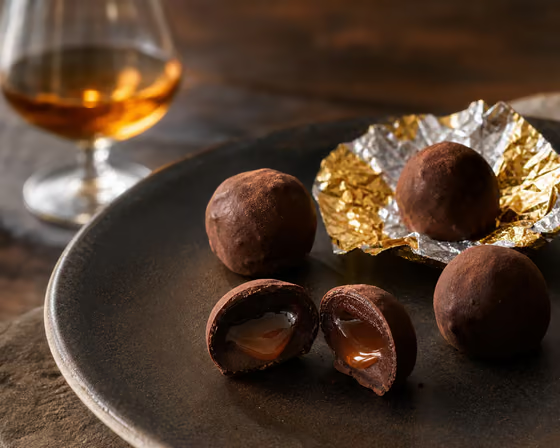 Catalogue image
 Lourinhã DOC Brandy Bonbon
A dark-chocolate bonbon with a Lourinhã DOC brandy heart.
The West