Beja Santa Clara Pastries
Also known as: Santa Clara Pastries of Beja's Convent of Esperança
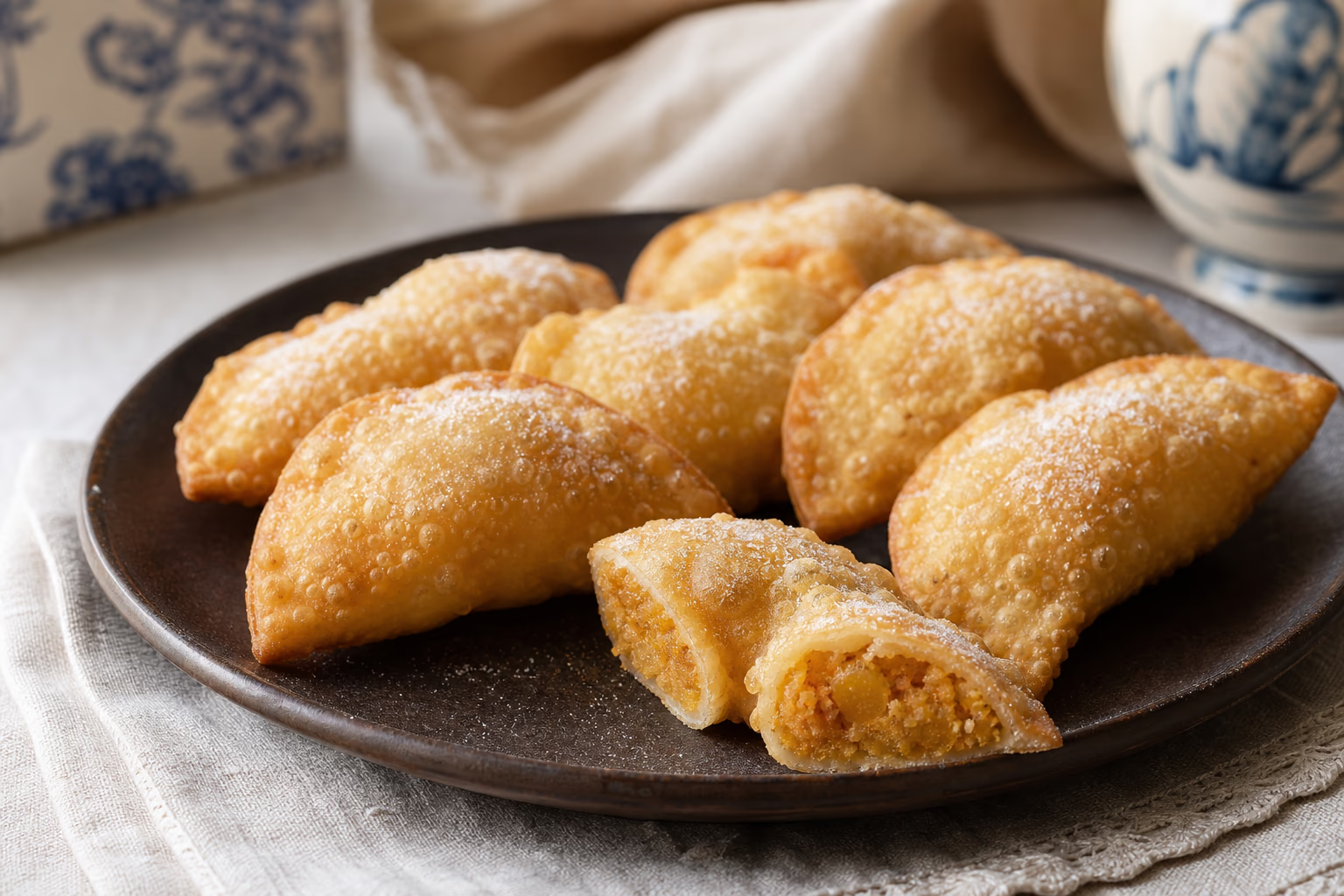
Beja's fried crescent with chickpea, almond, eggs and chila.
- Origin
- Beja · attributed in published tradition to the former Convent of Nossa Senhora da Esperança
- Place
- Beja
- Region
- The Alentejo
- Category
- Convent Sweets
- Season
- Year-round, according to the published culinary record
- Evidence
- Limited documentation
Pastéis de Santa Clara de Beja are fried crescents of tender pastry filled with a mixture of chickpea, almond, eggs, butter and chila squash preserve. The culinary record published by LifeCooler describes flour scalded with olive oil and kneaded with warm water and salt, enclosing a filling bound in sugar syrup and flavoured with cinnamon and clove.
After the filling thickens, the pastry is rolled into a strip, topped at intervals with spoonfuls of filling, folded and cut into crescents. The pastries are fried in hot oil and dusted with sugar. The image on this page follows those documented traits — crescent shape, frying and sugar — but is an editorial interpretation, not a photograph from an identified producer.
They should not be merged with Coimbra's Pastéis de Santa Clara. Turismo de Portugal identifies the Beja pastries among the city's sweets and describes them as almond-filled; the documented Beja formula here additionally uses chickpea and chila and is fried.
- Flour
- Water
- Salt
- Olive oil
- Cooked chickpeas
- Almonds
- Sugar
- Egg yolks
- Egg white
- Butter
- Chila squash preserve
- Cinnamon
- Clove
- Oil for frying
- Sugar for dusting
The source documents the ingredients and frying but publishes no tasting assessment. As a culinary inference, a fried sugared pastry around a dense chickpea, almond, egg and chila filling flavoured with cinnamon and clove is a reasonable expectation.
The published Beja version uses chickpea and chila and is fried. It should not automatically be used to describe Pastéis de Santa Clara from Coimbra or other places, whose recipes may use different ingredients and techniques.
Turismo de Portugal recommends Pastéis de Santa Clara among the sweets to try in Beja, but the reviewed sources identify no current producer or outlet. Check directly with local pastry shops before making a special journey.
Not documented in the sources reviewed.
LifeCooler presents the sweet as a creation of the nuns of Beja's former Convent of Esperança, while the extended name “Santa Clara Pastries of the Convent of Esperança in Beja” also appears in All About Portugal. This is a published traditional attribution; this review found no dated convent recipe or other primary document demonstrating when or by whom the pastry was created.
The convent's existence is documented independently of the recipe. The District Archive of Beja holds the records of the Convent of Nossa Senhora da Esperança and dates the institution from 1500 to 1905; another Archive note documents a Carmelite nun professing there in 1704. Sources from the Diocese of Beja date the community's foundation to 1541 and the building's demolition to the late nineteenth century.
The Santa Clara name occurs among sweets from several Portuguese localities. A shared name does not make the Beja product a direct variant of the Coimbra recipe: they should be treated as distinct regional identities whenever their composition and technique are specified.
Limited documentation
The identity is documented, but its origin, composition or availability has limited sourcing.
- lifecooler.com/artigo/dormir/pastis-de-santa-clara-do-convento-da-esperana-de-beja/329453 (opens in a new tab)
- visitportugal.com/pt-pt/destinos/alentejo/73794 (opens in a new tab)
- allaboutportugal.pt/fr/beja/saberes-e-sabores/pasteis-de-santa-clara-do-convento-da-esperanca-de-beja (opens in a new tab)
- adbja.dglab.gov.pt/servicos/projecto-ordens-monasticoconventuais-no-baixo-alentejo-1415-1911/ (opens in a new tab)
- adbja.dglab.gov.pt/assento-de-batismo-de-soror-maria-perpetua-da-luz/ (opens in a new tab)
- diocese-beja.pt/wp-content/uploads/2019/06/NB09Maio2019.pdf (opens in a new tab)
Pastries from here — The Alentejo
 Catalogue image
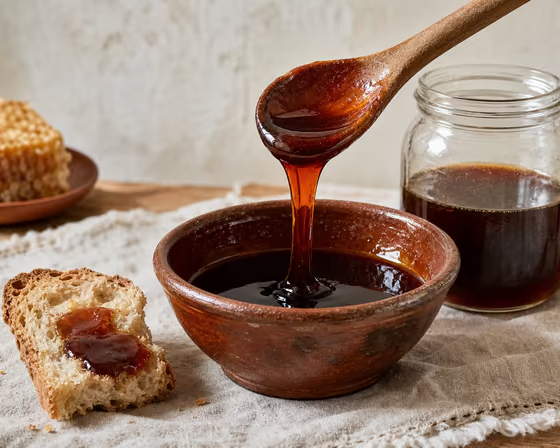
 Portuguese Água-mel Syrup
Water that recovers honey from combs after extraction, filtered and reduced for hours to 70–77° Brix.
The Alentejo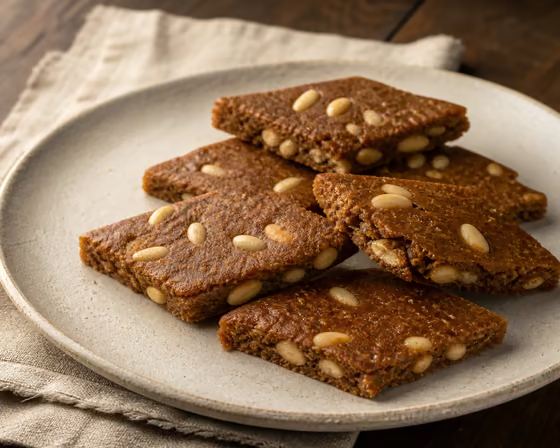 Catalogue image
 Alcomonias
Toasted coarse wheat flour, honey and pine nuts spread and cut into diamonds.
The Alentejo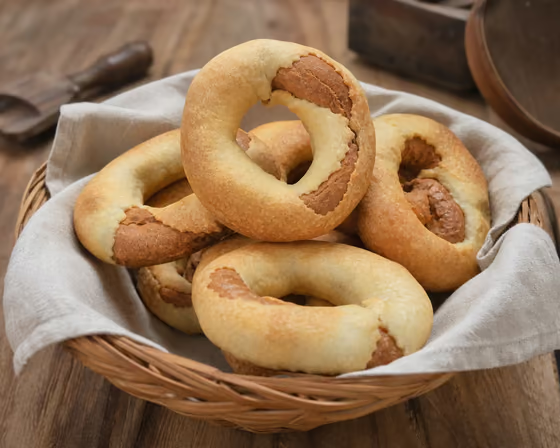 Catalogue image
 Amoreiras-Gare Alcôncoras
A large circular honey-and-olive-oil biscuit born from Amoreiras-Gare's promise-pole tradition.
The Alentejo Catalogue image
 Elvas Plums
Protected Rainha Cláudia Verde greengages sold fresh, dried or candied—the sweet form requires at least seven days of slow candying.
The Alentejo