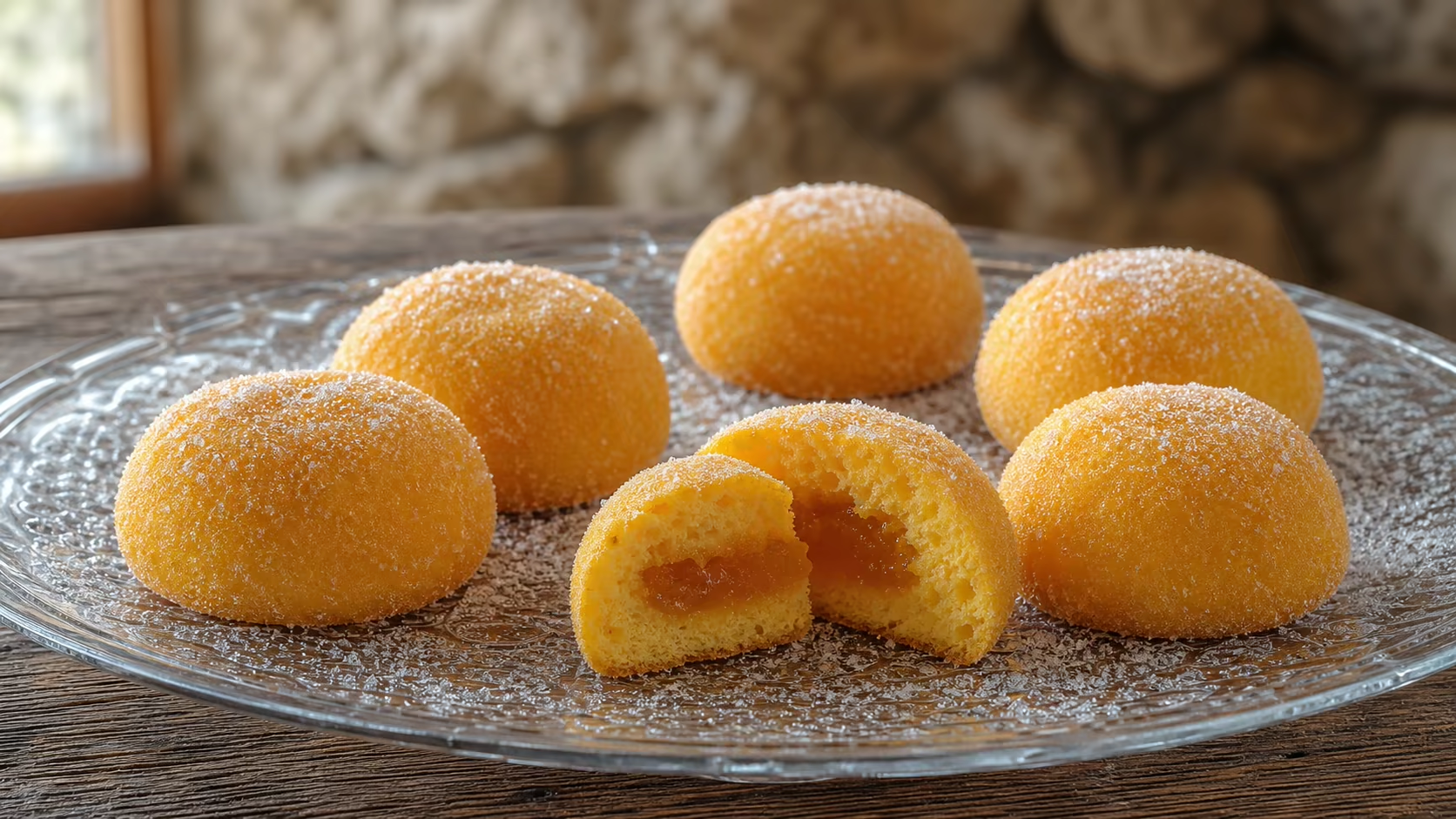
Papos de Anjo
Little pillows of egg yolk baked in the oven — and, in Mirandela, filled with fruit jam instead of soaked in syrup.
- Origin
- Convent sweet · Mirandela version, Trás-os-Montes
- Place
- Mirandela
- Region
- Nationwide
- Category
- Convent Sweets
- Season
- Year-round
- Evidence
- Well documented
Papos de anjo are among the most delicate egg sweets of Portugal's convent tradition: small portions of well-beaten yolk that swell in the oven until they are fluffy and slightly domed, like the full craw of a bird. In the most common version they are baked in greased moulds and then plunged into a scented sugar syrup that soaks and sweetens them.
Mirandela does it its own way. Here the papos take more eggs than the standard recipe, skip the syrup bath, and gain instead a filling of fruit jam — traditionally pumpkin, today also peach or strawberry — and a dusting of sugar. The result is drier on the outside and moister within, the fruit jam cutting the richness of the egg. It is one of the sweets that most defines this Trás-os-Montes town.
- egg yolks
- whole eggs
- sugar
- water
- fruit jam (pumpkin, peach or strawberry)
- cinnamon
- butter (for greasing)
- icing sugar (for dusting)
Very sweet and deeply eggy, the yolk lending a deep, velvety flavour. The texture is fluffy and faintly spongy, moist at the centre; in Mirandela the fruit jam adds a fragrant counterpoint that lifts the richness, while the dusting of sugar leaves a dry, fine finish on the palate.
The classic version, common across the country, bakes the papos and then steeps them in a sugar syrup scented with lemon, vanilla or cinnamon, leaving them glossy and soaked. The Mirandela version stands apart by using more eggs, skipping the syrup, and turning to a fruit-jam filling with a dusting of sugar. Other recognised versions are made in Viseu, Amarante and on Terceira Island, each with its own touch.
In traditional bakeries and pastry shops in Mirandela and across Trás-os-Montes, where they are a local speciality. Look for papos served dry, dusted with sugar and filled with fruit, rather than the generic syrup-soaked version — it is the fruit jam and the missing sugar bath that mark the Mirandela style.
A tawny Port or a Moscatel to match the sweetness; or a short espresso to cut through the richness of the egg.
Turismo de Portugal includes papos de anjo among Portuguese convent sweets and also records them among Amarante's specialties. The consulted sources therefore support the convent family and the existence of regional versions, but do not identify an inventing convent, an initial date or a single line of transmission.
Mirandela has a legend about an abbot, a married woman and love messages coded through different fruit preserves served with the sweet. It is repeated as local tradition without enough documentation to present it as fact. This entry retains it only as folklore associated with the Mirandela version, whose culinary distinction—fruit preserve filling instead of the more common syrup bath—is documented by regional sources.
Well documented
Identity supported by institutional, specialist or corroborating sources.
- visitportugal.com/pt-pt/content/amarante (opens in a new tab)
- en.wikipedia.org/wiki/Papo-de-anjo (opens in a new tab)
- allaboutportugal.pt/pt/mirandela/saberes-e-sabores/papos-de-anjo-de-mirandela (opens in a new tab)
- outsider.pt/papos-de-anjo-de-mirandela-um-doce-conventual-que-derrete-na-boca/ (opens in a new tab)
- garficopo.blogspot.com/2012/06/papos-de-anjo-de-mirandela.html (opens in a new tab)
Pastries from here — Nationwide
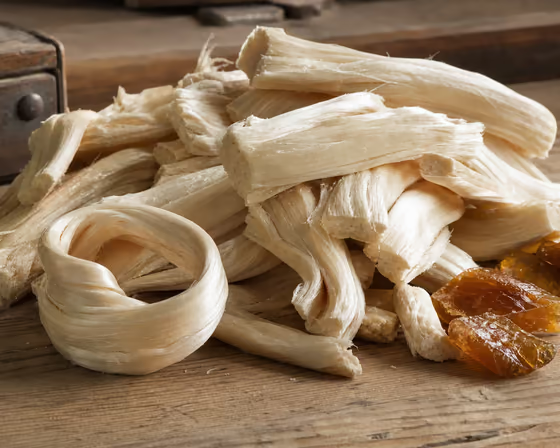 Catalogue image
 Alféloa
Sugar or molasses cooked to a hard stage and worked until pale.
Nationwide Catalogue image
 Portuguese Gila Allumette
A rectangular puff pastry with cream, gila and cinnamon beneath diamond-patterned royal icing.
Nationwide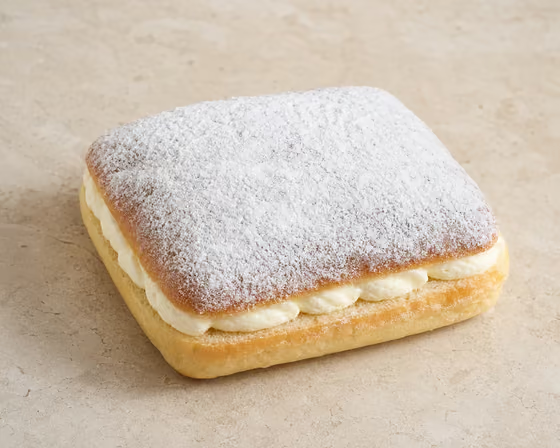 Catalogue image
 Portuguese Brioche Almofada
Light brioche dough, fresh buttercream and icing sugar.
Nationwide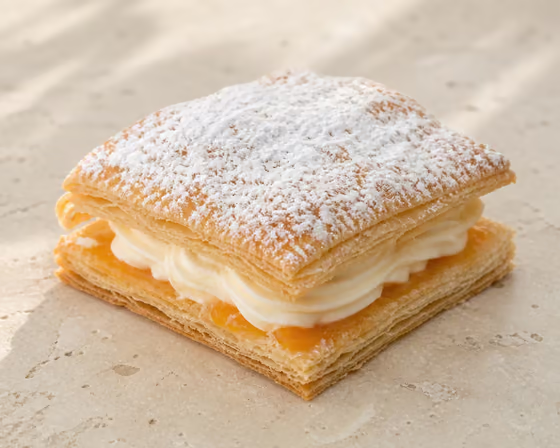 Catalogue image
 Portuguese Puff-Pastry Almofada
Puff pastry with white cream, egg sweet and icing sugar—the laminated Almofada variant.
Nationwide