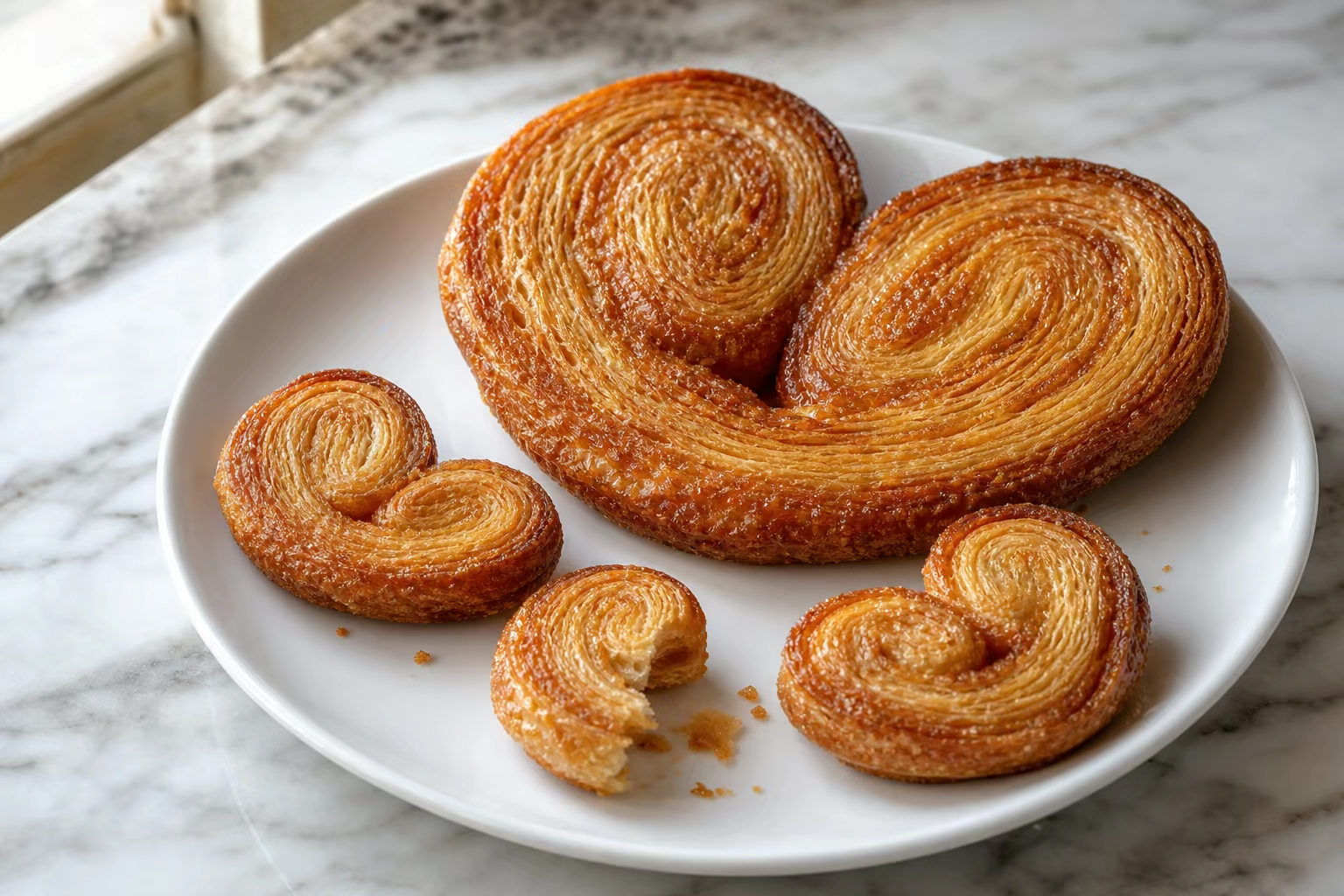
Palmier
Also known as: Palm leaf · Pig's ear · Elephant ear · French heart
A crisp puff-pastry heart, glazed with caramelised sugar.
- Origin
- European puff-pastry tradition with a French name; integrated into Portuguese pastry shops, with no creator or date established by the consulted sources
- Place
- Nationwide
- Region
- Nationwide
- Category
- Laminated & Fine Pastries
- Season
- Year-round
- Dough family
- Laminated puff pastry Layers created through repeated folds of dough and fat.
- Evidence
- Limited documentation
The palmier is the most honest temptation in the pastry window: puff pastry rolled in from both sides until the two coils meet in the middle, dusted with sugar and sliced thin, so each piece fans open in the oven like a palm frond. Hence the French name — "feuille de palmier" — and the heart-shaped silhouette everyone knows.
French in origin, the palmier long ago stopped sounding foreign in Portugal. It sits in every pastelaria, from the corner counter to the grand old confeitarias, and comes in every size: from a one-bite morsel to a plate-sized giant meant to be torn and shared.
This is an afternoon sweet, a snack, a companion to a strong coffee. It needs no nun's name or convent legend — only good pastry, more sugar than seems wise, and a hot oven.
- Puff pastry (butter)
- Sugar
- Butter
- Wheat flour
- Salt
- Water
Crisp and brittle, with the layers shattering between your teeth. Caramelised sugar gives a golden, faintly toasted, just-bitter shell that plays against the buttery, papery layers within. Sweet but dry and light — built to be dunked or chased with something hot.
It comes mini (for nibbling) and giant (for sharing). There are plain palmiers, extra-sugared ones, and versions with the base dipped in chocolate. Some pastelarias fill them with cream or egg-sweet; others make savoury versions with cheese or herbs to serve with drinks.
You'll find it in almost any Portuguese pastelaria — it's one of those sweets always in the window. For the oversized kind, Pastelaria O Careca in Restelo, Lisbon, is a benchmark. Look for an even golden colour and well-caramelised sugar: a good palmier snaps, it doesn't bend.
A strong coffee or an espresso, a galão at teatime, or a cup of black tea. Its crisp dryness calls for something hot — and the giant one, shared, holds up nicely against a bottle of sparkling wine.
The French name describes a shape resembling palm leaves, but the consulted sources do not securely establish an inventor, creation date or the precise route by which the pastry entered Portugal. Theories linking it to pastry trimmings or a Viennese origin should be treated as hypotheses rather than documented facts.
Its contemporary Portuguese presence is well demonstrated by regular pastry-shop production. Pastelaria O Careca in Restelo, open since 1954, documents its own oversized version; that case proves continuity at one Lisbon establishment, not the palmier's Portuguese origin. Portuguese coated and filled variants are documented separately in the catalogue.
Limited documentation
The identity is documented, but its origin, composition or availability has limited sourcing.
- en.wikipedia.org/wiki/Palmier (opens in a new tab)
- tasteatlas.com/palmier (opens in a new tab)
- pastelariaocareca.pt/historia/ (opens in a new tab)
- pastelariaocareca.pt/palmier/ (opens in a new tab)
- pt.wikipedia.org/wiki/Palmeira_(gastronomia) (opens in a new tab)
- japanese-products.blog/2021/02/24/sanritsu-genji-pie/ (opens in a new tab)
Pastries from here — Nationwide
 Catalogue image
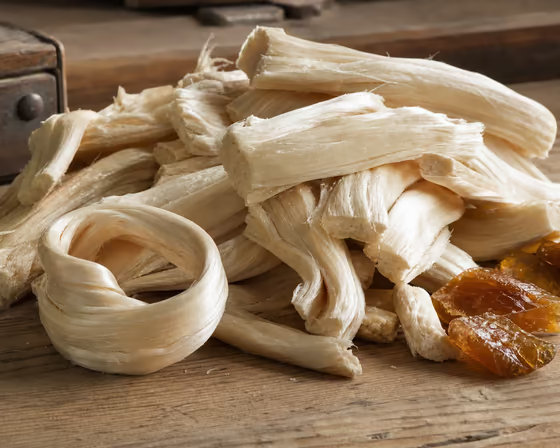
 Alféloa
Sugar or molasses cooked to a hard stage and worked until pale.
Nationwide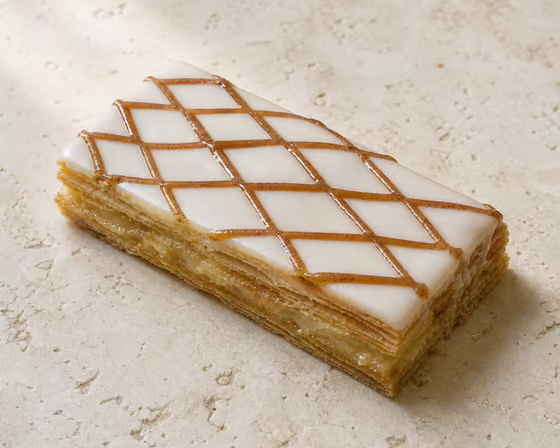 Catalogue image
 Portuguese Gila Allumette
A rectangular puff pastry with cream, gila and cinnamon beneath diamond-patterned royal icing.
Nationwide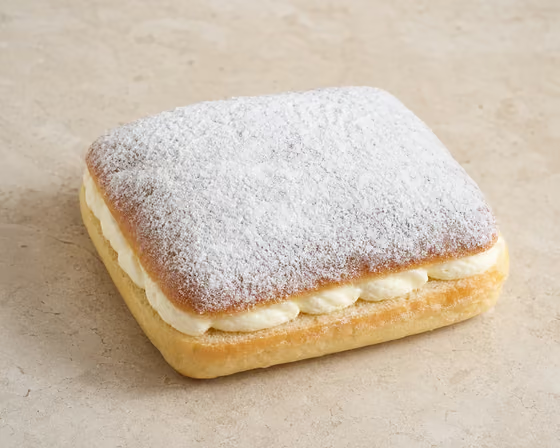 Catalogue image
 Portuguese Brioche Almofada
Light brioche dough, fresh buttercream and icing sugar.
Nationwide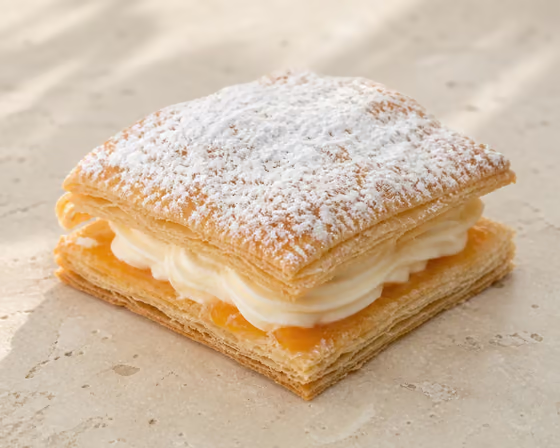 Catalogue image
 Portuguese Puff-Pastry Almofada
Puff pastry with white cream, egg sweet and icing sugar—the laminated Almofada variant.
Nationwide