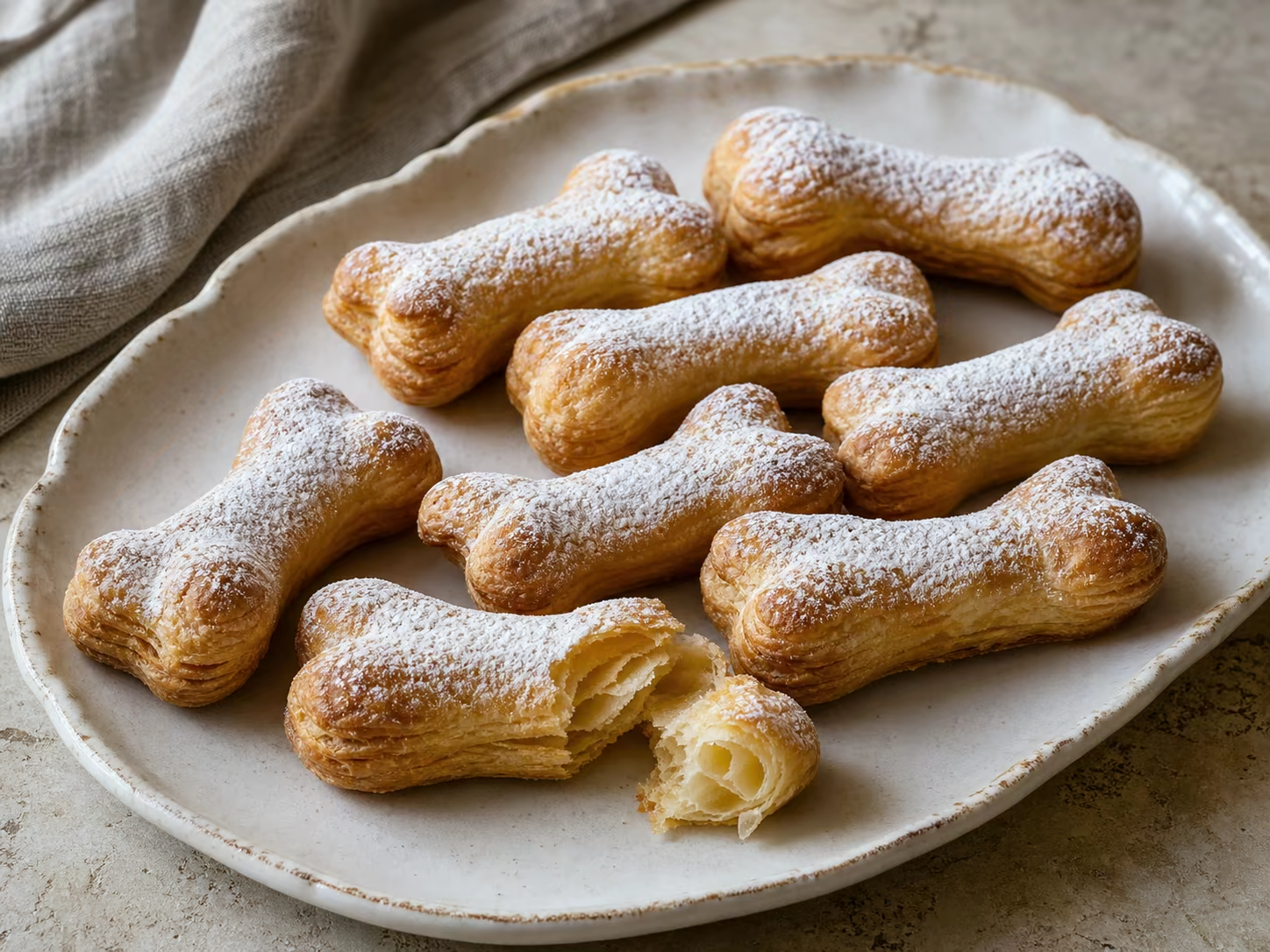
Peniche Puff-Pastry Bones
Also known as: Ossinhos · São Pedro de Alcântara bones
Bone-shaped puff pastries dusted with sugar and connected to Peniche's maritime memory.
- Origin
- Peniche · Oeste
- Place
- Peniche · Oeste
- Region
- The West
- Category
- Laminated & Fine Pastries
- Season
- Seasonality not documented
- Dough family
- Laminated puff pastry Layers created through repeated folds of dough and fat.
- Evidence
- Well documented
Ossinhos de Peniche are small puff pastries shaped like bones and dusted with icing sugar. Their laminated pastry and silhouette with widened ends are documented in a current food guide; in 2019 Peniche Municipality included the sweet, under the name Ossos São Pedro de Alcântara, among its local entries for the Seven Wonders of Portuguese Sweets.
The shape and name refer to the wreck of the Spanish ship San Pedro de Alcantara near Papôa. Two dissertations about Peniche record that association as local memory or tradition. The distinction matters: the sources document the inspiration for the name, not a recipe created in the eighteenth century.
The national list of traditional products published by Qualifica/the National Association of Municipalities and Producers also includes Ossinhos de Peniche, confirming its identification within Portugal's traditional food repertoire.
- Puff pastry
- Icing sugar
The sources describe puff pastry covered with icing sugar but do not publish a detailed tasting note.
No documented variations were found. Ossinhos de Peniche and Ossos São Pedro de Alcântara are names for the product, not proven distinct recipes.
A food guide published in 2025 recommends Ossinhos at Pastelaria Princesa do Mar on Rua António Maria Oliveira in Peniche. Confirm availability and opening hours directly before travelling.
Not documented in the sources consulted.
An ethnographic study of Peniche places the emergence of Ossinhos and the other mentioned municipal sweets in the second half of the twentieth century. The same source explains that the name evokes the San Pedro de Alcantara, wrecked near Papôa in 1786; a 2012 dissertation records the same association using information from Peniche Municipality.
The shipwreck is a separate, well-documented historical event. According to the municipality, the ship was travelling from Callao, Peru, to Cádiz when it sank on 2 February 1786, causing 128 deaths. Thus, 1786 is the date of the event commemorated by the sweet, not its creation date.
In 2019, a municipal competition entry prepared with local businesses and pastry chefs used the name Ossos São Pedro de Alcântara. The coexistence of this form and Ossinhos de Peniche shows how the historical memory entered the product's commercial and popular identity.
Well documented
Identity supported by institutional, specialist or corroborating sources.
- cm-peniche.pt/municipio/comunicacao/noticias/todas-as-noticias/noticia/peniche-candidata-se-as-7-maravilhas-doces-de-portugal (opens in a new tab)
- memoriamedia.net/bd_docs/transcricao_peniche/Tese.PDF (opens in a new tab)
- iconline.ipleiria.pt/bitstream/10400.8/633/1/Mestrado%20Mkt%20Prom.Turistica_Sandrina_Lourenco.pdf (opens in a new tab)
- cm-peniche.pt/visitar/turismo/rotas-turisticas/a-descoberta-da-papoa/sitio-do-naufragio-do-navio-san-pedro-de-alcantara (opens in a new tab)
- tasteoflisboa.com/pt/blog/peniche-travel-guide-for-food-lovers/ (opens in a new tab)
- eubrdialogues.com/sites/default/files/acoes/documentos/049xlix_lista_de_produtos_tradicionais_portugueses_v_19_0.pdf (opens in a new tab)
Pastries from here — The West
 Catalogue image
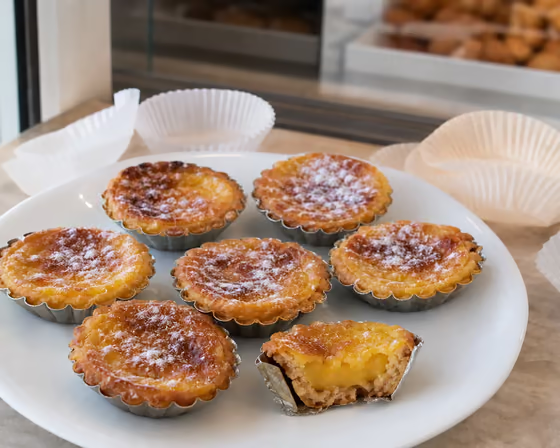
 Friends of Peniche
The sweet named after friends you should not trust.
The West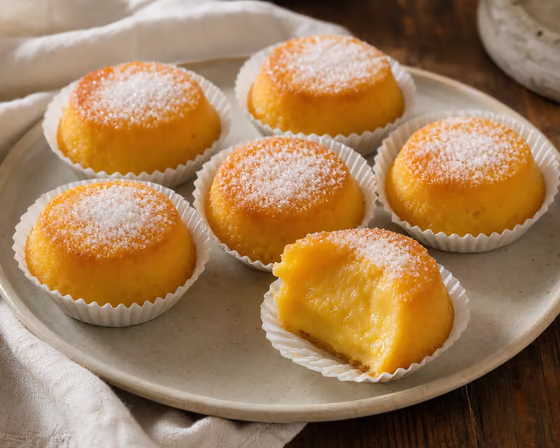 Catalogue image
 Areias Brancas
Small yolk-and-almond pudding cakes, named by the coast and covered with white sugar.
The West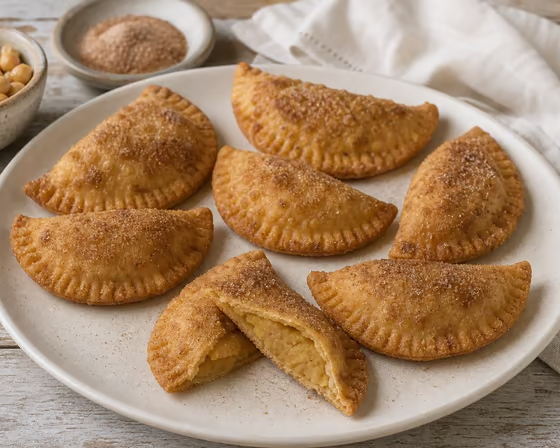 Catalogue image
 Peniche Chickpea Azevias
Thin fried half-moons with a sweet, creamy chickpea, almond and egg-yolk filling.
The West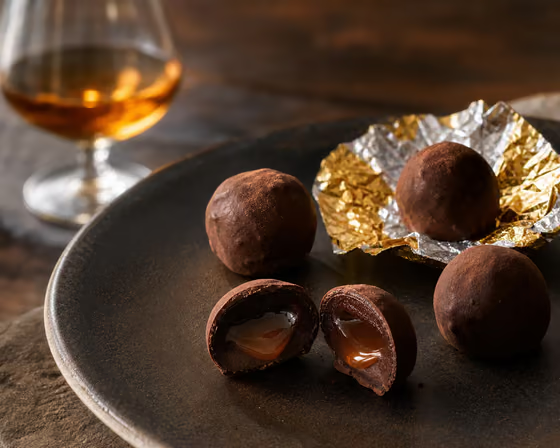 Catalogue image
 Lourinhã DOC Brandy Bonbon
A dark-chocolate bonbon with a Lourinhã DOC brandy heart.
The West