Almond Morgado
Also known as: Morgado · Algarve almond morgado
An almond-paste shell filled with gila preserve, egg threads and soft egg sweet.
- Origin
- Algarve · refined confectionery of the coastal zone
- Place
- Portugal
- Region
- The Algarve
- Category
- Cakes & Sweet Breads
- Season
- Celebration cake, especially for weddings and baptisms; also used on other occasions
- Evidence
- Well documented
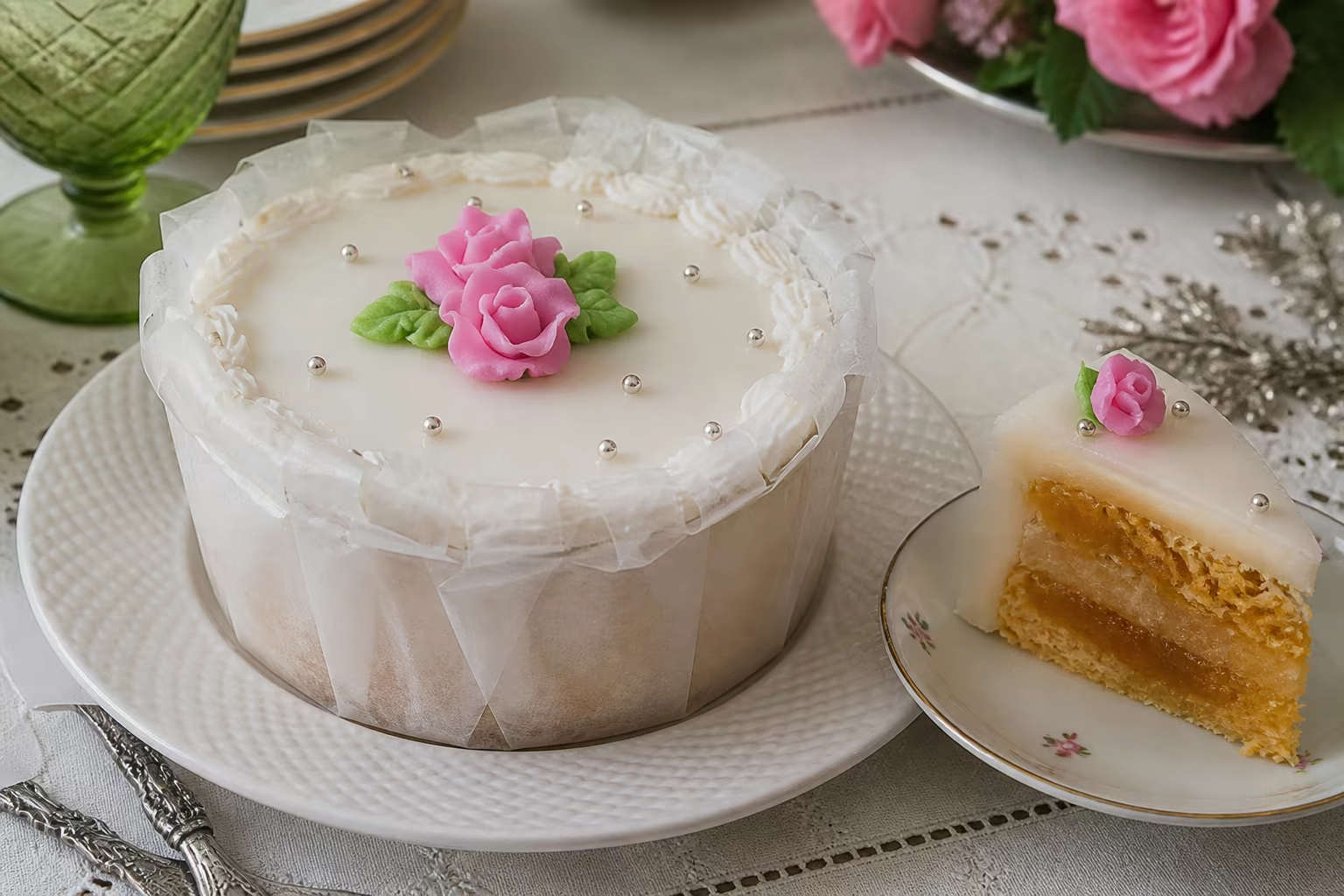
Morgado de Amêndoa is an Algarve cake shaped like a cheese. Its outer paste is made from finely ground almonds, sugar and water; it forms a shell known as an ‘alcofa’ that receives three fillings: gila preserve, egg threads and soft egg-yolk sweet. After being closed with a lid of the same paste, the piece is brushed with egg white and baked to colour it.
According to the Portuguese Directorate-General for Agriculture and Rural Development, it normally measures about 22cm in diameter and 6–7cm in height. It may appear snow-white when finished with the traditional powdered-sugar coating, or lightly golden without it. Flowers or fruit modelled from the same paste, silver dragées and tissue-paper fringing complete its festive presentation.
- Finely ground almonds
- Sugar
- Water
- Egg white for brushing
- Gila preserve
- Egg threads
- Soft egg-yolk sweet
- Powdered sugar for the traditional coating
- Paste flowers or fruit and silver dragées for decoration
The official record characterises it as an elaborate almond-and-egg cake and documents its gila, egg-thread and soft egg-yolk fillings; it publishes no detailed tasting note.
Morgadinhos are small cakes made in the same way. The large piece may have the traditional white powdered-sugar coating or remain lightly golden, and its exterior decoration varies. Morgado de Figo is another Algarve product with its own entry, not merely a variation of this almond cake.
The 2001 source documents Casa de Taquelim Gonçalves in Lagos as the continuation of a renowned family tradition, but does not confirm present availability. It is principally a celebration cake and should be ordered or sought from Algarve confectioners, with availability checked directly.
Not documented in the official record.
DGADR places Morgado within the ‘refined confectionery’ of the coastal Algarve: elaborate almond-and-egg sweets, contrasted with upland confectionery based on bread dough or figs. As a technical antecedent, it records that a recipe collection taken by Infanta Maria of Portugal in the fifteenth century contained the paste for an ‘alcofa’, although it referred neither to the Algarve nor to Morgado de Amêndoa. That document does not prove a convent origin or creation date for the present cake.
The same source describes a production model in which pastry shops ordered these sweets from private confectioners. In Lagos, D. Amélia Taquelim became one of the most renowned—although her husband actually made the sweets—and later opened Casa de Taquelim Gonçalves, which still belonged to the family's descendants when the 2001 source was published. No documentation was found for the proposed etymology linking the name to the firstborn heir of an entailed estate.
Well documented
Identity supported by institutional, specialist or corroborating sources.
- tradicional.dgadr.gov.pt/pt/cat/doces-e-produtos-de-pastelaria/189-morgado-de-amendoa (opens in a new tab)
- tradicional.dgadr.gov.pt/en/categories/desserts-and-pastry/189-morgado-de-amendoa (opens in a new tab)
- noponto.pt/morgado/ (opens in a new tab)
Pastries from here — The Algarve
 Catalogue image
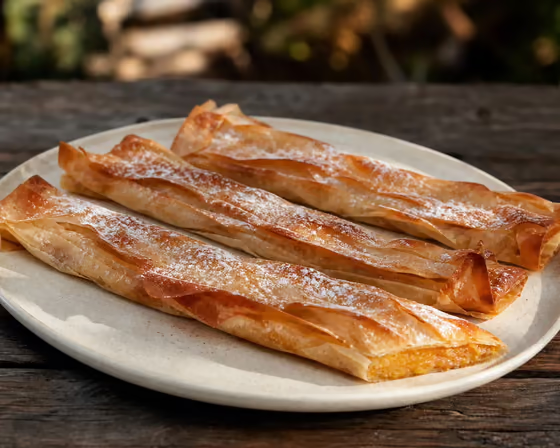
 Aljezur Sweet-Potato Pillows
A long pillow of crisp pastry leaves wrapped around Aljezur sweet potato.
The Algarve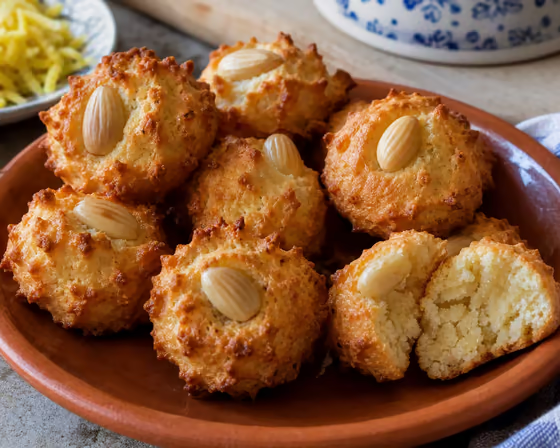 Catalogue image
 Almond Spiky Biscuits
Bristling peaks of almond, lemon and egg white, crisp outside and soft at the centre.
The Algarve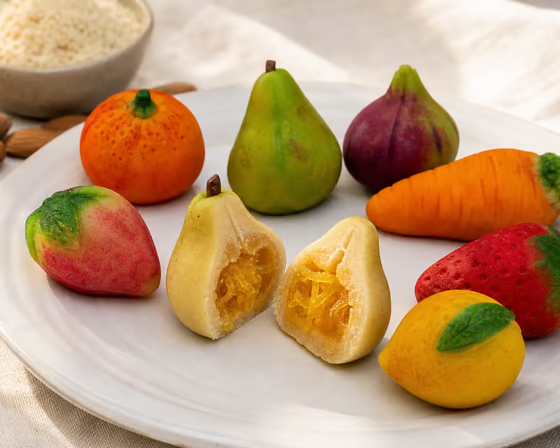 Catalogue image
 Silves Almond Sweets
Algarve figures hand-shaped and painted in almond paste.
The Algarve Catalogue image
 Algarve Nut Sweet Bread
An upland sweet bread enriched with olive oil, spices and walnuts or almonds.
The Algarve