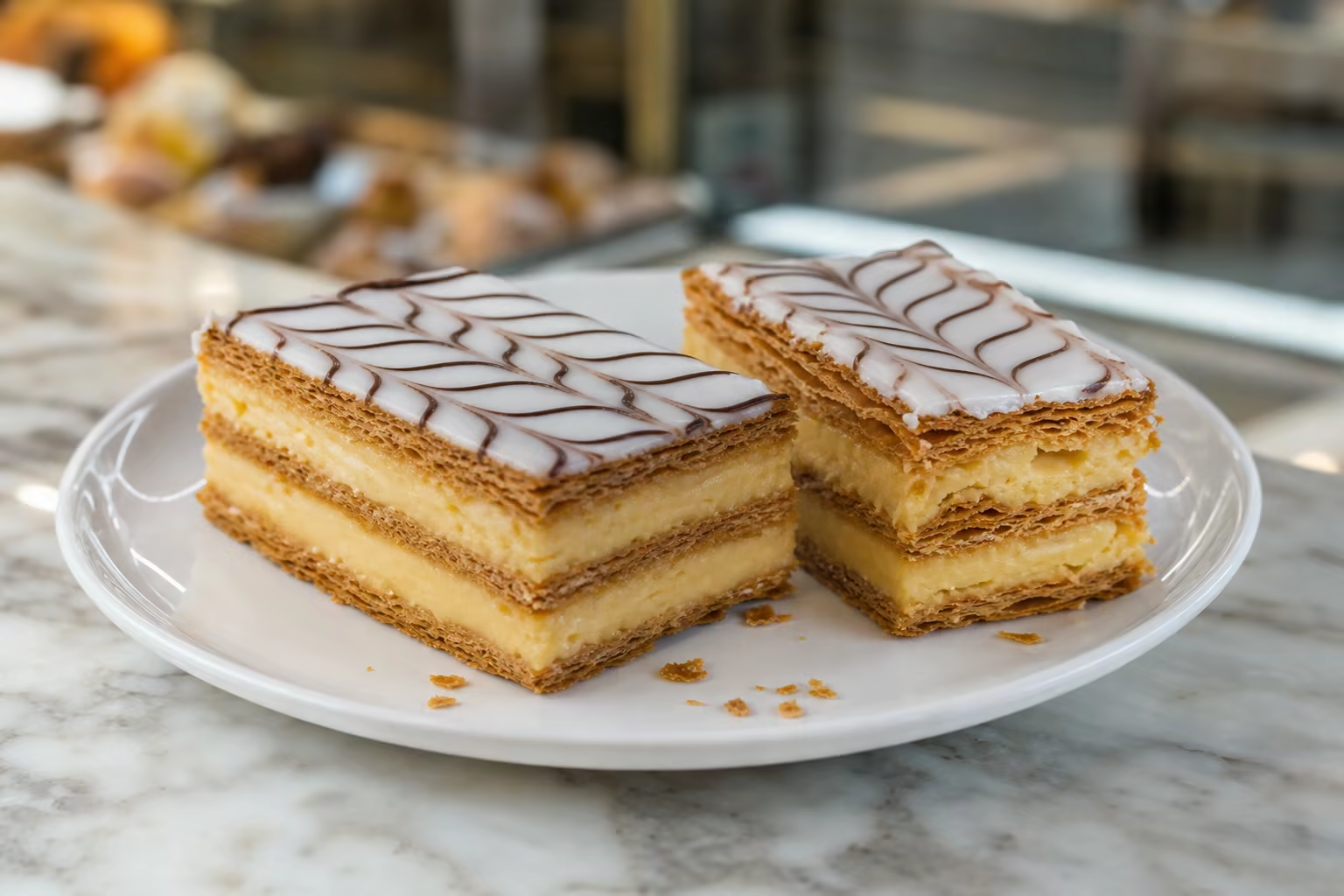
Mille-Feuille
Also known as: Mille-feuille · Napoleão in Porto and northern Portugal · Josefina in Porto and northern Portugal
Puff pastry, sweet egg cream and fondant or cream finishes.
- Origin
- French speciality adapted within Portuguese pastry-making
- Place
- Nationwide
- Region
- Nationwide
- Category
- Laminated & Fine Pastries
- Season
- Seasonality not documented
- Dough family
- Laminated puff pastry Layers created through repeated folds of dough and fat.
- Evidence
- Well documented
Fabrico Próprio documents the Portuguese Mil-folhas as puff pastry filled with sweet egg cream. Its finish may be dark chocolate fondant, white sugar fondant or sweet egg cream itself. This specialist definition describes a family of finishes, not one compulsory white surface feathered with chocolate.
The same source records that in Porto and northern Portugal the item is known as Napoleão when chocolate-coated and Josefina when finished with sugar fondant. Because names and finishes vary regionally, this page does not treat Mil-folhas, Napoleão and Josefina as perfectly interchangeable terms in every pastry shop.
- Puff pastry
- Sweet egg cream
- Chocolate fondant in one version
- Sugar fondant in one version
The documented construction contrasts pastry layers with sweet egg-cream filling, under a finish that may add chocolate, sugar or more cream. The consulted sources publish no comparative tasting assessment capable of fixing texture or intensity across every version.
Dark chocolate coating, white fondant and sweet egg cream are documented finishes. In Porto and the north, Fabrico Próprio associates Napoleão with chocolate and Josefina with sugar fondant; confirm each shop's terminology and filling.
The speciality belongs to the Portuguese pastry repertoire, but the consulted sources do not support a nationwide list of current producers. Ask about composition, finish and the local name before buying.
As an editorial suggestion, espresso or unsweetened black tea.
Fabrico Próprio dates the French speciality to the nineteenth century and presents it as an improvement, attributed to Marie-Antoine Carême, on an earlier cake associated with La Varenne and 1651. This is the genealogy published by the specialist source; it does not identify when, by whom or in which shop the pastry entered Portugal.
The source cautiously suggests that the northern names Napoleão and Josefina may allude to the period in which the cake reached the country. It does not establish a definitive etymology. This page therefore preserves that uncertainty rather than presenting a connection to Napoleon Bonaparte, Naples or another theory as fact.
Well documented
Identity supported by institutional, specialist or corroborating sources.
- fabricoproprio.net/en/encyclopedia/mille-feuille/ (opens in a new tab)
- fabricoproprio.net/en/glossary/ (opens in a new tab)
- timeout.pt/porto/pt/restaurantes/tres-sitios-para-comer-mil-folhas-no-porto (opens in a new tab)
Pastries from here — Nationwide
 Catalogue image
 Alféloa
Sugar or molasses cooked to a hard stage and worked until pale.
Nationwide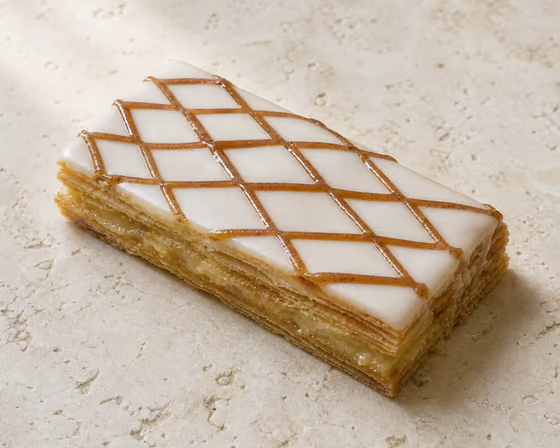 Catalogue image
 Portuguese Gila Allumette
A rectangular puff pastry with cream, gila and cinnamon beneath diamond-patterned royal icing.
Nationwide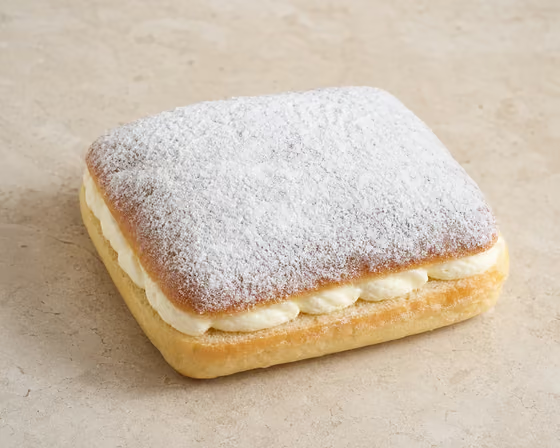 Catalogue image
 Portuguese Brioche Almofada
Light brioche dough, fresh buttercream and icing sugar.
Nationwide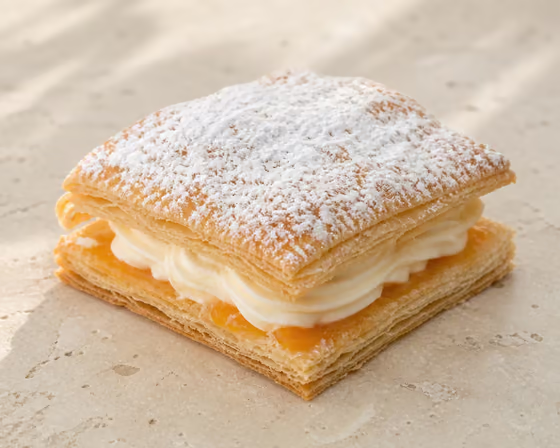 Catalogue image
 Portuguese Puff-Pastry Almofada
Puff pastry with white cream, egg sweet and icing sugar—the laminated Almofada variant.
Nationwide