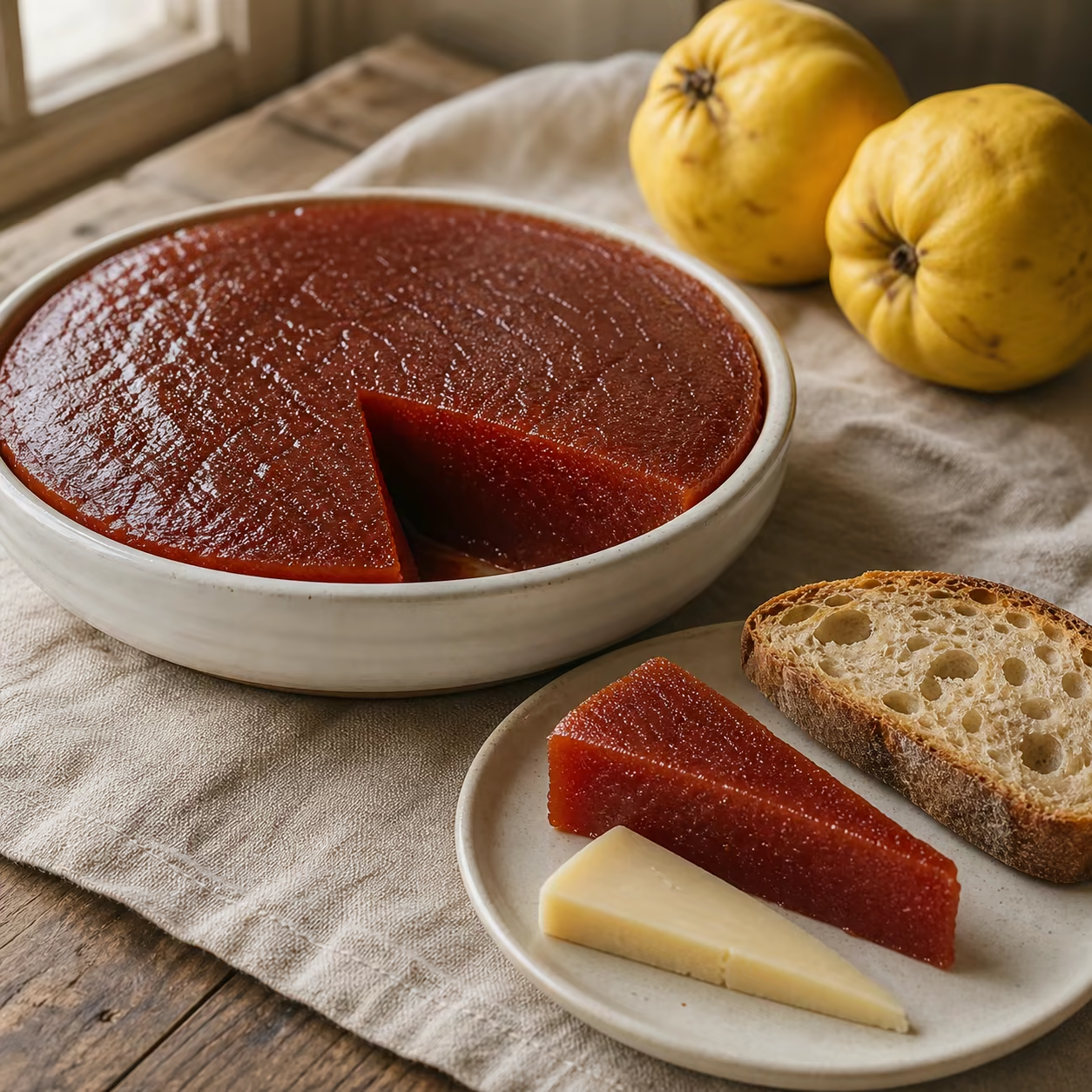
Portuguese Quince Paste
Also known as: Portuguese Quince Paste · Red Quince Paste · Portuguese Marmelada
Quince and sugar slowly cooked into a firm, sliceable ruby paste.
- Origin
- Portugal · documented at least since the 15th–16th centuries
- Place
- Portugal
- Region
- Nationwide
- Category
- Fruit & Honey Sweets
- Season
- Year-round · traditionally prepared in autumn
- Evidence
- Well documented
Portuguese marmelada is a solid quince preserve: smooth, consistent and firm enough to cut with a knife. Portuguese law reserves the name for the homogeneous, consistent mixture obtained exclusively by cooking quince flesh with sugars. Its traditional colour ranges from amber to ruby red and deepens during cooking.
It is neither British-style citrus marmalade nor a runny preserve eaten by the spoon. It is served in slices, often with bread or cheese, and was traditionally kept in shallow bowls protected with paper. It should also be distinguished from Marmelada Branca de Odivelas IGP, a paler convent speciality with its own process and identity.
- Quince flesh
- Sugar
- Water only for the initial cooking
Sweet and concentrated, with quince's floral perfume, gentle acidity and a smooth, dense, sliceable texture.
Sugar ratio, cooking time and drying vary from household to household, producing paler, softer pastes or darker, firmer ones. Marmelada Branca de Odivelas IGP is a separate speciality, not merely an undercooked version.
It is found in grocers, markets, regional-product shops and family kitchens throughout Portugal, especially after the autumn quince harvest.
Aged or fresh cheese, rustic bread, cornbread and black tea.
Marmelada belongs to the oldest written layer of Portuguese sweet-making. The culinary manuscript of Infanta D. Maria, compiled between the late 15th and early 16th centuries, preserves three marmelada recipes: one attributed to Ximénes, another to Dona Joana and a third for marmelada in pieces. The range of formulas shows that the sweet already had a technique and repertoire of its own.
During the 17th and 18th centuries, marmelada recipes appeared frequently in Portuguese cookbooks, while the paste was also used in tarts and pastries. Those practices travelled with Portuguese expansion and influenced other sugar traditions. At home in Portugal, a bowl of marmelada remained closely tied to the autumn quince harvest and domestic fruit preservation.
Well documented
Identity supported by institutional, specialist or corroborating sources.
- diariodarepublica.pt/dr/detalhe/decreto-lei/97-661899 (opens in a new tab)
- dl.uc.pt/bitstream/10316.2/46375/1/o_mais_antigo_livro_de_cozinha_portugues.pdf (opens in a new tab)
- revistas.rcaap.pt/aham/article/download/37749/26081/223519 (opens in a new tab)
- cm-odivelas.pt/descubra-odivelas/gastronomia-e-artesanato/gastronomia (opens in a new tab)
- teleculinaria.pt/receitas/marmelada-a-moda-antiga/ (opens in a new tab)
- feed.continente.pt/receitas/marmelada-caseira (opens in a new tab)
Pastries from here — Nationwide
 Catalogue image
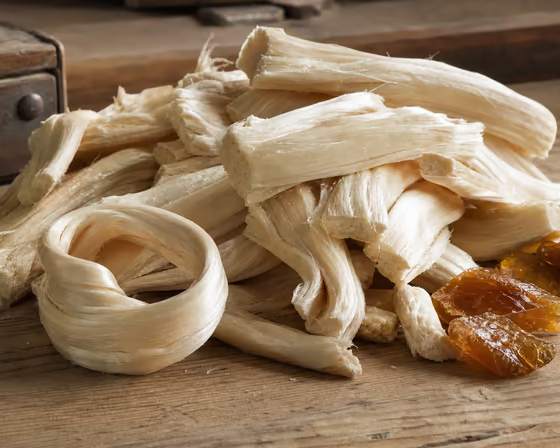
 Alféloa
Sugar or molasses cooked to a hard stage and worked until pale.
Nationwide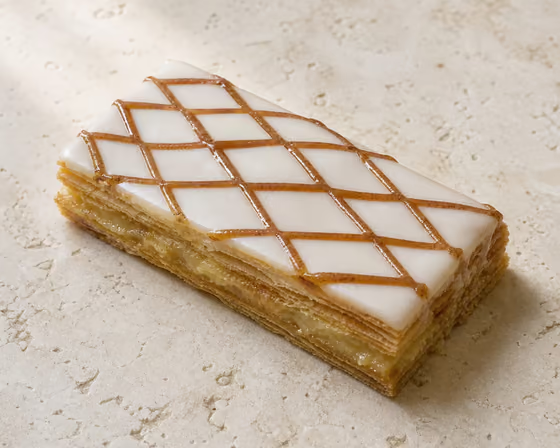 Catalogue image
 Portuguese Gila Allumette
A rectangular puff pastry with cream, gila and cinnamon beneath diamond-patterned royal icing.
Nationwide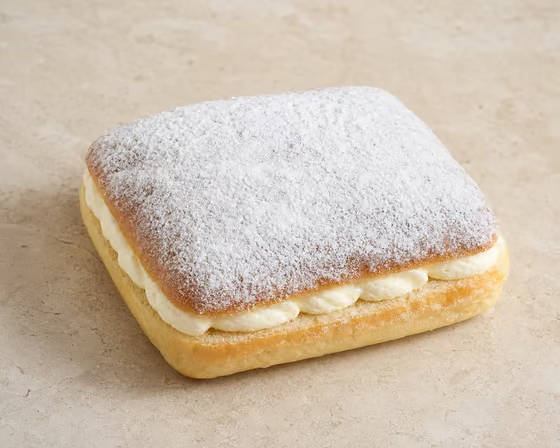 Catalogue image
 Portuguese Brioche Almofada
Light brioche dough, fresh buttercream and icing sugar.
Nationwide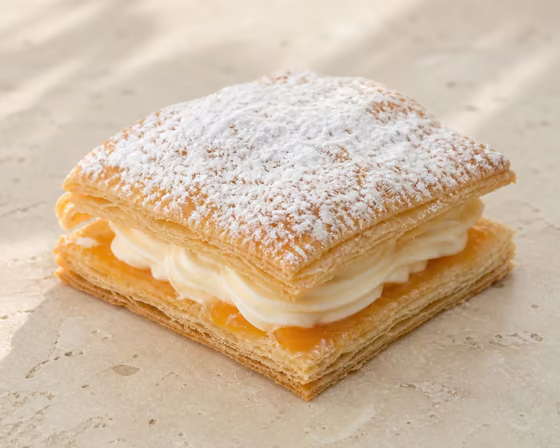 Catalogue image
 Portuguese Puff-Pastry Almofada
Puff pastry with white cream, egg sweet and icing sugar—the laminated Almofada variant.
Nationwide