Blancmange
Also known as: Manjar branco · White dish · Blancmange
The pale sweet that began with shredded chicken and crossed half a millennium.
- Origin
- Medieval European dish, reborn in Portugal's convents; closely tied to Coimbra
- Place
- Convents
- Region
- Nationwide
- Category
- Convent Sweets
- Season
- Year-round
- Evidence
- Well documented
Manjar branco is one of Portugal's oldest and most enigmatic sweets: pale, silky and faintly set, often scented with orange blossom. Today it is dessert, but its history belongs to a medieval kitchen where sweet and savoury were not sharply separated.
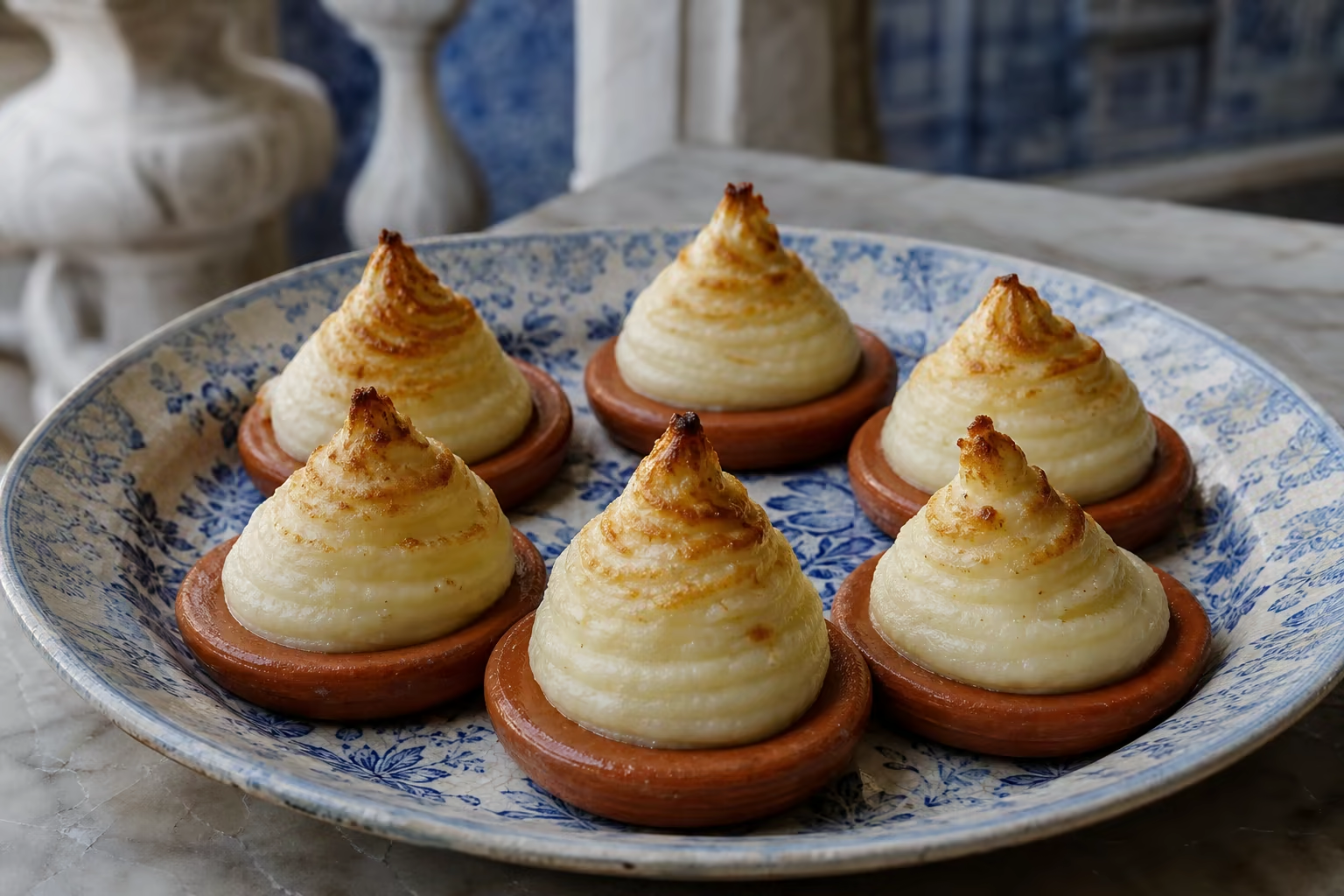
The best-known Coimbra convent version includes cooked chicken breast shredded into almost invisible threads, combined with milk, sugar, rice flour and orange zest. The meat contributes body and subtle richness without an obvious chicken flavour. Served by the spoon, often in red earthenware dishes, it is a rare surviving bridge between medieval savoury dishes and modern confectionery.
- Boiled, shredded chicken breast
- Rice flour
- Milk
- Sugar
- Orange blossom water or zest
- Lemon or orange zest
- Salt
Soft and milky, with a restrained, moderate sweetness far from the intense sugar of egg-yolk sweets. The texture is dense, creamy and faintly gelatinous, like a firm pudding; orange blossom lends a floral perfume, while the chicken contributes only body and a quiet background note, never a meaty taste.
Meatless versions exist, thickened only with rice flour or starch, alongside almond-milk variants closer to the medieval dish. The Portalegre version dropped the meat, while Coimbra kept the chicken, staying closer to the old recipe. In Coimbra it is linked to the "maminha de freira" tradition, in which the sweet is shaped into a rounded dome evoking a breast. In Brazil, "manjar branco" came to mean a coconut-milk pudding with prune sauce, entirely divorced from its chicken ancestry.
This is a rare sweet, hard to find in everyday pastry shops. Seek it in Coimbra, home of the conventual sweets that keep it alive: Pastelaria Briosa and Pastelaria Vénus are among the houses where it tends to appear, alongside traditional-pastry fairs. It is worth calling ahead, as many makers prepare it only to order or at certain times of year.
It calls for a sweet, perfumed wine such as Moscatel de Setúbal or a white Port, or simply a short espresso to cut its gentle sweetness.
Manjar branco descends from the medieval “white dish” found across Europe between the thirteenth and fifteenth centuries. Influenced by the Arab introduction of rice and almonds to Iberia, it began as a luxury mixture of poultry, almond milk, rice and sugar rather than a purely sweet dessert.
A Portuguese version appears in the sixteenth-century Livro de Cozinha da Infanta D. Maria, the oldest surviving cookbook in Portuguese. Convent kitchens later made it sweeter; Coimbra tradition particularly associates it with the Cistercian nuns of the Convent of Celas.
Well documented
Identity supported by institutional, specialist or corroborating sources.
- coimbra.pt/2019/03/patrimonio-doceiro-de-coimbra-candidato-as-7-maravilhas-doces-de-portugal/ (opens in a new tab)
- en.wikipedia.org/wiki/Manjar_branco (opens in a new tab)
- en.wikipedia.org/wiki/Blancmange (opens in a new tab)
- publico.pt/2019/10/09/fugas/noticia/ponto-manjarbranco-coimbra-1889304 (opens in a new tab)
- publico.pt/2016/11/06/culturaipsilon/noticia/vamos-descobrir-o-manjar-branco-da-infanta-d-maria-1749664 (opens in a new tab)
- hoteloslo-coimbra.pt/docaria-conventual-de-coimbra/ (opens in a new tab)
- historydollop.com/2019/11/16/14th-century-blank-maunger-chicken-and-rice/ (opens in a new tab)
Pastries from here — Nationwide
 Catalogue image
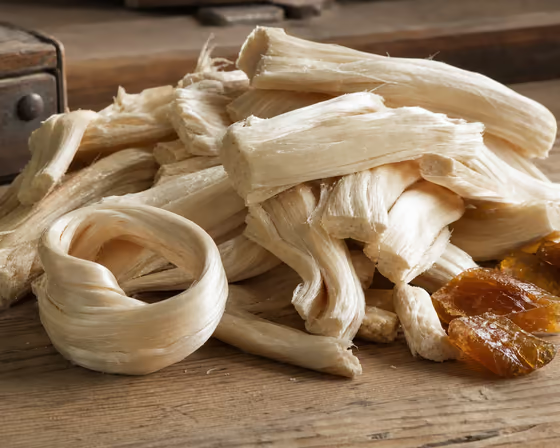
 Alféloa
Sugar or molasses cooked to a hard stage and worked until pale.
Nationwide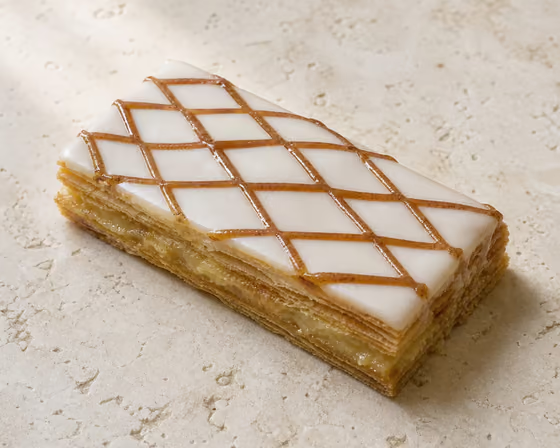 Catalogue image
 Portuguese Gila Allumette
A rectangular puff pastry with cream, gila and cinnamon beneath diamond-patterned royal icing.
Nationwide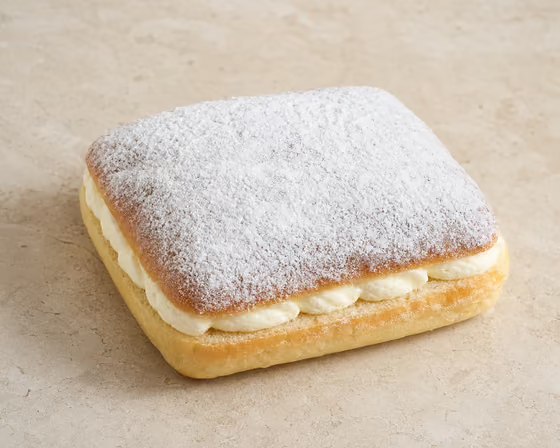 Catalogue image
 Portuguese Brioche Almofada
Light brioche dough, fresh buttercream and icing sugar.
Nationwide Catalogue image
 Portuguese Puff-Pastry Almofada
Puff pastry with white cream, egg sweet and icing sugar—the laminated Almofada variant.
Nationwide