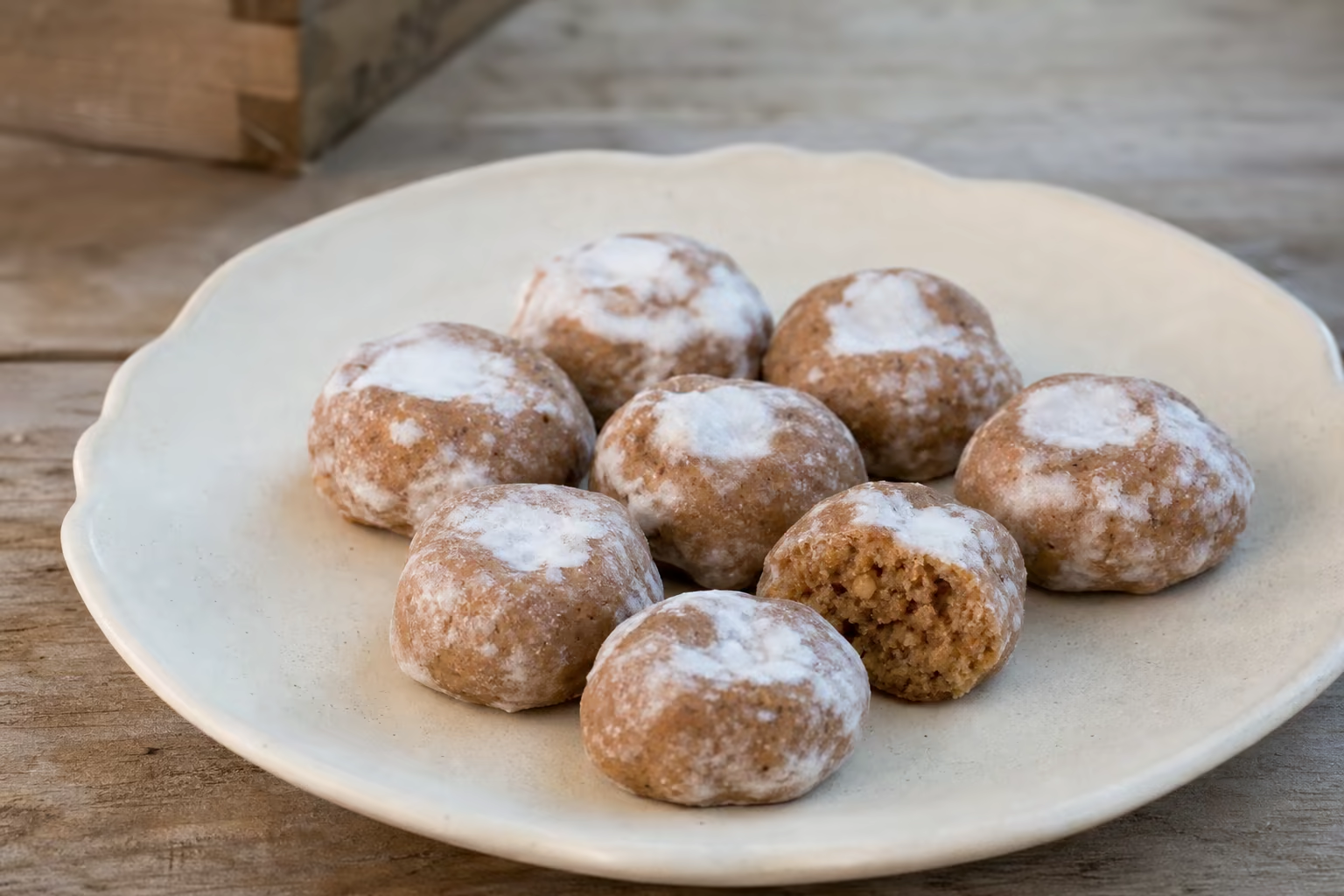
Amarante Lérias
Dark almond, flour and sugar sweets finished with a white sugar glaze.
- Origin
- Amarante · Porto district
- Place
- Amarante
- Region
- The North
- Category
- Convent Sweets
- Season
- Year-round; traditional on feast days
- Evidence
- Well documented
Lérias de Amarante are small sweets made from ground almonds, flour, dark sugar and water. The dough is shaped, cut and flattened before baking, producing low pieces weighing around 50 grams.
After baking, the lérias are dipped in a fine-sugar syrup and dried on racks. This finish leaves irregular white patches on the brown surface and helps them retain their qualities for several days.
- ground almonds
- wheat flour
- dark sugar
- water
- sugar for the glaze
Sweet, dense and almond-rich, with dark-sugar notes and a thin crystallised glaze.
Size, flatness and the amount of white glaze vary slightly between producers.
At traditional confectioners in Amarante, often in assortments with other local egg sweets.
Espresso, black tea or a sweet Vinho Verde.
Tradition links the recipe to the Poor Clare nuns of Amarante's Convent of Santa Clara. A cultural publication from Amarante municipality associates Lérias with that convent repertoire and identifies Alcino dos Reis as a renowned confectioner commemorated by the name Casa das Lérias. DGADR credits him with reviving the recipe in the early 20th century.
Well documented
Identity supported by institutional, specialist or corroborating sources.
- tradicional.dgadr.gov.pt/pt/cat/doces-e-produtos-de-pastelaria/183-lerias-de-amarante (opens in a new tab)
- cm-amarante.pt/wp-content/uploads/2024/10/MADE-3-1.pdf (opens in a new tab)
- cm-amarante.pt/criancas-aprenderam-a-confecionar-doces-conventuais/ (opens in a new tab)
Pastries from here — The North
 Catalogue image
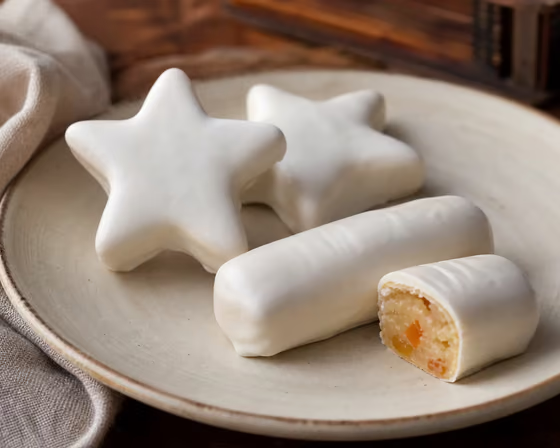
 A Bella Queijadinha de Barcelos
A white star of almond, preserved fruit and family memory.
The North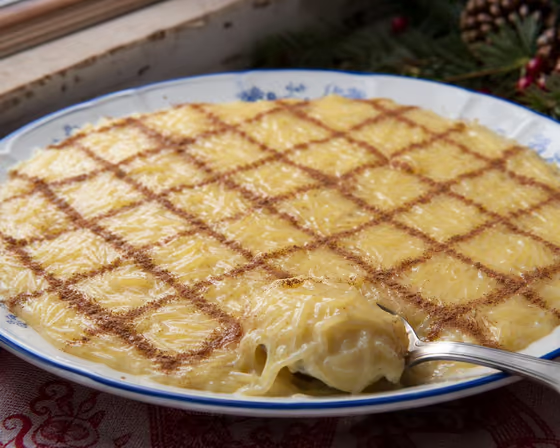 Catalogue image
 Sweet Vermicelli
Fine wheat threads simmered in milk and yolk, scored with cinnamon.
The North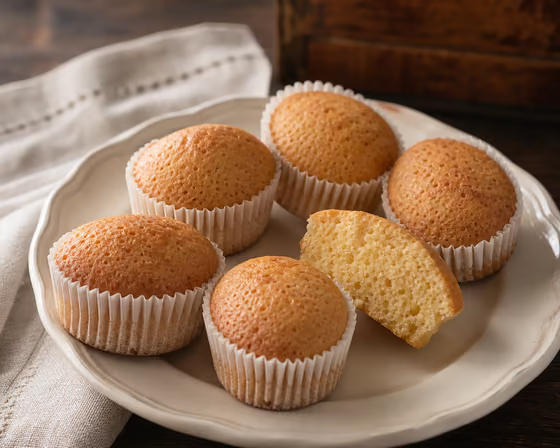 Catalogue image
 Amarantinos
Small egg, lemon and cinnamon cakes whose historical identity is not told consistently by the sources.
The North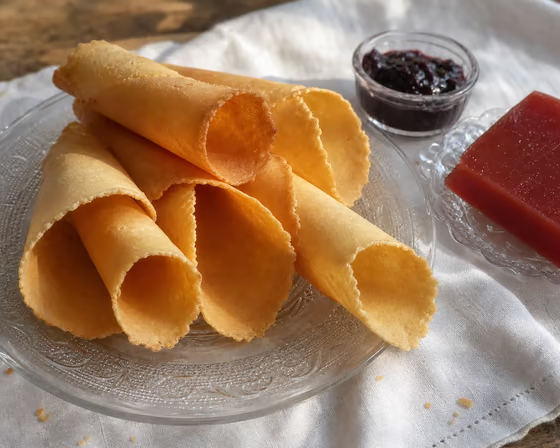 Catalogue image
 Vieira do Minho Cone Wafers
Paper-thin crisp wafers, iron-baked and rolled by hand while still hot.
The North