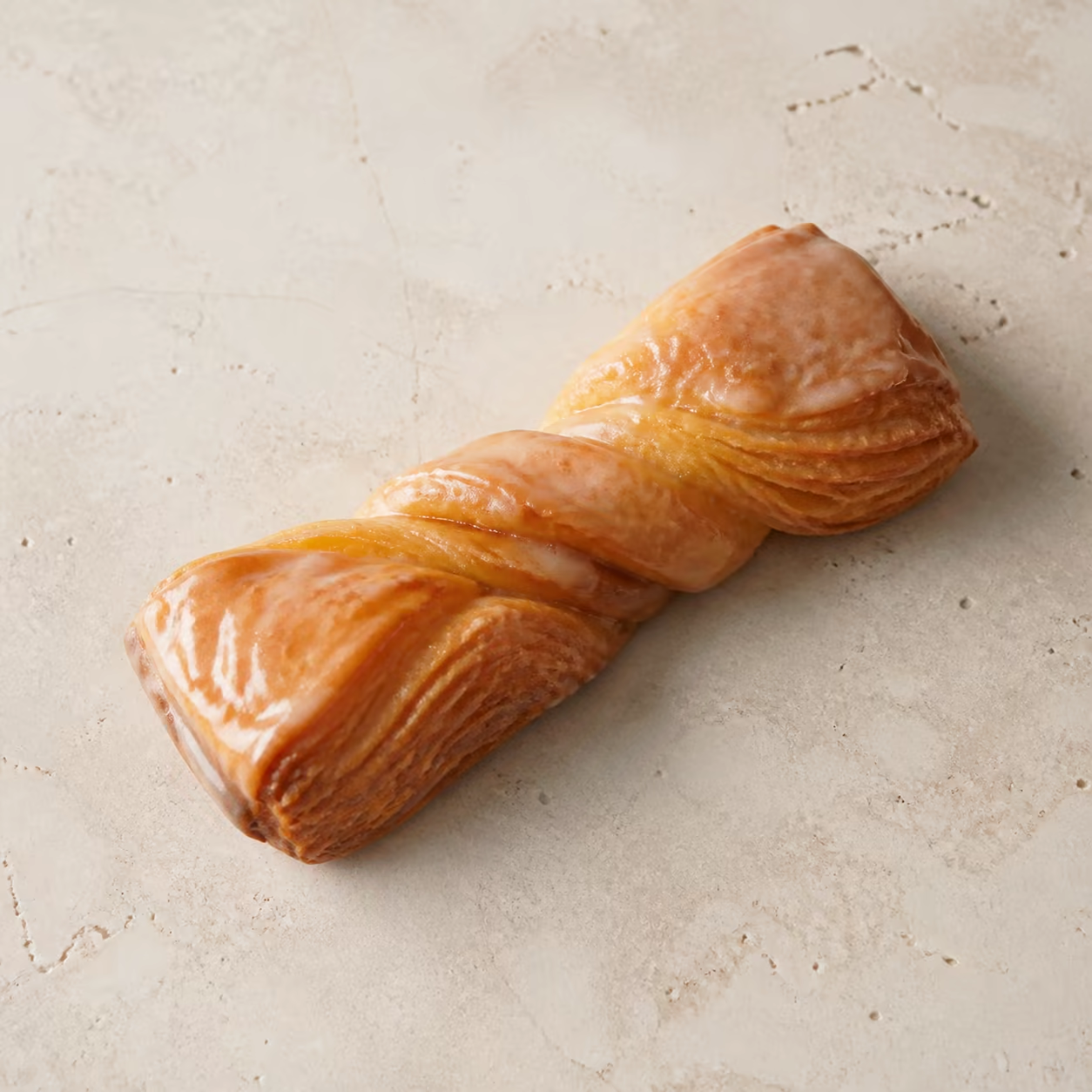
Portuguese Puff-Pastry Bow
Also known as: Portuguese Puff-Pastry Bow · Glazed Egg-Cream Bow
Bow-twisted puff pastry with sweet egg cream and a thin sugar glaze.
- Origin
- Portuguese pastry tradition · formal variant of Brisa
- Place
- Portugal
- Region
- Nationwide
- Category
- Laminated & Fine Pastries
- Season
- Year-round
- Dough family
- Laminated puff pastry Layers created through repeated folds of dough and fat.
- Evidence
- Well documented
Laço begins as a rectangle of puff pastry twisted twice, a motion that narrows the centre and opens the ends like a bow. The piece is coated or filled with sweet egg cream and finished with a very thin sugar glaze.
Its geometry is not merely decorative: the twists alter how the layers rise, creating crisper ends and a more compact creamy centre. It is a formal variant of Brisa, distinguished chiefly by its double twist.
- Puff pastry
- Sweet egg cream
- Sugar
- Water for the glaze
Crisp and buttery at the ends, moist in the centre, with sweet yolk and a delicately brittle sugar coating.
Some shops simplify the finish to sugar and cinnamon without glaze. Size, the spread of the ends and the amount of egg cream also vary.
Look for it in traditional in-house pastry shops. Recent listings also retain the name “mini laço de folhado” for bite-size pastry formats.
Espresso or black tea.
Pastry-counter documentation assigns Laço no secure inventor, city or date. Fabrico Próprio records it as a formal variant of Brisa and describes the technical sequence—puff-pastry rectangle, two twists, sweet egg cream and glaze—that establishes its identity.
Its name is directly visual and belongs to the vocabulary of forms used in Portuguese workshops. Laço remains recognisable in professional listings and pastry menus, although execution varies by shop.
Well documented
Identity supported by institutional, specialist or corroborating sources.
- fabricoproprio.net/enciclopedia/laco/ (opens in a new tab)
- es.restaurantguru.com/Pastelaria-Suica-Lisbon-2/menu (opens in a new tab)
- uc.pt/site/assets/files/2379637/anexo_a_cpn28_25.pdf (opens in a new tab)
Pastries from here — Nationwide
 Catalogue image
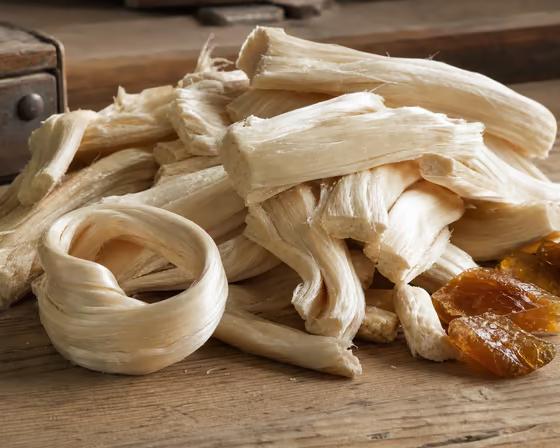
 Alféloa
Sugar or molasses cooked to a hard stage and worked until pale.
Nationwide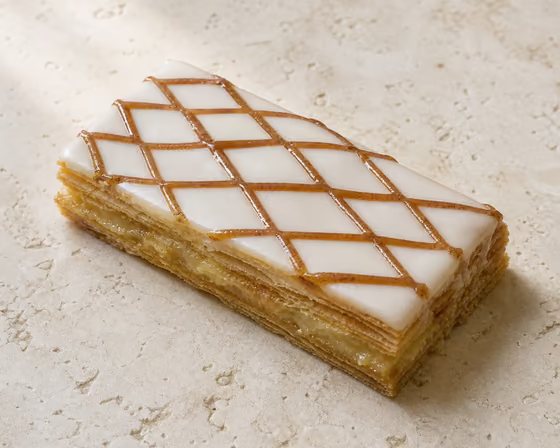 Catalogue image
 Portuguese Gila Allumette
A rectangular puff pastry with cream, gila and cinnamon beneath diamond-patterned royal icing.
Nationwide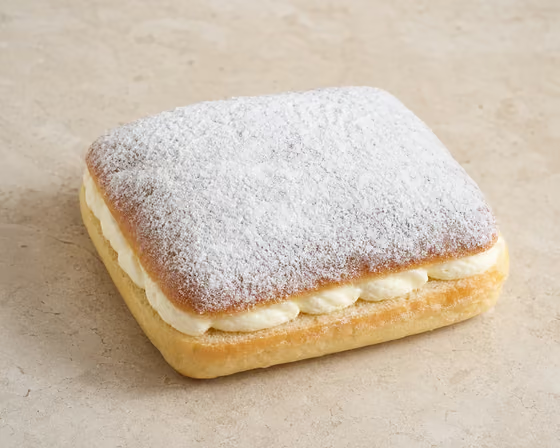 Catalogue image
 Portuguese Brioche Almofada
Light brioche dough, fresh buttercream and icing sugar.
Nationwide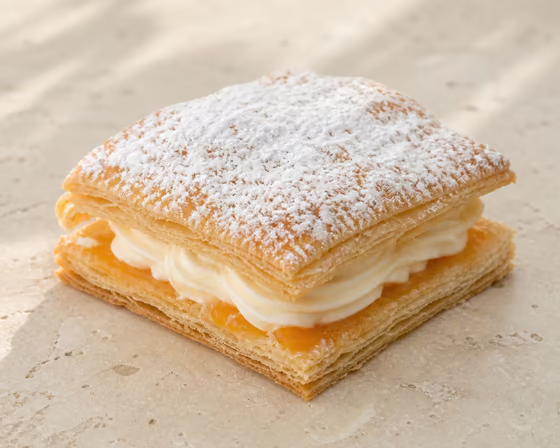 Catalogue image
 Portuguese Puff-Pastry Almofada
Puff pastry with white cream, egg sweet and icing sugar—the laminated Almofada variant.
Nationwide