São Brás Crooks
Also known as: Ganchas · Saint Blaise's Crook
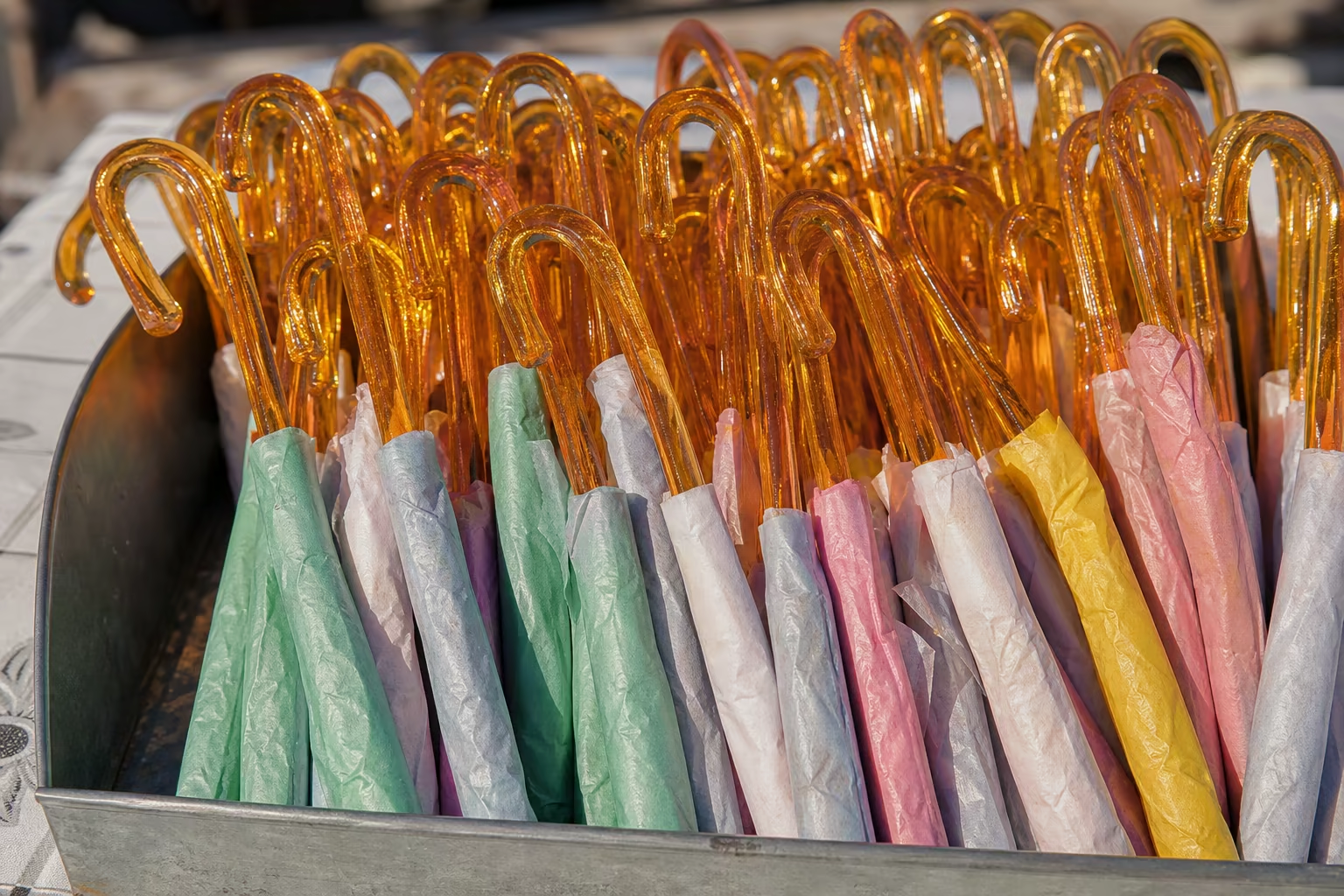
The saint's crook in pulled sugar, a courting gift on São Brás's day.
- Origin
- Centuries-old tradition · Feast of São Brás, Vila Real
- Place
- Vila Real
- Region
- Trás-os-Montes
- Category
- Festive & Seasonal
- Season
- Feast of São Brás (2 and 3 February)
- Evidence
- Well documented
The gancha is a hard boiled sweet of caramelised sugar, pulled and folded by hand until it takes the shape of São Brás's crosier — hence the folk names of walking-stick or crook. The lower end is usually twisted in coloured paper, which serves as a handle and shields the fingers from the sticky sugar, while the curved upper portion is left bare, lustrous and translucent, to be sucked slowly.
It begins as a sugar syrup brought to a high thread, sometimes scented with lemon or herbs, which as it cools becomes pliable and is worked into strands and loops before it sets. It is a fair-day sweet, sold from improvised trays in the streets of the Vila Velha, beside the chapel of São Brás.
More than a confection, it is a gift: on the third of February, a man gives a gancha to the woman he is courting, in return for the pito she offered him on Saint Lucy's Day, the thirteenth of December.
- Sugar
- Water
- Lemon juice
- Aromatic herbs (optional)
- Food colouring (optional)
Intensely sweet and brittle, with the glassy clarity of hard caramel; you suck it slowly until it turns smooth and thin, with a citrus undertone of lemon when it's added.
Some ganchas are plain, golden and translucent, others are tinted and wrapped in bright papers; the size and curve vary with the hand that pulls them, and a few are scented with lemon or herbs.
You'll find them almost only in Vila Real, at the street stalls of the Vila Velha beside the chapel of São Brás, around 2 and 3 February; some local bakeries make them at that time of year.
It needs little beyond itself, but pairs well with a strong coffee or a glass of Port to cut through the sweetness.
The gancha is bound to the devotion to São Brás, bishop and martyr invoked against ailments of the throat. Legend holds that the saint saved a child choking on a fishbone, and the episcopal crosier — the bishop's curved staff — became the symbol that the sweet reproduces. The chapel of São Brás, in the Vila Velha of Vila Real, has been listed as a National Monument since 1910, and it is around that chapel that the tradition stays alive.
The gancha is paired with the pito de Santa Luzia in a courtship ritual of centuries-old roots in Vila Real: the women offer the pito on the thirteenth of December, the men return the gancha on the second and third of February. For generations the sweet was made and sold by the women of a local family known as the "Marianas", who set up their stall beside the churches of the historic centre. The sweet is documented in the work "A Doçaria Portuguesa (Norte)".
Well documented
Identity supported by institutional, specialist or corroborating sources.
- publico.pt/2018/02/12/fugas/noticia/no-ponto-ganchas-de-sao-bras-1802864 (opens in a new tab)
- noponto.pt/ganchas-sao-bras/ (opens in a new tab)
- cm-vilareal.pt/index.php/rss/nos-dias-2-e-3-de-fevereiro-em-vila-real-da-se-a-gancha-sao-bras-2020 (opens in a new tab)
- noticiasdevilareal.sapo.pt/no-dia-de-s-bras-da-se-a-gancha-em-vila-real/ (opens in a new tab)
- viagens.sapo.pt/saborear/gastronomia/artigos/vila-real-ela-deu-o-pito-ele-retribui-hoje-com-a-gancha (opens in a new tab)
Pastries from here — Trás-os-Montes
 Catalogue image
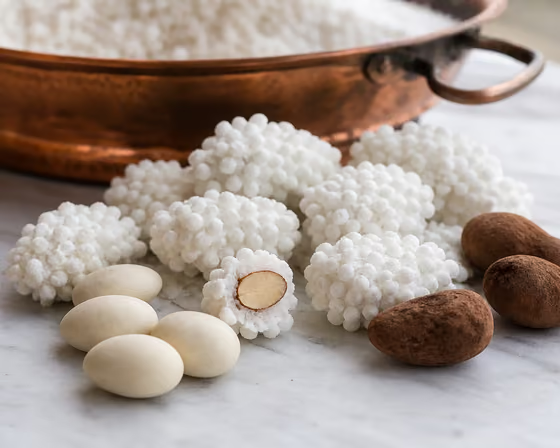
 Moncorvo Sugar-Coated Almonds
The queen of Trás-os-Montes sweets, spun from sugar and patience in copper.
Trás-os-Montes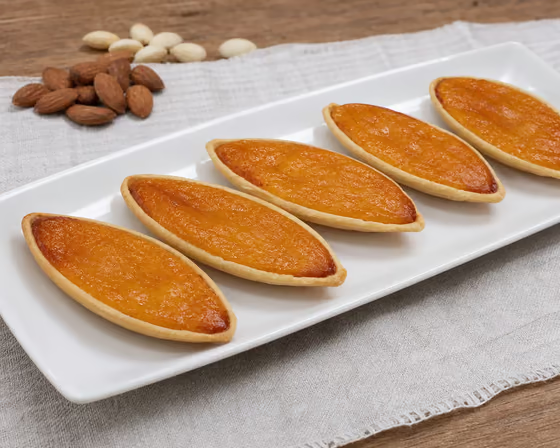 Catalogue image
 Alfândega da Fé Almond Boats
Pale pastry boats with a glossy filling of yolk and Trás-os-Montes almonds.
Trás-os-Montes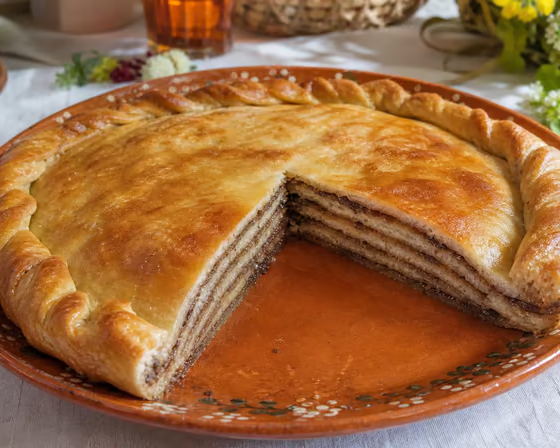 Catalogue image
 Mirandese Sweet Bola
The Easter bola that unravels in layers of sugar and cinnamon.
Trás-os-Montes Catalogue image
 Douro Port-Soaked Cake
A rich egg-and-butter cake soaked while hot in a generous Port-wine syrup.
Trás-os-Montes