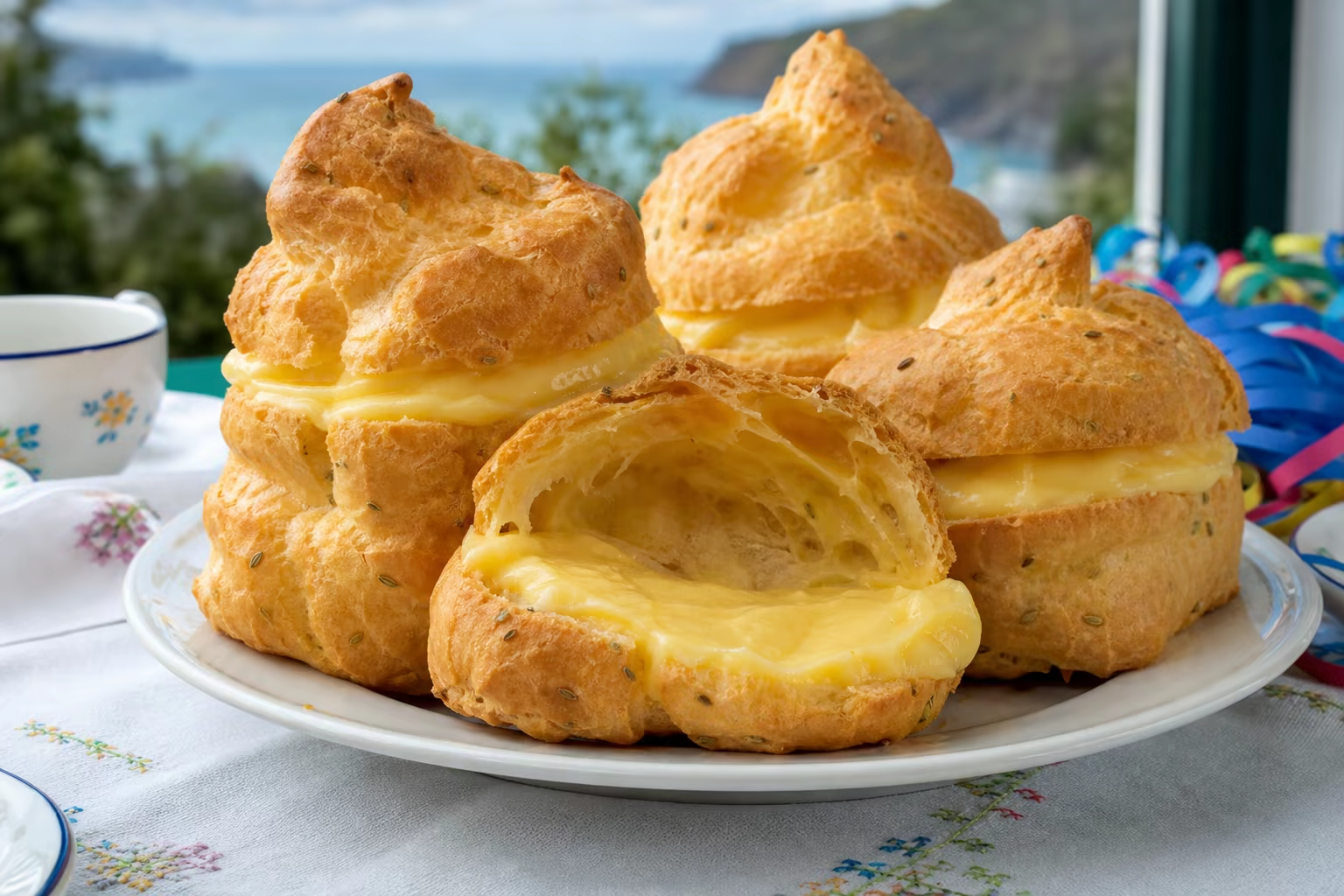
Faial Cream Puffs
Also known as: Fofas · Filhós
Faial's fennel-scented scalded pastry, filled with lemon or vanilla cream at Carnival.
- Origin
- Faial Island · Azores
- Place
- Horta
- Region
- The Azores
- Category
- Custards & Creams
- Season
- Carnival
- Evidence
- Well documented
Fofas do Faial are a Carnival sweet from Faial Island. Portugal's Directorate-General for Agriculture and Rural Development documents a scalded mixture of flour, water and milk, butter or margarine, sugar, salt, fennel seeds and eggs. It is first cooked on the stove; once cool, the eggs are incorporated one at a time and spoonfuls are baked at about 220°C.
The pastries may be served plain or filled with lemon or vanilla cream. The official Azores Tourism Portal independently confirms their specific association with Faial, Carnival, fennel and both fillings. They are not fried: despite the former name filhós, the documented preparation is baked.
- Wheat flour
- Water and milk
- Butter or margarine
- Eggs
- Fennel seeds (aniseed)
- Sugar
- Salt
- Lemon or vanilla cream (optional filling)
Fennel scents the pastry; when used, the filling adds lemon or vanilla cream. The official sources do not publish a more detailed tasting note.
DGADR documents three presentations: unfilled, with lemon cream or with vanilla cream. It also records a variant in which baking powder is mixed into the flour, at the stated ratio of 30g per 500g of flour.
The Azores Tourism Portal says fofas are made on Faial only during Carnival. Look for them in that season and confirm availability directly with local bakeries or producers before travelling; the consulted sources do not maintain a vendor list.
Not documented in the sources consulted.
DGADR records that these cakes were formerly called filhós and are made for Carnival. The Azores Tourism Portal describes them as a typical Faial sweet made only during that season.
Assaltos are part of Faial Carnival: groups move between parishes for dances, assaltos, matinées and parades. A 2020 local account directly associates fofas with the shared meals at these gatherings. The consulted sources do not establish a convent origin, a creation date or a genealogical relationship with French choux pastry, so those versions are not presented as proven history.
Well documented
Identity supported by institutional, specialist or corroborating sources.
- tradicional.dgadr.gov.pt/pt/cat/doces-e-produtos-de-pastelaria/699-fofas-do-faial (opens in a new tab)
- turismo.azores.gov.pt/faial/ (opens in a new tab)
- turismo.azores.gov.pt/en/faial/ (opens in a new tab)
- thetravellightworld.blogs.sapo.pt/fofas-do-faial-um-doce-tipico-do-185860 (opens in a new tab)
Pastries from here — The Azores
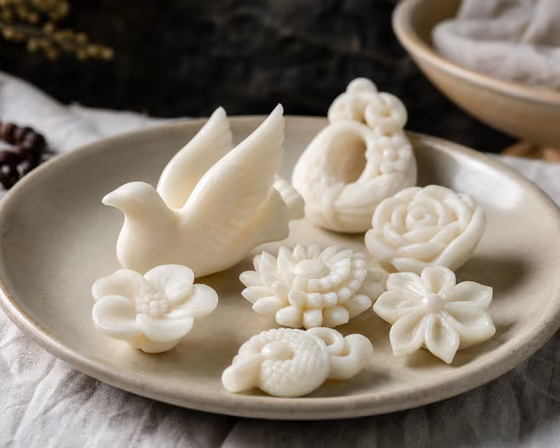 Catalogue image
 Alfenim Pulled Sugar
Hand-pulled sugar shaped into animals, flowers, hearts and votive figures.
The Azores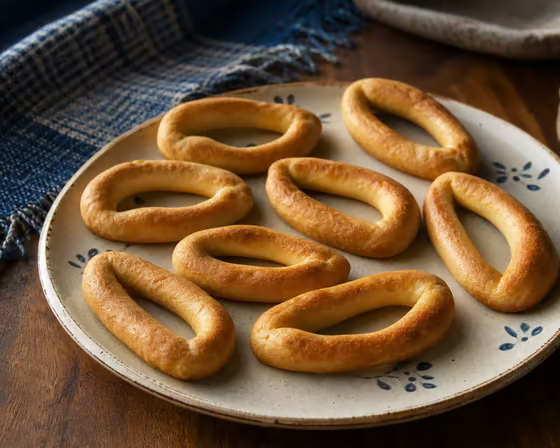 Catalogue image
 Brandy Biscuits
Crisp Santa Maria rings kneaded with eggs, rich fats and a glass of brandy.
The Azores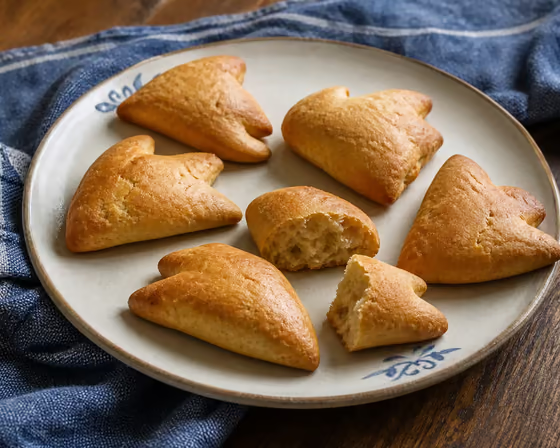 Catalogue image
 Ear-Shaped Biscuits
Santa Maria's triangular enriched biscuits, clipped at the tips like little ears.
The Azores Catalogue image
 Santa Maria Encanelado Biscuits
Santa Maria's yeasted rings under a thick white sugar glaze.
The Azores