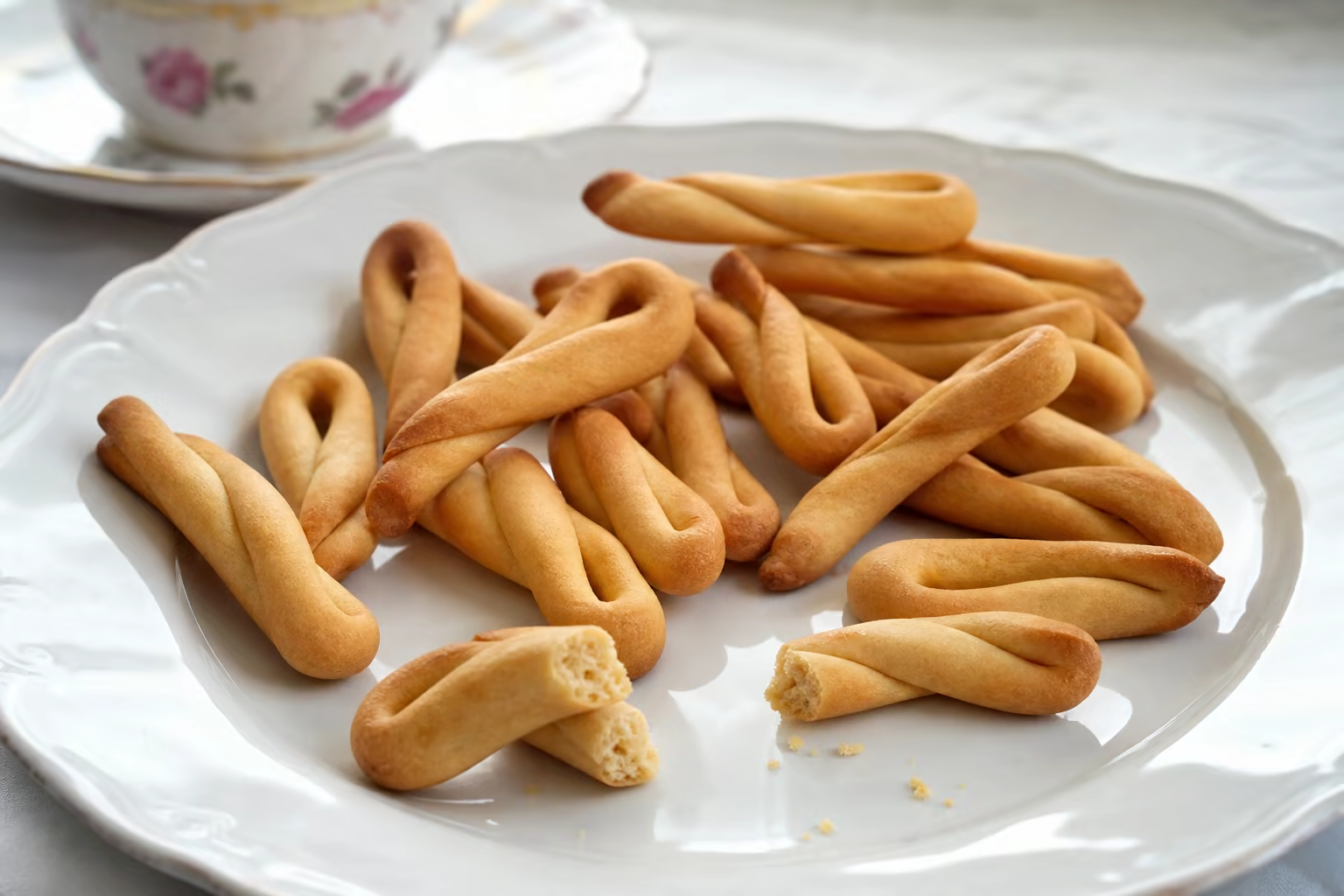
Braga Fidalguinhos
Also known as: Fidalguinhos
The interlaced biscuit that mocks the dangling legs of the nobility.
- Origin
- Convent confectionery · Convent of Nossa Senhora dos Remédios, Braga
- Place
- Braga
- Region
- The North
- Category
- Cakes & Sweet Breads
- Season
- Year-round · especially Easter
- Evidence
- Well documented
Fidalguinhos are dry, crisp, thin, interlaced biscuits, perfumed with cinnamon and lemon zest. They are made from a long rope of dough that is folded in half and twisted back on itself, yielding a curious silhouette: two crossed arms that, so the story goes, mimic the dangling legs of an idle nobleman.
Golden and brittle, they snap cleanly between the fingers. They are small and unpretentious — the kind that are eaten one after another with a cup of afternoon tea or coffee.
In Braga, they appear frequently on the Easter table, beside the other specialities of the city's convent confectionery, though the best pastry shops and sweet-makers keep them year-round.
- Wheat flour
- Sugar
- Butter
- Eggs
- Egg yolks
- Lemon zest
- Cinnamon
Dry and crisp, they snap easily and dissolve into buttery crumbs. The sweetness is restrained, lifted by the bright scent of lemon zest and the quiet warmth of cinnamon.
The fineness of the dough rope and the regularity of the twist depend greatly on the maker's hand, so every bakery presents its own thickness and shape. They often appear alongside pederneiras, another dry biscuit from Braga.
Look for them in the traditional pastry shops and confectioners of Braga's historic centre, especially those that keep the old convent recipes. They are easiest to find around Easter.
They call for a hot tea or an afternoon coffee; in a more festive vein, they sit well beside a small glass of Port or Moscatel.
The fidalguinhos recipe belongs to the repertoire of the former Convent of Nossa Senhora dos Remédios in Braga, and counts among the many legacies of the city's rich convent confectionery that survived the suppression of the religious houses. The name and the shape carry an old wit: the biscuit twisted into crossed legs was a satire on the fidalgos — the hereditary nobility who, according to tradition, needed little effort to obtain what they desired.
The most frequently cited scholarly reference is Alfredo Saramago's Cozinha do Minho (2000), which records the convent origin and the satirical meaning of the shape. In Braga, the recipe passed from the hands of the nuns to the pastry shops of the city, where formulas with many generations behind them are kept to this day.
Well documented
Identity supported by institutional, specialist or corroborating sources.
- tradicional.dgadr.gov.pt/pt/cat/doces-e-produtos-de-pastelaria/1097-fidalguinhos-de-braga (opens in a new tab)
- webraga.pt/blog/a-docaria-conventual-em-braga/ (opens in a new tab)
- visitbraga.travel/en/highlights/gastronomia-e-vinhos/fidalguinhos/ (opens in a new tab)
- lumeear.blogspot.com/2019/04/os-fidalguinhos-e-as-pederneiras.html (opens in a new tab)
Pastries from here — The North
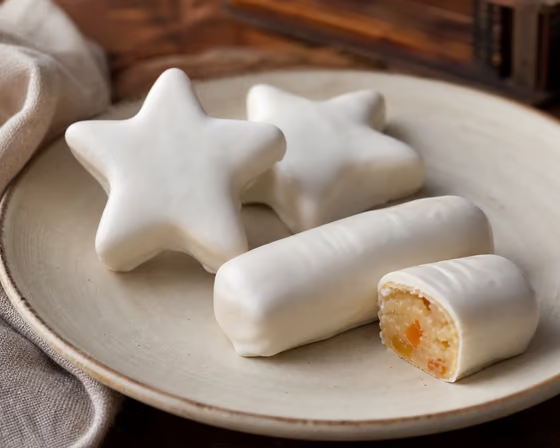 Catalogue image
 A Bella Queijadinha de Barcelos
A white star of almond, preserved fruit and family memory.
The North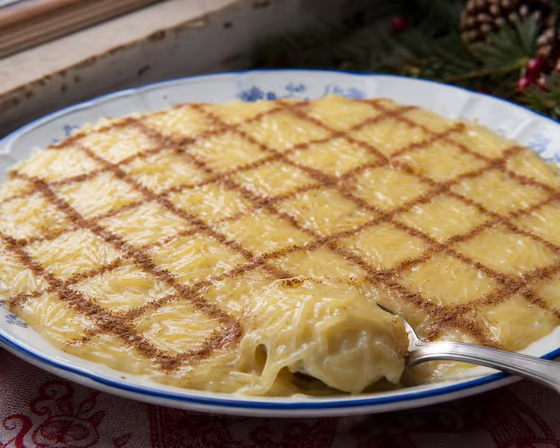 Catalogue image
 Sweet Vermicelli
Fine wheat threads simmered in milk and yolk, scored with cinnamon.
The North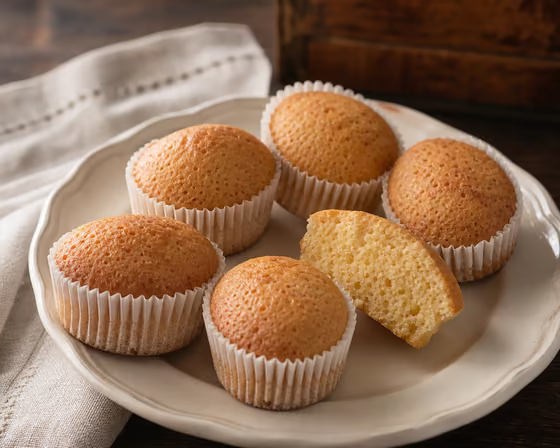 Catalogue image
 Amarantinos
Small egg, lemon and cinnamon cakes whose historical identity is not told consistently by the sources.
The North Catalogue image
 Vieira do Minho Cone Wafers
Paper-thin crisp wafers, iron-baked and rolled by hand while still hot.
The North