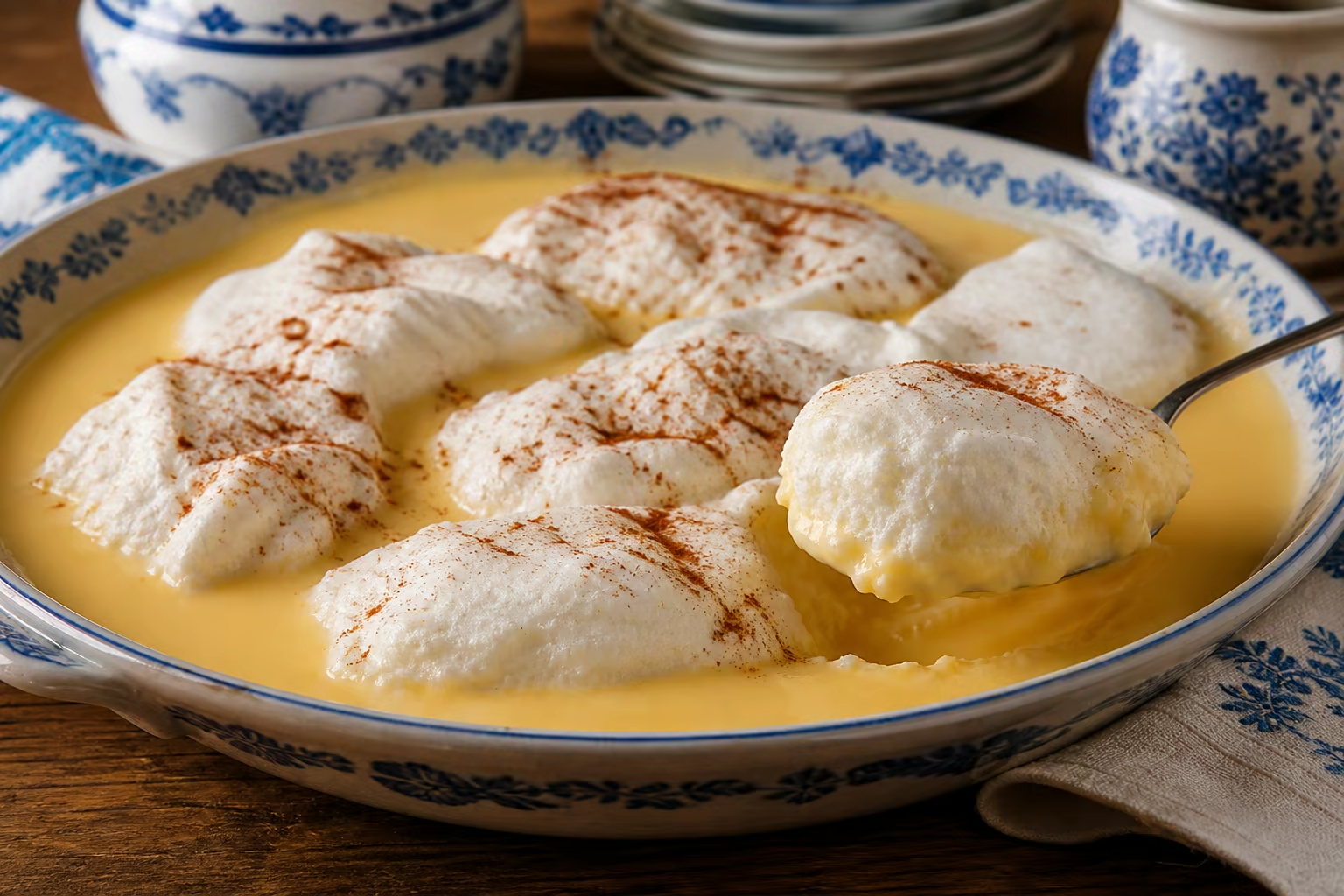
Floating Islands
Also known as: Floating Islands · Poached Portuguese Meringues
Cloud-soft meringues poached in milk, afloat on a cinnamon-scented egg custard.
- Origin
- Traditional Portuguese dessert of uncertain documented origin; associated in different collections with Estremadura and related preparations called «nuvens» (clouds).
- Place
- Nationwide
- Region
- Nationwide
- Category
- Custards & Creams
- Season
- Year-round
- Evidence
- Well documented
Farófias are a Portuguese spoon dessert: portions of stiffly whisked egg white briefly poached in milk, usually scented with cinnamon and lemon peel. Once drained, they rest on a custard made from the poaching milk, thickened with yolks and, in many recipes, a little starch.
Made without an oven or moulds, they depend chiefly on the consistency of the whites and careful control of the custard's temperature. They are served at room temperature or chilled, usually in a deep dish and dusted with cinnamon. Family and regional versions vary in the custard's consistency, flavourings and presentation.
- Egg whites
- Egg yolks
- Whole milk
- Sugar
- Cinnamon stick
- Lemon peel
- Ground cinnamon
- Cornstarch
Contrast is everything: the poached whites are light, spongy and almost airy, while the egg custard beneath is soft, silky and just sweet enough. Cinnamon and lemon lend depth and freshness, and the final dusting of cinnamon adds a warm, woody perfume to every spoonful.
Some poach the whites in syrup rather than milk, some caramelise sugar for a golden thread on top, and some flavour the custard with vanilla alone. In some households the custard is thicker, almost a leite-creme; in others it is deliberately loose, to be drunk at the end. The dusting of cinnamon is all but universal.
This is more of a home dessert than a pastry-shop one, so the best version is usually the one made in a family kitchen. You will also find them in taverns and traditional Portuguese restaurants from north to south, where they sit on the homemade-dessert list beside leite-creme and rice pudding.
They ask for little more than a spoon, but they go well with a strong black coffee to cut the sweetness, or with a fortified wine such as Moscatel de Setúbal to round off a meal.
The precise origin of farófias is not established by the sources consulted. Maria de Lourdes Modesto included them under Estremadura in «Cozinha Tradicional Portuguesa», while other collections record related preparations called «nuvens» (clouds). These references document regional circulation but are not enough to attribute the invention securely to a convent, place or date.
They belong to the same technical family as French «œufs à la neige» and floating islands: egg whites cooked separately and served with custard. In Portuguese practice, spoonfuls of white are commonly poached in milk scented with lemon and cinnamon, which is then reused for the custard. The dessert remains part of domestic repertoires and traditional restaurants in several regions of Portugal.
Well documented
Identity supported by institutional, specialist or corroborating sources.
- media.rtp.pt/anossatarde/artigos/receita-farofias/ (opens in a new tab)
- pt.wikipedia.org/wiki/Far%C3%B3fias (opens in a new tab)
- virgiliogomes.com/index.php/cronicas/561-farofias (opens in a new tab)
- historiasacucaradas.wordpress.com/2018/11/23/nuvens/ (opens in a new tab)
Pastries from here — Nationwide
 Catalogue image
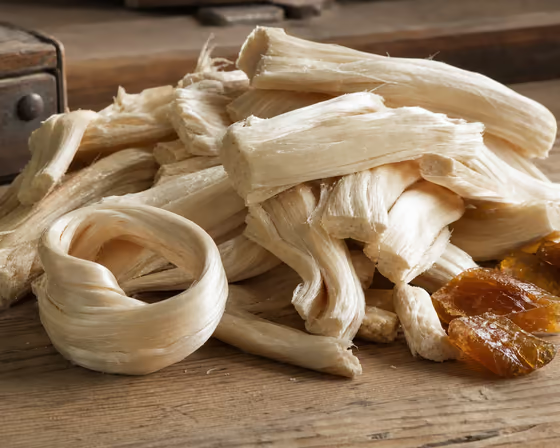
 Alféloa
Sugar or molasses cooked to a hard stage and worked until pale.
Nationwide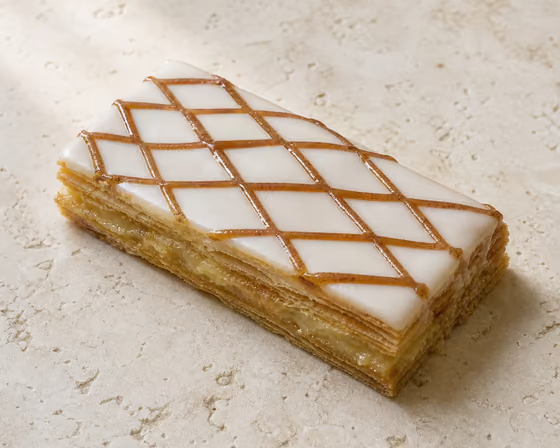 Catalogue image
 Portuguese Gila Allumette
A rectangular puff pastry with cream, gila and cinnamon beneath diamond-patterned royal icing.
Nationwide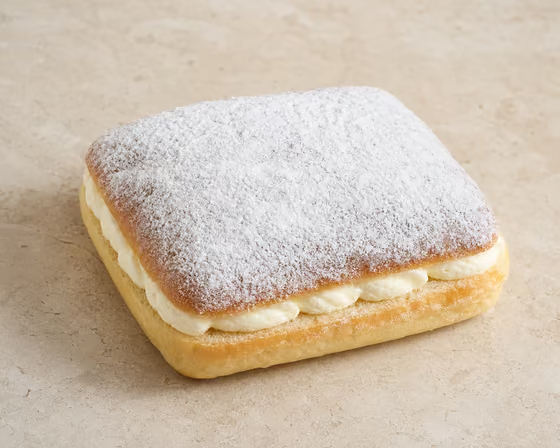 Catalogue image
 Portuguese Brioche Almofada
Light brioche dough, fresh buttercream and icing sugar.
Nationwide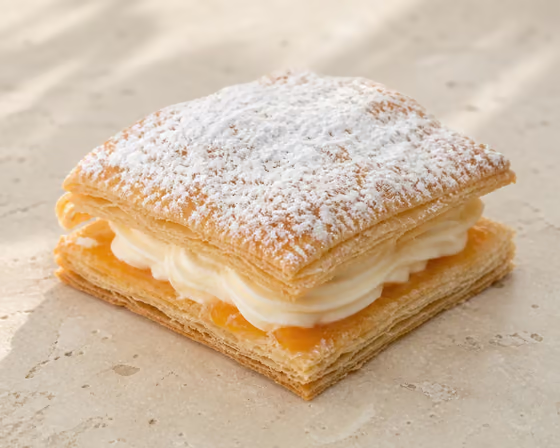 Catalogue image
 Portuguese Puff-Pastry Almofada
Puff pastry with white cream, egg sweet and icing sugar—the laminated Almofada variant.
Nationwide