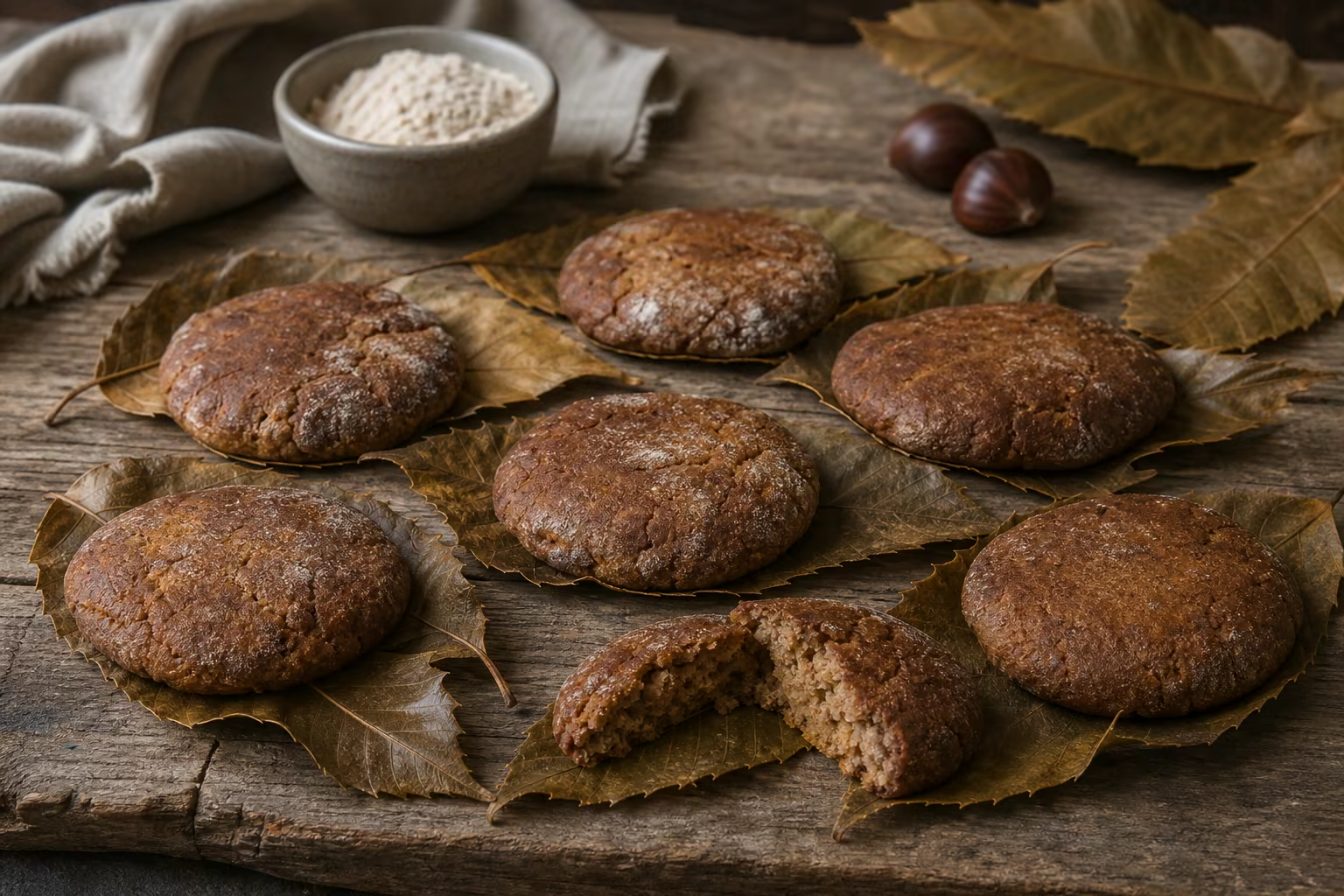
Resende Chestnut Falachas
Also known as: Resende Chestnut Falachas · Saint Blaise Chestnut Cakes · Douro Chestnut Falachas
Rustic chestnut-flour breads, flattened and baked on chestnut leaves.
- Origin
- Resende and Moura Morta · Douro
- Place
- Resende · Douro
- Region
- The North
- Category
- Festive & Seasonal
- Season
- Winter · feast of Saint Blaise
- Evidence
- Well documented
Falachas are low, rustic chestnut-flour breads shaped by hand into thick, flattened rounds. They bake on chestnut leaves, which act as a natural base and leave their veins impressed on the underside.
Ethnographic research on Resende describes the older base as dried-chestnut flour, warm water and salt only. Once baked, a falacha could also be sliced, fried and dusted with sugar and cinnamon. Public recipes from other parts of the Douro add wheat flour and sugar to the dough itself; these are documented variants, not ingredients automatically transferred to the Resende formula.
Related traditions survive elsewhere in the Douro, including Moura Morta in Peso da Régua. This page concentrates on Resende's falacha associated with the feast of Saint Blaise while retaining the other names as regional variants, without pretending that every recipe is identical.
- Dried-chestnut flour
- Warm water
- Salt
- Chestnut leaves for baking
- Sugar and cinnamon only for the documented fried finish
- Wheat flour and sugar in dough variants published outside Resende
Toasted, earthy chestnut with a dense crumb and dry crust; the documented older base is savoury, while the fried sugar-and-cinnamon finish creates a sweet version.
In Resende, ethnographic documentation records the chestnut-flour, warm-water and salt base and the option of frying slices with sugar and cinnamon. Other published Douro recipes incorporate wheat flour and sugar into the dough. Moura Morta has its own related chestnut-flour tradition.
At the Saint Blaise feast in Resende and by order from local makers. Related versions are also found elsewhere in the Douro, notably at Moura Morta.
Black tea, cloth-filtered coffee or a small glass of tawny Port.
In Resende, falachas are tied to devotion to Saint Blaise and the feast held in early February. Research into the intangible heritage of Tâmega e Sousa describes falacheiras selling them during the feast and the continuation of household production while chestnut flour remains available.
Dried, hulled chestnuts replaced or supplemented cereals in mountain areas vulnerable to shortage. Ao Sabor de Portugal interprets the sweet falacha as a winter votive bread: chestnut flour connects the saint's calendar, the economy of the chestnut groves and the need to preserve food.
The name Falachas also appears in Portugal's national list of traditional products. Local and academic sources confirm the flattened form, baking on chestnut leaves and the essential ingredients.
Well documented
Identity supported by institutional, specialist or corroborating sources.
- eubrdialogues.com/sites/default/files/acoes/documentos/049xlix_lista_de_produtos_tradicionais_portugueses_v_19_0.pdf (opens in a new tab)
- freguesias.pt/portal/gastronomia.php (opens in a new tab)
- aosabordeportugal.pt/site/2020/05/paes-doces/ (opens in a new tab)
- comum.rcaap.pt/server/api/core/bitstreams/442bf4c2-092c-4be0-a7cd-0e71dd7ef6d9/content (opens in a new tab)
- comum.rcaap.pt/server/api/core/bitstreams/24519b71-8404-4ab9-a64e-6174eca84144/content (opens in a new tab)
- acp.pt/viagens-e-lazer/estrada-fora/conhecer-portugal/norte/detalhe/peso-da-regua (opens in a new tab)
- cozinhatradicional.com/falachas/ (opens in a new tab)
Pastries from here — The North
 Catalogue image
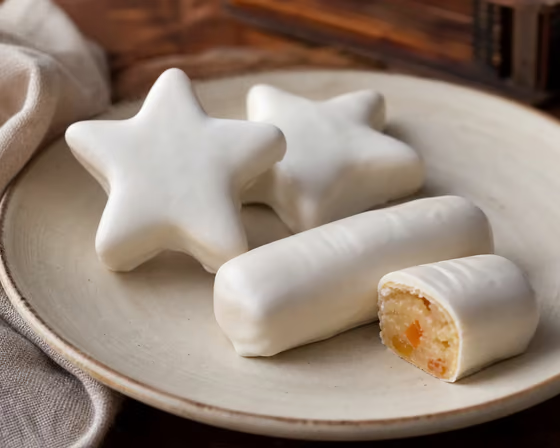
 A Bella Queijadinha de Barcelos
A white star of almond, preserved fruit and family memory.
The North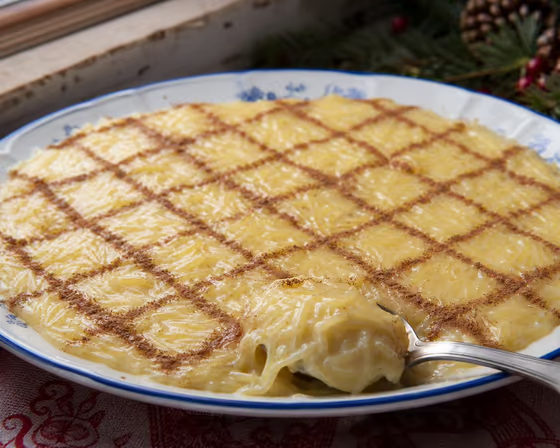 Catalogue image
 Sweet Vermicelli
Fine wheat threads simmered in milk and yolk, scored with cinnamon.
The North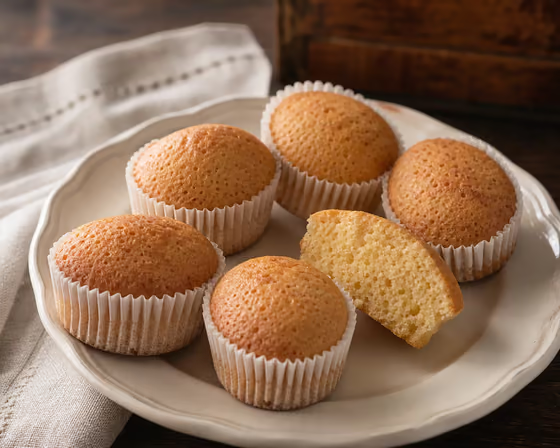 Catalogue image
 Amarantinos
Small egg, lemon and cinnamon cakes whose historical identity is not told consistently by the sources.
The North Catalogue image
 Vieira do Minho Cone Wafers
Paper-thin crisp wafers, iron-baked and rolled by hand while still hot.
The North