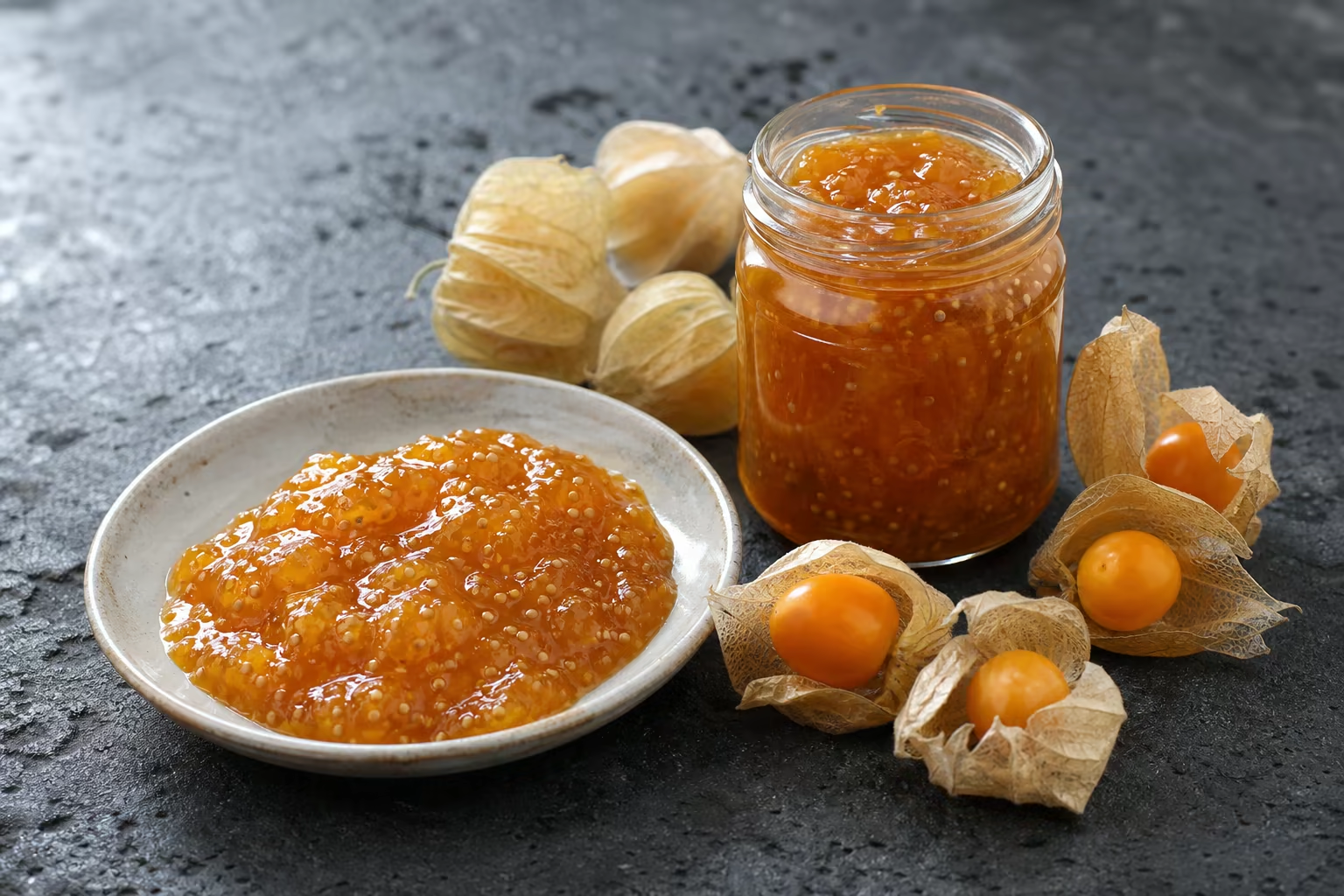
Azorean Capucho Jam
Also known as: Azorean Cape Gooseberry Jam · Capucho Jam · Azorean Physalis Preserve
An Azorean preserve of capucho, the golden berry locally known as rebuçado.
- Origin
- Azores · a recipe collected on Santa Maria and documented production on São Miguel
- Place
- Azores · Santa Maria and São Miguel
- Region
- The Azores
- Category
- Fruit & Honey Sweets
- Season
- Year-round as a preserve; fruit harvested mainly in summer and autumn
- Evidence
- Well documented
Doce de Tomate de Capucho is an Azorean preserve made from Physalis peruviana and sugar. Despite the word ‘tomato’, it does not use the ordinary red tomato: capucho is a small orange berry enclosed in a husk that turns brown when ripe. The fruit is also called rebuçado in the Azores.
The sources document more than one formula and they must not be merged. A recipe collected by Augusto Gomes on Santa Maria uses equal weights of fruit and sugar; a current Quintal dos Açores product made in Candelária, São Miguel, declares 70% capucho and 30% sugar. Sweetness, set and proportion therefore depend on the recipe or producer.
- capucho fruit (Physalis peruviana)
- sugar
DGADR describes the fruit as combining strawberry, kiwi and redcurrant; in the preserve, that fruit profile is balanced by an amount of sugar that varies between documented formulas.
The Santa Maria recipe published by Augusto Gomes uses equal weights of fruit and sugar and a process involving a rest in water; the current Quintal dos Açores label declares 70% fruit and 30% sugar. Doce de capucho and doce de tomate de capucho name this family, but not one standardised formula.
At shops specialising in Azorean products. Marca Açores lists Cooperativa Celeiro da Terra’s Doce de Tomate de Capucho in Povoação, while Quintal dos Açores makes Doce de Capucho in Candelária, both on São Miguel.
The primary sources reviewed document the fruit eaten fresh or as a preserve but do not establish a canonical accompaniment.
Capucho originated in the Andes. DGADR cites an Azorean description published by Edmond Goeze in 1867; regional heritage documentation dates Goeze’s journey to São Miguel to 1866 and publication of his account to the following year. The same DGADR record notes small-scale canned-jam production by Sociedade Corretora Micaelense, founded by Cristiano Pacheco in the early twentieth century. Augusto Gomes included a Santa Maria recipe in his 1998 collection. In 2019, Doce de Tomate de Capucho was nominated for the Seven Wonders of Portuguese Sweets in the Fruit and Honey Sweets category. Marca Açores continues to list the product made by Cooperativa Celeiro da Terra in Povoação.
Well documented
Identity supported by institutional, specialist or corroborating sources.
- tradicional.dgadr.gov.pt/pt/cat/frutos-frescos/775-capucho (opens in a new tab)
- tradicional.dgadr.gov.pt/en/categories/fresh-fruit/1193-capucho-en (opens in a new tab)
- marcaacores.pt/catalogo/b7c89367-cd6b-4585-88cd-cf653425e149 (opens in a new tab)
- marcaacores.pt/catalogo/e964a1d1-366a-4b2e-8d1f-efa3520cb5e7 (opens in a new tab)
- marcaacores.pt/ficheiros/catalogo.pdf (opens in a new tab)
- caruspinus.pt/wp-content/uploads/2019/04/7MARAVILHASDOCESPORTUGAL_LISTA_NOMEADOS_vs2.pdf (opens in a new tab)
- siaram.azores.gov.pt/patrimonio-cultural/jardins-dos-acores/Jardim-Jose-do-Canto/_texto.html (opens in a new tab)
- bparlsr.azores.gov.pt/destaque/exposicao-augusto-gomes/ (opens in a new tab)
- garfadasonline.blogspot.com/2009/06/ (opens in a new tab)
- nevis.pt/produtos/doce-de-capucho-quintal-dos-acores-250g/ (opens in a new tab)
Pastries from here — The Azores
 Catalogue image
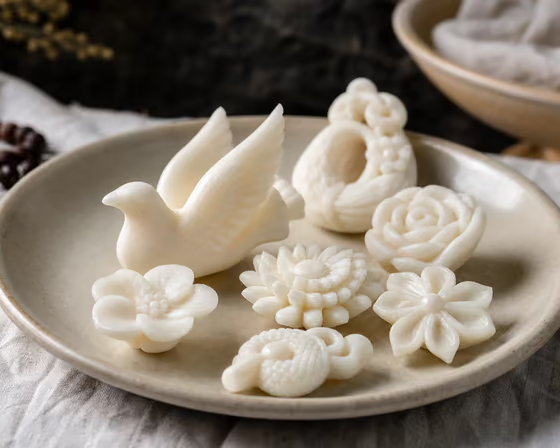
 Alfenim Pulled Sugar
Hand-pulled sugar shaped into animals, flowers, hearts and votive figures.
The Azores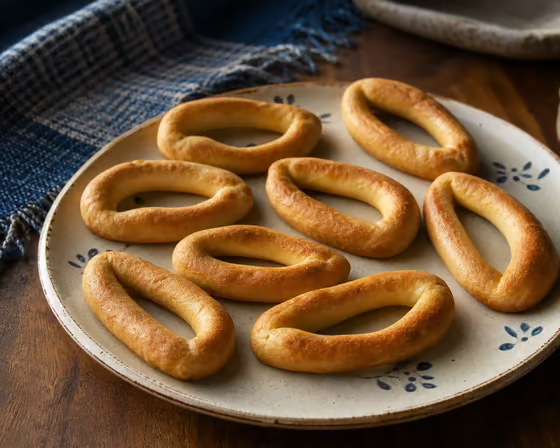 Catalogue image
 Brandy Biscuits
Crisp Santa Maria rings kneaded with eggs, rich fats and a glass of brandy.
The Azores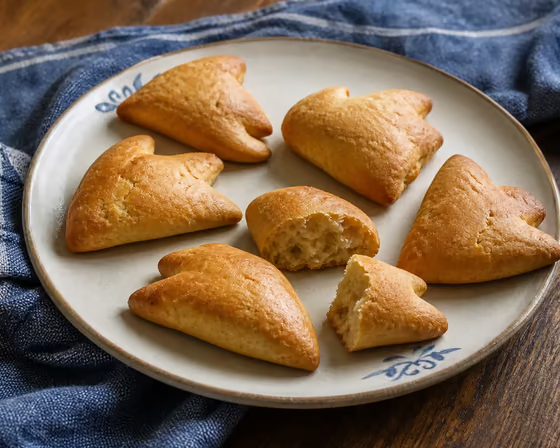 Catalogue image
 Ear-Shaped Biscuits
Santa Maria's triangular enriched biscuits, clipped at the tips like little ears.
The Azores Catalogue image
 Santa Maria Encanelado Biscuits
Santa Maria's yeasted rings under a thick white sugar glaze.
The Azores