Portuguese Pumpkin and Walnut Preserve
Also known as: Pumpkin and Walnut Preserve · Pumpkin Jam with Walnuts
Pumpkin and sugar cooked into a preserve, with walnuts added before filling the jars.
- Origin
- Portugal · home and artisanal preserve with no documented exclusive region
- Place
- Nationwide
- Region
- Nationwide
- Category
- Fruit & Honey Sweets
- Season
- No specific season documented; a jarred preserve
- Evidence
- Well documented
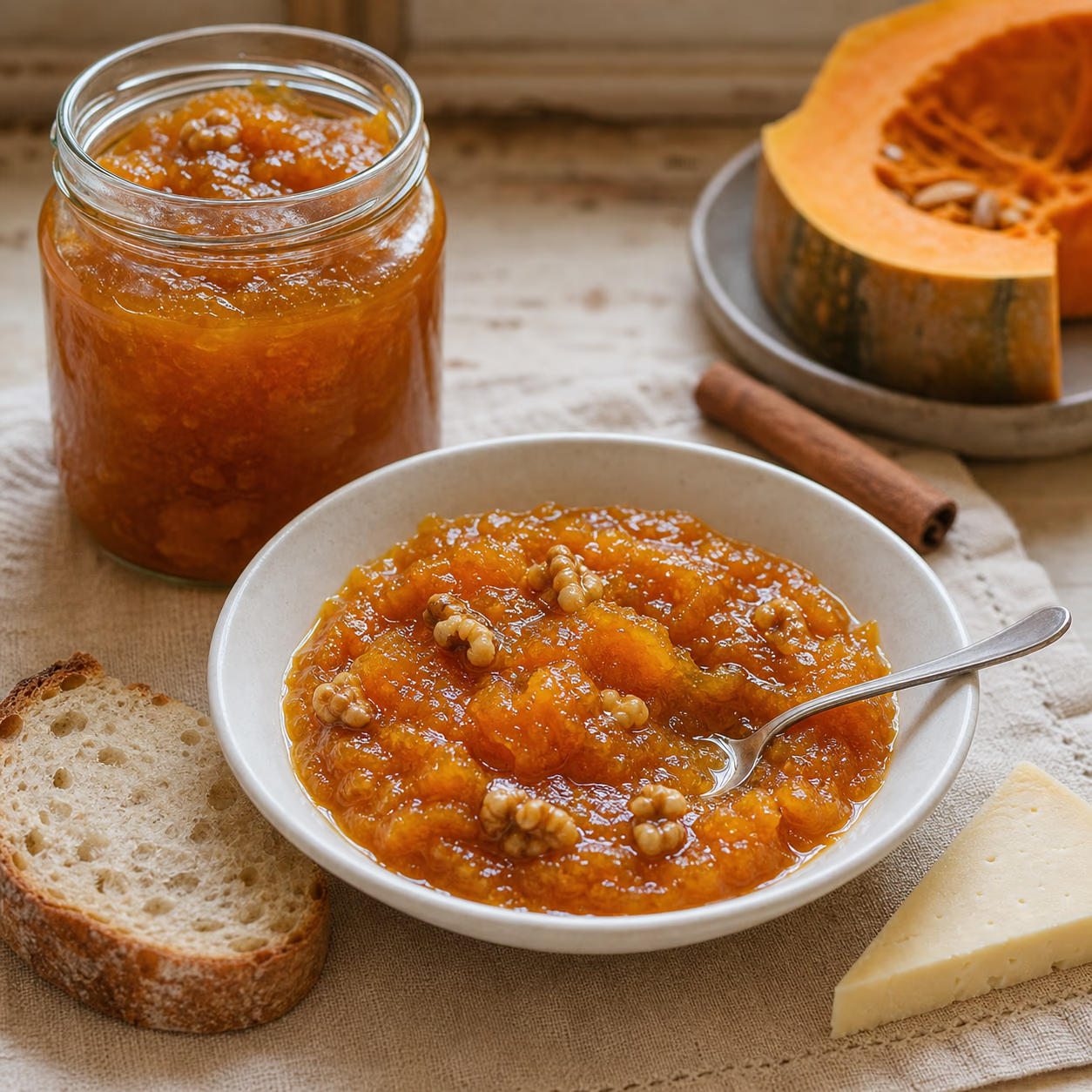
Doce de Abóbora com Noz is a Portuguese jarred preserve made from pumpkin, sugar and walnuts. A domestic recipe published by Teleculinária adds lemon peel and juice and a cinnamon stick: the pumpkin rests with sugar and lemon, cooks over low heat, is blended and receives the walnuts at the end.
Production outside the home is also documented. An academic food-safety report follows an artisanal producer and describes selection, peeling, washing, weighing, cooking pumpkin with sugar, blending, adding walnuts, hot filling, capping and pasteurization. Another academic fruit-preserve development study records a commercial pumpkin-and-walnut product as the basis for a new walnut-and-hazelnut formulation.
Formulas vary: the domestic version uses brown sugar, lemon and cinnamon without added pectin; documented commercial examples may use pectin and citric acid. The image represents orange preserve in a jar with walnut pieces, but it is an editorial interpretation rather than a photograph from an identified producer.
- Pumpkin
- Sugar
- Walnuts
- Lemon in some formulas
- Cinnamon in some formulas
- Pectin or citric acid in some commercial formulas
Pumpkin, sugar and walnuts define the composition; lemon and cinnamon occur in the documented domestic version. Texture, concentration and walnut proportion vary between formulas, so no single verified sensory description applies to every example.
Teleculinária's recipe uses 1 kg pumpkin, 800 g brown sugar and 100 g walnuts, plus lemon and cinnamon. One commercial formula studied academically included pectin; another producer declares pumpkin, sugar, 3% walnuts, pectin, citric acid and cinnamon. Plain pumpkin preserve and versions with almonds or walnut and hazelnut are close relatives rather than identical formulas.
It appears as a home recipe and as an artisanal or commercial jarred product. The sources document specific producers but do not establish uniform nationwide availability; check each product's label for ingredients, allergens and storage instructions.
Teleculinária suggests toast or biscuits; other combinations were not treated as universal in this review.
The reviewed sources establish that the product circulates in Portuguese domestic recipes and artisanal and commercial production. They do not establish a creation date, author, exclusive region of origin or continuous historical lineage, so this page assigns it no specific antiquity.
The academic HACCP report is especially useful for separating a recipe from a safe preservation process: the studied producer used hot filling and controlled pasteurization. A home recipe that does not reproduce a validated process does not automatically become shelf-stable merely because it uses sugar or sterilized jars. This site's recipe is therefore presented for refrigerated storage.
Walnut must be declared as an allergen. The academic case describes the product in glass jars and explicitly identifies tree nuts; a Gardunha producer likewise declares walnut in its ingredient list and refrigeration after opening.
Well documented
Identity supported by institutional, specialist or corroborating sources.
- teleculinaria.pt/receitas/doce-de-abobora-com-noz/ (opens in a new tab)
- comum.rcaap.pt/bitstreams/3cf5a9ff-074c-4520-a175-f6b63107a1e2/download (opens in a new tab)
- comum.rcaap.pt/server/api/core/bitstreams/87d4e788-e863-4b7d-bbd9-aa127efc2d0b/content (opens in a new tab)
- saboresdagardunha.pt/products/doce-de-abobora-com-noz (opens in a new tab)
Pastries from here — Nationwide
 Catalogue image
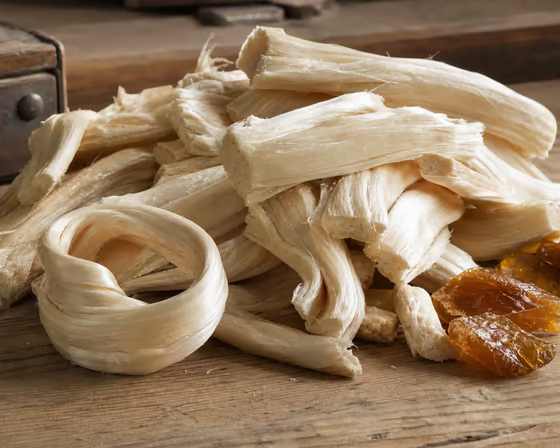
 Alféloa
Sugar or molasses cooked to a hard stage and worked until pale.
Nationwide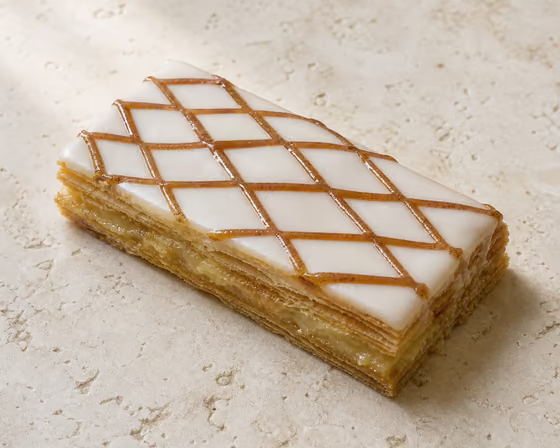 Catalogue image
 Portuguese Gila Allumette
A rectangular puff pastry with cream, gila and cinnamon beneath diamond-patterned royal icing.
Nationwide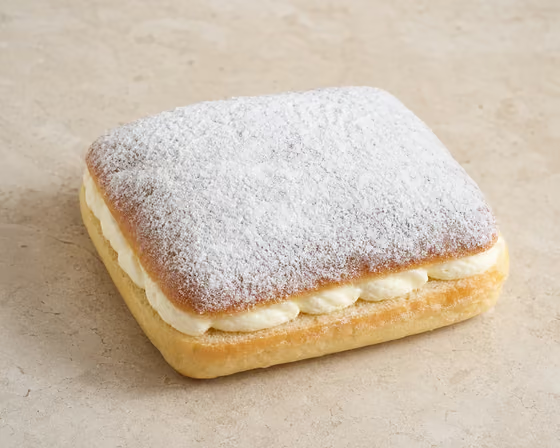 Catalogue image
 Portuguese Brioche Almofada
Light brioche dough, fresh buttercream and icing sugar.
Nationwide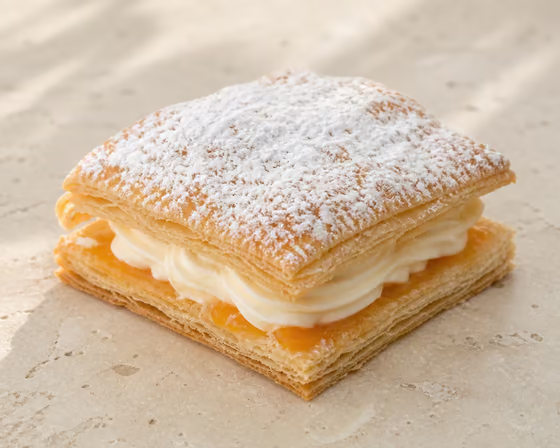 Catalogue image
 Portuguese Puff-Pastry Almofada
Puff pastry with white cream, egg sweet and icing sugar—the laminated Almofada variant.
Nationwide