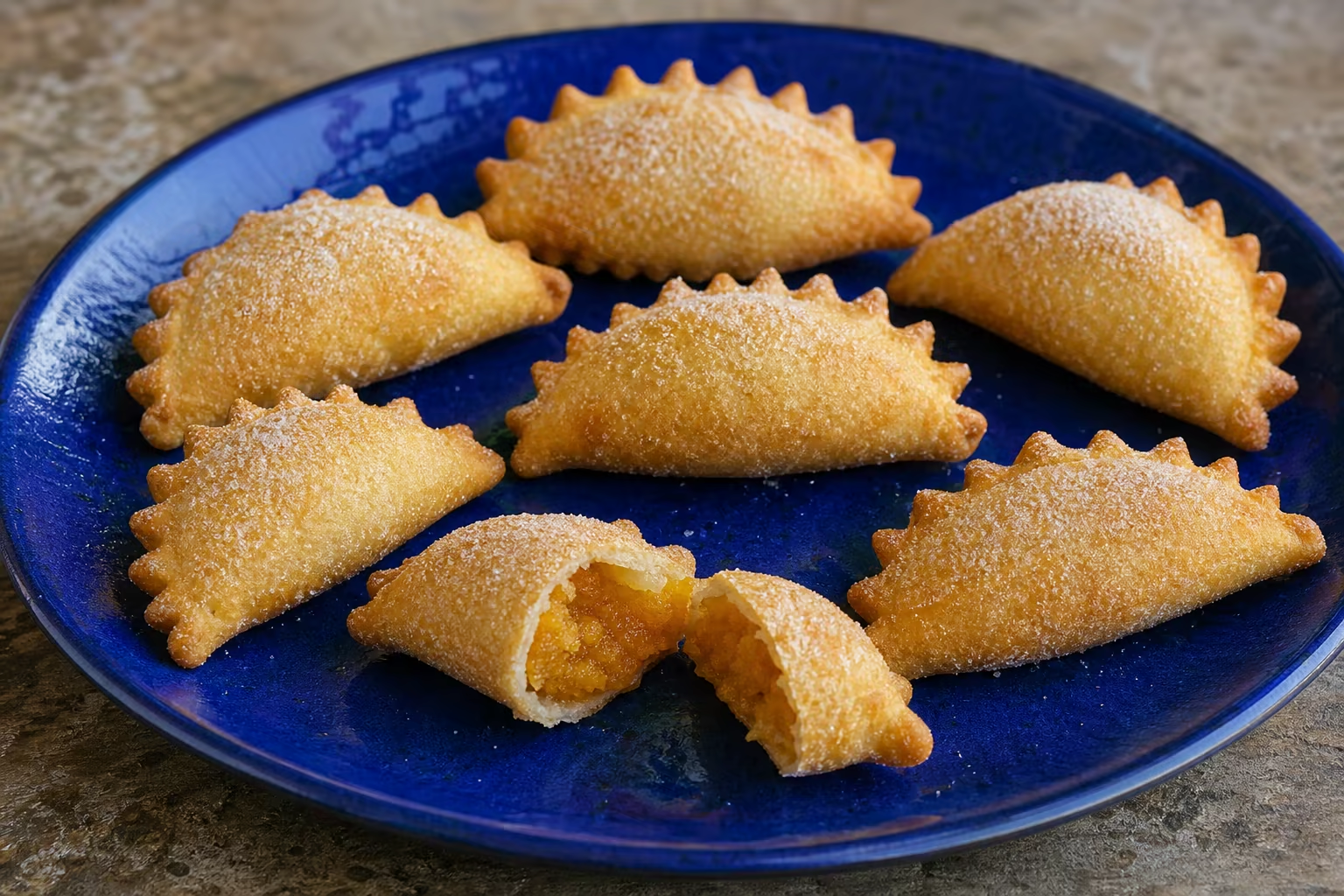
Cockscombs
Also known as: Pastéis de Toucinho · Vila Real Pastries
A crisp pastry crescent with a serrated edge and a sweet almond-and-egg heart.
- Origin
- Convent sweet from Vila Real — traditionally credited to the Poor Clares (17th century onward)
- Place
- Nationwide
- Region
- Nationwide
- Category
- Laminated & Fine Pastries
- Season
- Year-round
- Dough family
- Short or tender pastry A flour-and-fat wrapper mixed directly without puff-pastry folds.
- Evidence
- Well documented
Cristas de galo are half-moons of thin, crisp pastry, sealed along a crimped edge that mimics a rooster's comb. Inside hides a silky filling of almond, egg yolk and sugar — the classic pastel de toucinho filling — playing against the dry, golden shell.
Though now inseparable from Vila Real, they earned national fame when chosen among the 7 Wonders of Portuguese Sweets, and so they travel the country from north to south in the windows of good pastry shops.
Eaten in a few bites, always at room temperature, they are as decorative as they are delicious: a celebration sweet that fits in the palm of your hand.
- Flour
- Lard
- Eggs
- Almond
- Sugar
- Tart apple
- Cinnamon
- Salt
The shell is dry, thin and crisp, almost crumbling; inside, the filling is moist, dense and very sweet, with almond up front and a whisper of cinnamon. The contrast between the crunchy outside and the soft heart is the whole point of the sweet.
The most classic filling is almond, egg yolk and sugar, and many traditional recipes add grated tart apple and cinnamon to lighten and perfume it. The pastry is a thin lard shortcrust; the serrated edge, cut with a pastry wheel, is the dominant visual feature. The nomenclature is not completely stable. DGADR lists “Viuvinhas” among the alternative names for Cristas de Galo, but historical research published by Vila Real municipality and old Pastelaria Gomes advertisements enumerate Viuvinhas/Pastéis de Santa Clara and Pastéis de Toucinho/Cristas de Galo as separate products. This catalogue documents that second historical usage separately.
Vila Real is the natural home of cristas de galo: look for the city's historic pastelarias — Casa Lapão is the best-known reference — and the convent-sweet houses of Trás-os-Montes. Good pastry shops nationwide carry them too, especially since their national recognition. The real thing shows a sharply crimped edge and a dense, deep-yellow centre that is never dry.
They call for a short espresso to offset the sweetness or — very much in the Trás-os-Montes spirit — a small glass of Port or Moscatel. An unsweetened black tea works beautifully too.
Like so many Portuguese sweets, cristas de galo were born in the convent kitchen. Tradition ties them to the Poor Clare nuns of Vila Real — at the Convento de Nossa Senhora do Amparo, of the Order of Saint Clare — where an abundance of egg yolks and almond, a legacy of convent economy, produced a fine filling wrapped in a dough of flour, lard and egg.
For a long time they were known as pastéis de toucinho or Vila Real pastries; the name cristas de galo took hold later, from the resemblance of the crimped edge to a rooster's comb. In 2019 their place among the 7 Wonders of Portuguese Sweets carried them well beyond Trás-os-Montes.
Well documented
Identity supported by institutional, specialist or corroborating sources.
- tradicional.dgadr.gov.pt/pt/cat/doces-e-produtos-de-pastelaria/757-cristas-de-galo (opens in a new tab)
- cm-vilareal.pt/gremio/images/publicacoes/CadCultCovilhetes.pdf (opens in a new tab)
- 7maravilhas.pt/cristas-de-galo/ (opens in a new tab)
- escarpasdocorgo.blogspot.com/2024/10/cristas-de-galo-ou-pasteis-de-toucinho.html (opens in a new tab)
- casalapao.pt/Produtos/cristas-de-galo (opens in a new tab)
Pastries from here — Nationwide
 Catalogue image
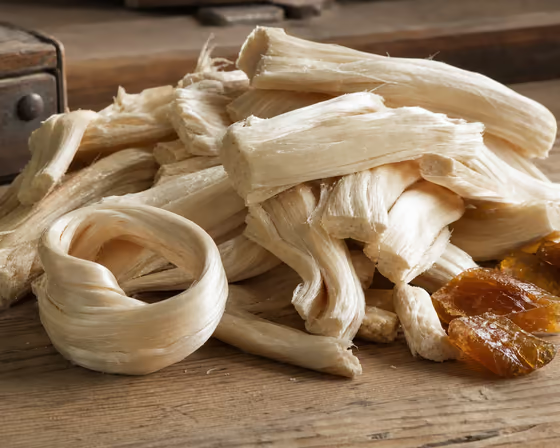
 Alféloa
Sugar or molasses cooked to a hard stage and worked until pale.
Nationwide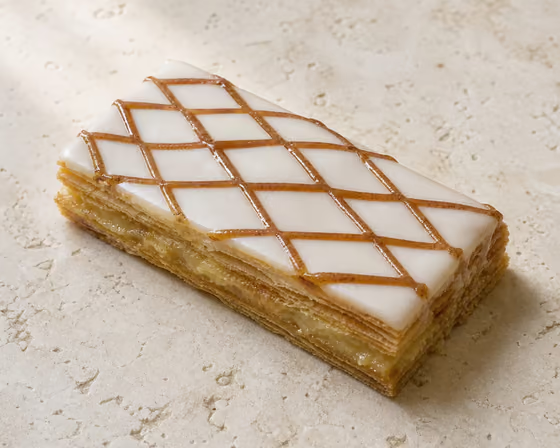 Catalogue image
 Portuguese Gila Allumette
A rectangular puff pastry with cream, gila and cinnamon beneath diamond-patterned royal icing.
Nationwide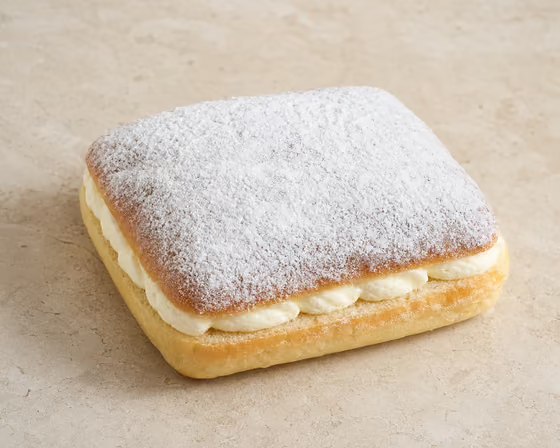 Catalogue image
 Portuguese Brioche Almofada
Light brioche dough, fresh buttercream and icing sugar.
Nationwide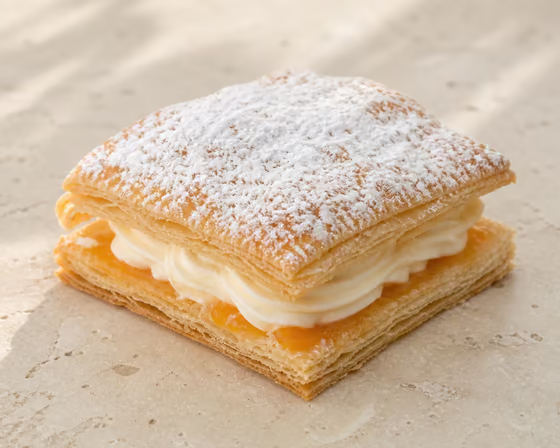 Catalogue image
 Portuguese Puff-Pastry Almofada
Puff pastry with white cream, egg sweet and icing sugar—the laminated Almofada variant.
Nationwide