Alcobaça Abbess's Crown
Also known as: Abbess's Crown · Alcobaça Abbess Crown
A small cylinder of almond, hazelnut, yolks and caramelized chila, crowned with translucent strands.
- Origin
- Alcobaça · contemporary creation by Pastelaria Alcôa
- Place
- Alcobaça
- Region
- The West
- Category
- Convent Sweets
- Season
- Year-round, subject to availability
- Evidence
- Well documented
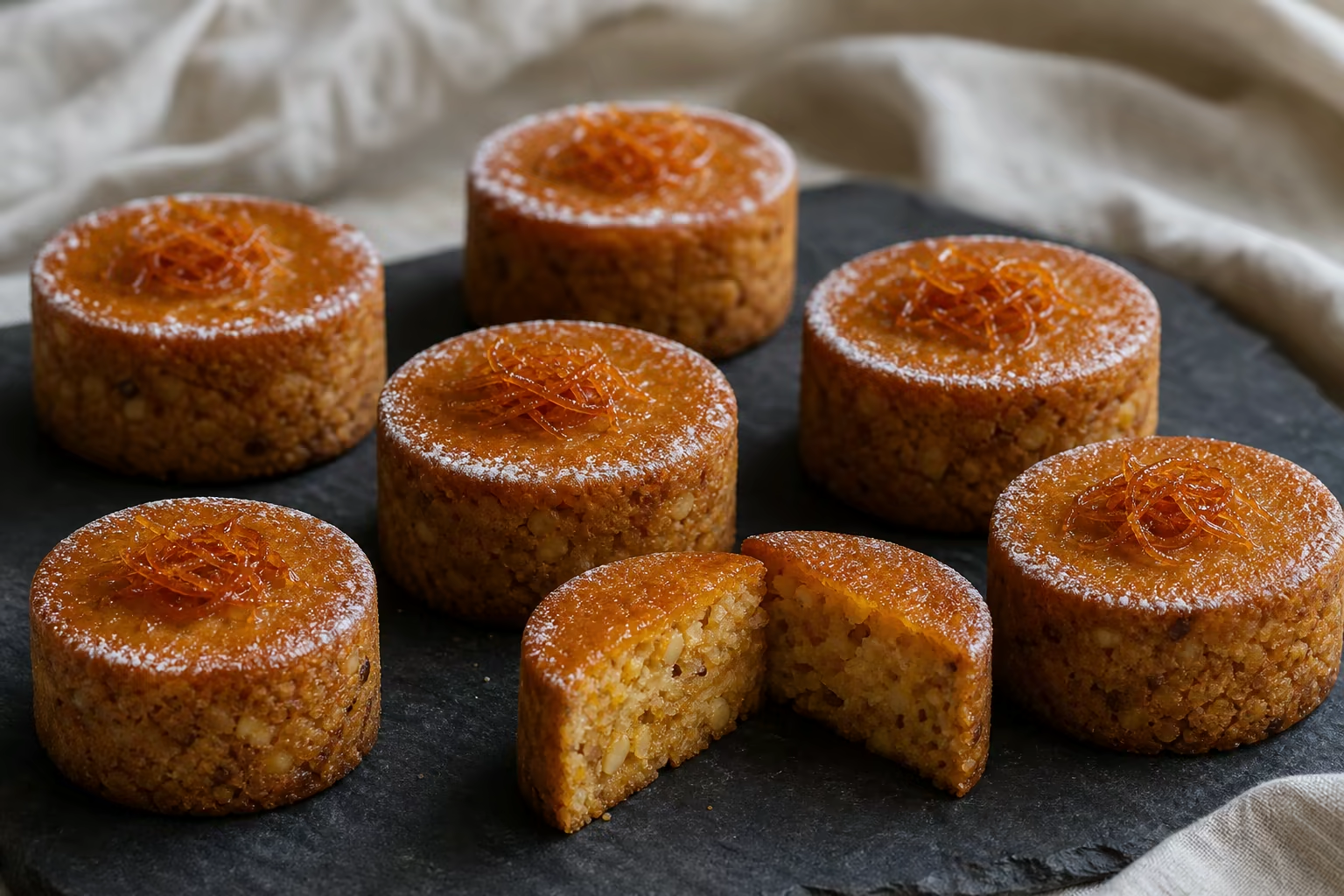
Coroa da Abadessa is a dense, moist individual sweet with a golden-brown body and cylindrical form. Almonds, hazelnuts, yolks, sugar and caramelized chila form its compact body; a pale glossy top carries strands of chila that suggest a small crown.
The speciality speaks the language of Alcobaça's convent confectionery, but it is a contemporary creation. Sources connected to the shop place its emergence in 2017, when Alcôa prepared sweets for Pope Francis's visit to Fátima. That same year, Coroa da Abadessa won first prize in the Best Convent Sweet competition at Alcobaça's international fair.
The commercial formula and proportions are not public. This page records only corroborated ingredients, form and chronology; its image is an original editorial photograph that does not reproduce the producer's packaging, branding or photographic composition.
- Almonds
- Hazelnuts
- Caramelized chila
- Egg yolks
- Sugar
Intensely rich and sweet, with toasted nuts, yolk and moist chila strands in a compact, slightly granular texture.
Handmade pieces vary from nearly round cylinders to slightly faceted forms. The top may carry more or less powdered sugar and chila strands, without changing the compact nut-rich body.
At Pastelaria Alcôa in Alcobaça, opposite the monastery, and at the house's Lisbon shops when available. Confirm before travelling, as the selection can change.
Espresso, black tea or a small serving of Alcobaça ginjinha.
Pastelaria Alcôa has worked opposite the Monastery of Santa Maria de Alcobaça since 1957 and describes its practice as research into and continuation of Cistercian confectionery arts. The house also presents new creations at the International Convent Sweets and Liqueurs Fair—a practice owner Paula Alves summarizes as 'inventing inside a monastery'.
Coroa da Abadessa emerged from that creative context in 2017. It was offered to Pope Francis during his visit to Fátima and, in November, won first prize in the Best Convent Sweet competition at Alcobaça's 19th fair. Its name associates the piece with female convent authority and, according to a 2025 report, symbolizes hope and unity.
It is important to distinguish inspiration from age: the sweet uses ingredients and techniques from convent tradition, but sources identify it as a modern Alcôa creation, not a recovered medieval recipe.
Well documented
Identity supported by institutional, specialist or corroborating sources.
- pastelaria-alcoa.com (opens in a new tab)
- cm-alcobaca.pt/63001/conheca-os-vencedores-das-edicoes-anteriores (opens in a new tab)
- regiaodecister.pt/2017/11/23/alcoa-volta-vencer-premio-na-mostra-de-doces/ (opens in a new tab)
- lusopress.tv/2025/04/24/a-docaria-conventual-da-alcoa-conquistou-o-papa-francisco/ (opens in a new tab)
- uol.com.br/nossa/noticias/redacao/2024/12/12/brasileira-desbravou-portugal-atras-de-doces-e-virou-jurada-do-masterchef.htm (opens in a new tab)
- viagemeturismo.abril.com.br/coluna/portugal-lisboa/os-melhores-doces-portugueses-de-norte-a-sul/ (opens in a new tab)
Pastries from here — The West
 Catalogue image
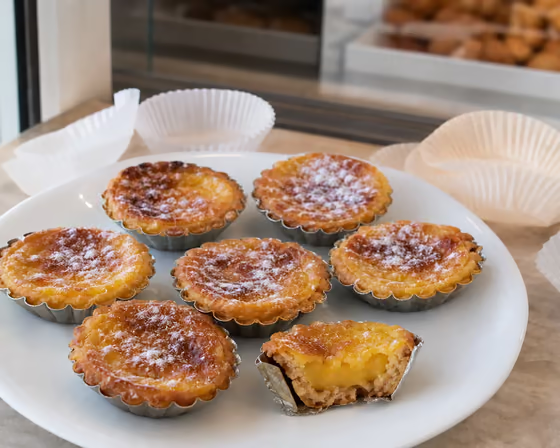
 Friends of Peniche
The sweet named after friends you should not trust.
The West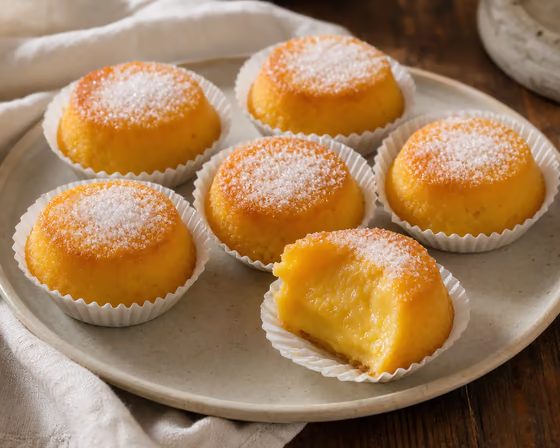 Catalogue image
 Areias Brancas
Small yolk-and-almond pudding cakes, named by the coast and covered with white sugar.
The West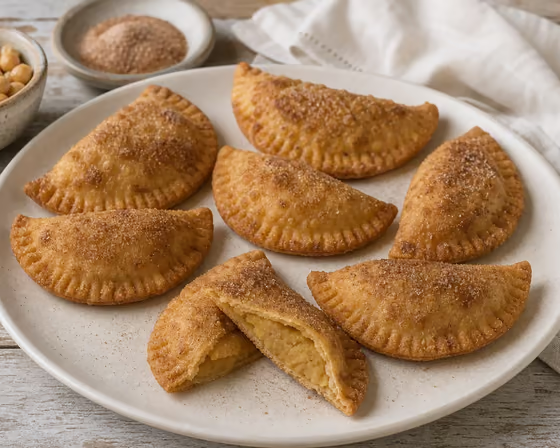 Catalogue image
 Peniche Chickpea Azevias
Thin fried half-moons with a sweet, creamy chickpea, almond and egg-yolk filling.
The West Catalogue image
 Lourinhã DOC Brandy Bonbon
A dark-chocolate bonbon with a Lourinhã DOC brandy heart.
The West