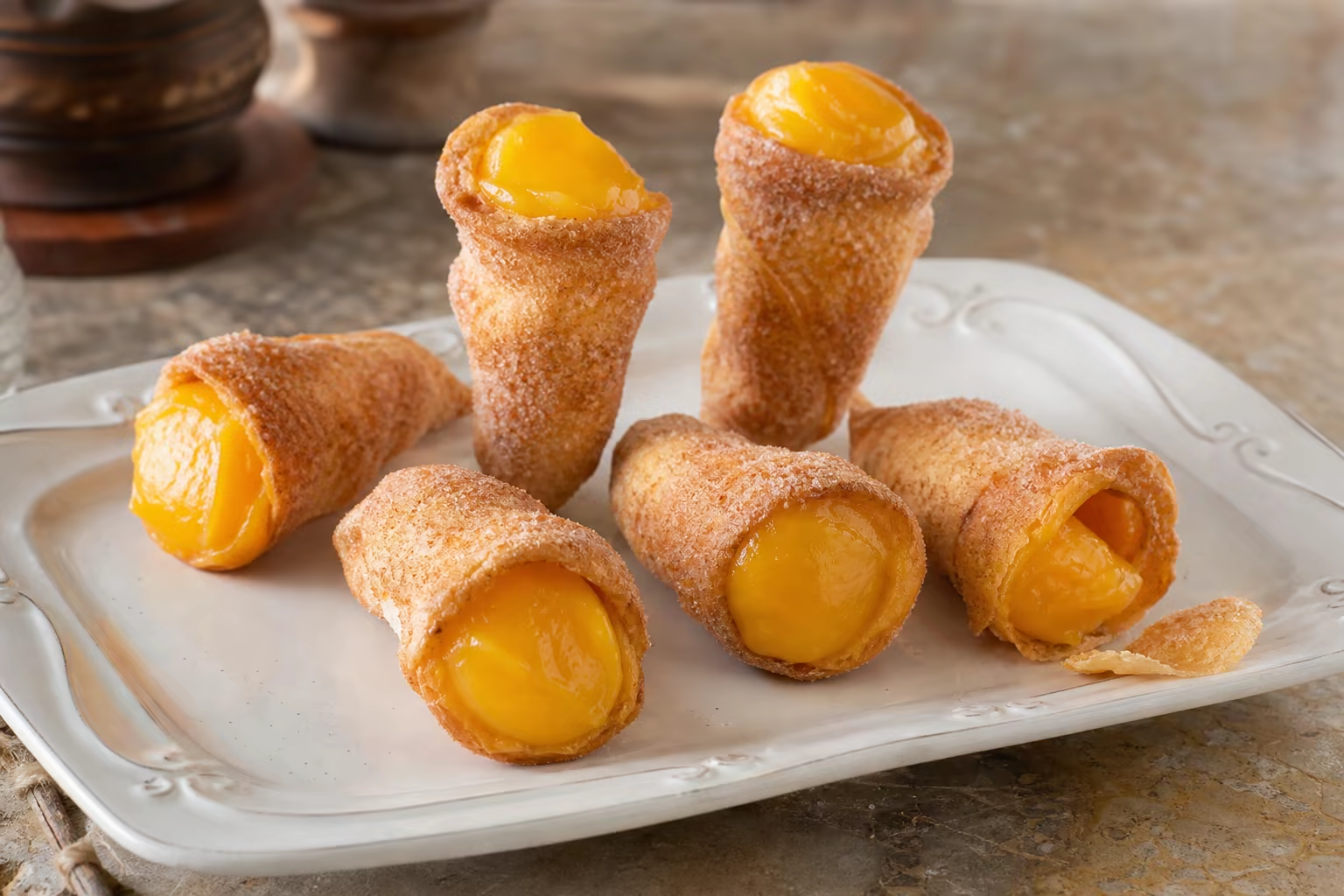
Cornucopias
Also known as: Alcobaça cornucopias · Cornucopias filled with ovos-moles · Cornucopias of Angra do Heroísmo
A crisp pastry horn brimming with ovos-moles, the sweetest emblem of plenty.
- Origin
- Cistercian convents around Alcobaça; traditionally attributed to the Mosteiro de Coz, 13th century
- Place
- Convents
- Region
- Nationwide
- Category
- Convent Sweets
- Season
- Year-round
- Evidence
- Well documented
The cornucopia is pastry made into an image: a thin, brittle cone of dough, shaped into a horn, fried or baked until golden, then filled with ovos-moles — that silky cream of egg yolks and sugar cooked to just the right point. The name comes from the classical horn-shaped vessel, a symbol of plenty, and the sweet honours it literally: it is always filled to overflowing.
It is one of the most elegant relics of Portuguese conventual pastry. Small, golden, sometimes dusted with almond or sugar, it sets the crackle of the shell against a soft, vivid-yellow interior. You eat it in two or three bites, but the impression lingers.
Tied above all to Alcobaça, in central Portugal, it is also a specialty of Angra do Heroísmo, on Terceira Island in the Azores, where it took on a character of its own — proof of how a convent idea travelled and put down roots.
- Flour
- Butter
- Lard
- Sugar
- Egg yolks
- Ground almonds
- Water
First comes the crack: the thin, dry shell snaps cleanly. Then the filling arrives — dense, glossy ovos-moles with the deep sweetness of yolks cooked to a sugar thread, balanced by the plainness of the pastry. Rich without being cloying, finished by a toasty note of almond.
The shape stays constant — always the cone — but the detail shifts. In Alcobaça the ovos-moles filling and an almond or sugar finish dominate; in Angra do Heroísmo, on Terceira Island, cornucopias follow a kindred recipe with a character of their own, sometimes working toasted breadcrumbs into the dough. Some bakers fry the shell, others bake it, and thickness varies from house to house.
Look for them in Alcobaça, their birthplace, in the town's historic pastry shops — Pastelaria Alcôa, founded in 1957 across from the Monastery, is among the most decorated and counts the cornucopia as its signature, honoured at the town's International Exhibition of Conventual Sweets and Liqueurs. The real ones have a thin shell and a freshly made ovos-moles filling; be wary of those plugged with industrial yellow cream. In the Azores, they are a specialty of Angra do Heroísmo.
Calls for a short, bitter espresso, or a glass of fortified wine — a moscatel or a Port — to stand up to the intense sweetness of the yolks. A plain black tea also works to cleanse the palate between bites.
The creation of cornucopias is traditionally attributed to the convents around Alcobaça, in particular the Mosteiro de Coz — a Cistercian nunnery founded in the 12th century and dependent on the great Abbey of Alcobaça — with the sweet itself dated by tradition to the 13th century. As with almost all conventual pastry, it was born of monastic thrift: egg whites were used to starch habits and clarify wine, leaving mountains of yolks that, married with sugar and almonds, produced some of the country's most celebrated sweets.
After the religious orders were dissolved in 1834, the recipes passed from the cloisters into the hands of secular confectioners, who kept them alive. In Alcobaça, Joaquina Conceição Crespo — born in Leiria and settled in the town in 1928 — is remembered as one of the first to make cornucopias for sale. Through the 20th century the tradition took hold in the town's pastry shops, and the cornucopia became one of Alcobaça's signature sweets, a fixture at the town's International Exhibition of Conventual Sweets and Liqueurs.
Well documented
Identity supported by institutional, specialist or corroborating sources.
- pt.wikipedia.org/wiki/Cornuc%C3%B3pia_(doce) (opens in a new tab)
- doceselicoresconventuaisalcobaca.wordpress.com/2016/09/13/cornucopias/ (opens in a new tab)
- jornaldeleiria.pt/noticia/cornucopia-e-rainha-na-mostra-de-doces-conventuais (opens in a new tab)
- centerofportugal.com/article/sweet-alcobaca (opens in a new tab)
- amodadoflavio.pt/2020/02/cornucopias-um-doce-acoriano-com-historia-e-sabor/ (opens in a new tab)
- cozinhaacoriana.pt/cornucopias/ (opens in a new tab)
Pastries from here — Nationwide
 Catalogue image
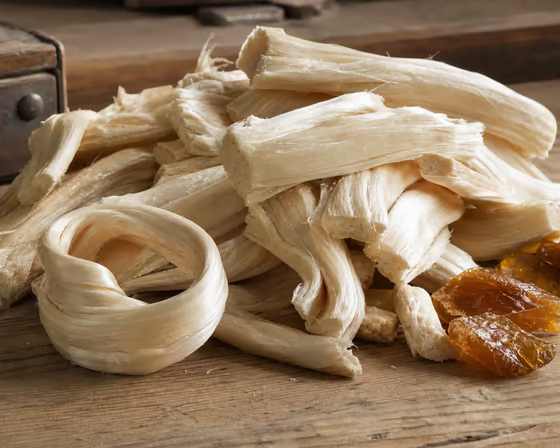
 Alféloa
Sugar or molasses cooked to a hard stage and worked until pale.
Nationwide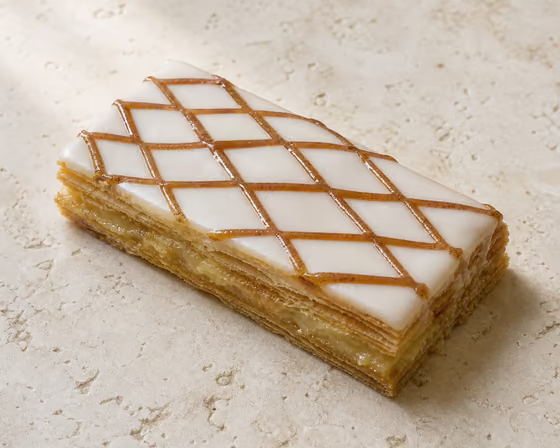 Catalogue image
 Portuguese Gila Allumette
A rectangular puff pastry with cream, gila and cinnamon beneath diamond-patterned royal icing.
Nationwide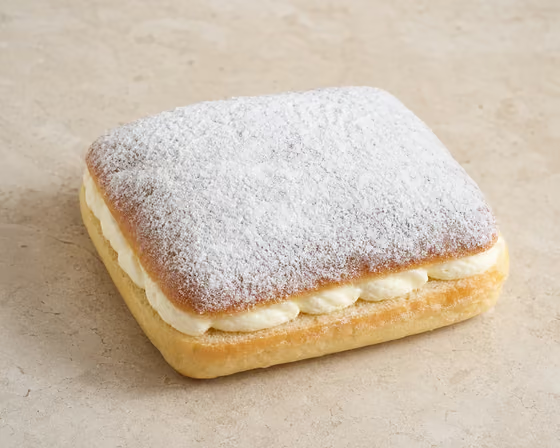 Catalogue image
 Portuguese Brioche Almofada
Light brioche dough, fresh buttercream and icing sugar.
Nationwide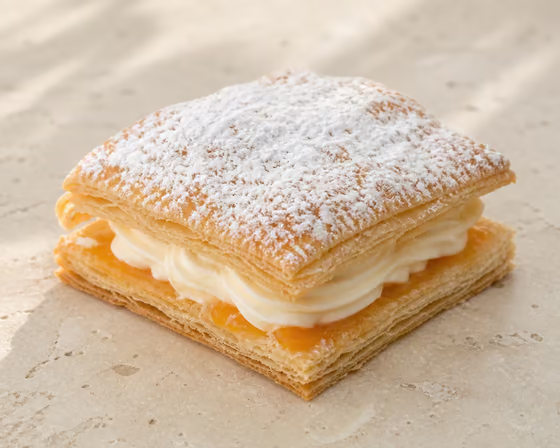 Catalogue image
 Portuguese Puff-Pastry Almofada
Puff pastry with white cream, egg sweet and icing sugar—the laminated Almofada variant.
Nationwide