Fão Clarinhas
Also known as: Clarinhas · Pastéis de Lili · Gila pastries
The golden half-moon that made Fão a byword for sweetness.
- Origin
- Fão · Lower Minho · documented since the late 19th century
- Place
- Fão
- Region
- The North
- Category
- Fried Sweets
- Season
- Year-round
- Evidence
- Well documented
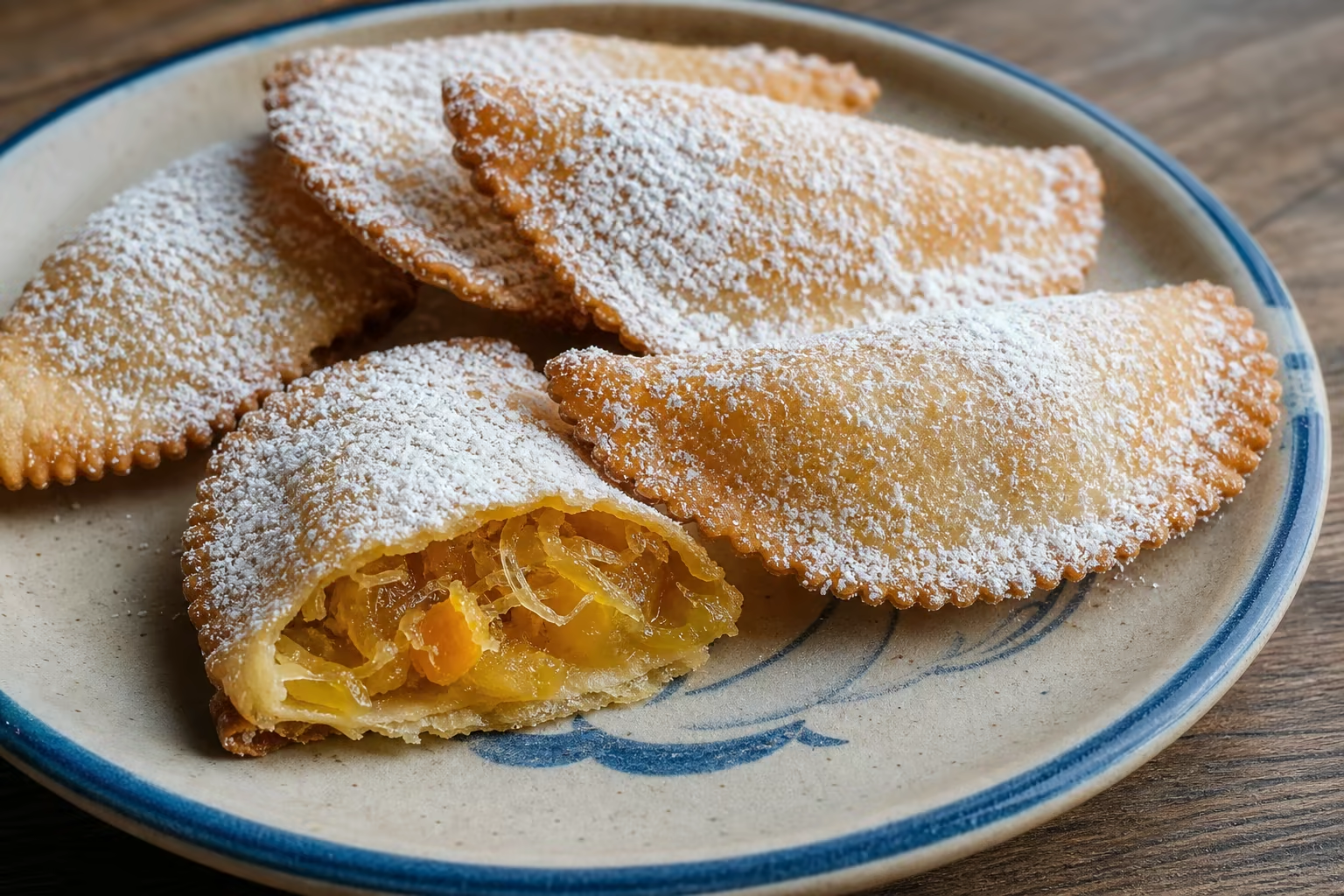
Clarinhas de Fão are small thin-pastry turnovers, folded into half-moons and crimped with a pastry wheel, concealing a thick filling of gila-pumpkin preserve bound with egg yolks. They are fried in olive oil until the pastry turns a crisp golden colour, then served dusted with icing sugar that floats off with every bite.
At first glance they are modest — a few fingers of pastry puffy from the oil, with crimped edges left by the serrated wheel. But in the mouth they reveal the contrast that made them celebrated: the light, warm shell yields to a soft interior fragrant with lemon and cinnamon, sweet without being cloying.
They are eaten at room temperature or still warm, at the end of a meal or mid-afternoon, and form part of the sweet imagination of everyone who passes through Esposende and the village of Fão.
- Flour
- Eggs (yolks)
- Gila pumpkin preserve
- Sugar
- Lemon zest
- Cinnamon
- Olive oil (for frying)
- Icing sugar (for dusting)
The pastry turns light and crisp from frying, set against a soft, threaded gila-and-yolk filling that is sweet and scented with lemon and cinnamon. The dusting of icing sugar rounds it off without weighing it down.
Some shape them as half-moons, others prefer a rectangular form. Descendant confectioners offer versions with their own names and proportions — hence the nicknames pastéis de Lili or gila pastries — varying the amount of yolk, the depth of cinnamon, or the thinness of the pastry.
They are found above all in the bakeries and confectioners of the village of Fão and the wider Esposende area, on the Minho coast, where they are still made by hand. They make an almost obligatory souvenir for anyone visiting the mouth of the Cávado.
They call for a strong coffee or a cup of tea, yet pair beautifully with a Port or a Moscatel, whose liqueur-like sweetness echoes the gila and cinnamon.
Sources agree on the association with Fão and knowledge of the sweet since the late nineteenth century, but disagree about its origin. One version attributes its invention to Santa Clara Convent; another points to Confeitaria Salvação, founded in Barcelos in 1830; and local narratives connect the name to a seller called Clara. Without primary documentation linking these accounts, none should be presented as established fact.
What can be verified is continuity in Fão. Esposende's tourism portal identifies current production and sale in the town, while municipal material includes Clarinhas in the local gastronomic offer. This entry therefore treats them as a historic Fão speciality and preserves origin stories as oral tradition.
Well documented
Identity supported by institutional, specialist or corroborating sources.
- pt.wikipedia.org/wiki/Clarinhas (opens in a new tab)
- tradicoesdoces.com/post/clarinhas-de-fao (opens in a new tab)
- bloguedominho.blogs.sapo.pt/esposende-ja-provou-as-clarinhas-de-fao-38409979 (opens in a new tab)
- revistadevinhos.pt/comer/harmonizacao-clarinhas-de-fao (opens in a new tab)
- lp.visitesposende.com/produtos-endogenos/clarinhas/ (opens in a new tab)
Pastries from here — The North
 Catalogue image
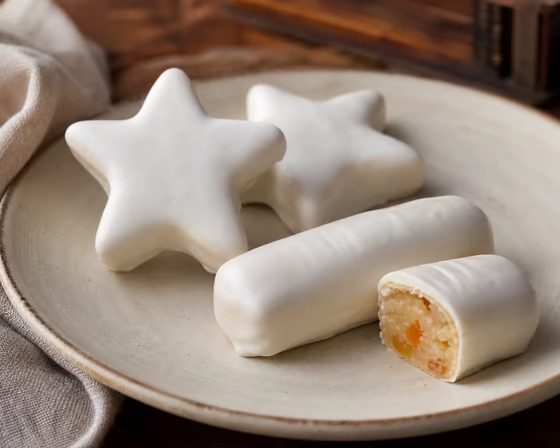
 A Bella Queijadinha de Barcelos
A white star of almond, preserved fruit and family memory.
The North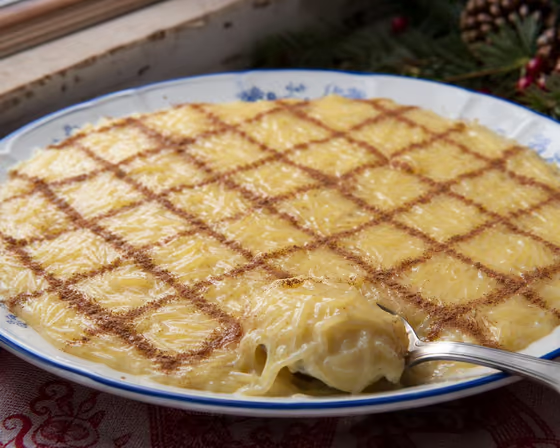 Catalogue image
 Sweet Vermicelli
Fine wheat threads simmered in milk and yolk, scored with cinnamon.
The North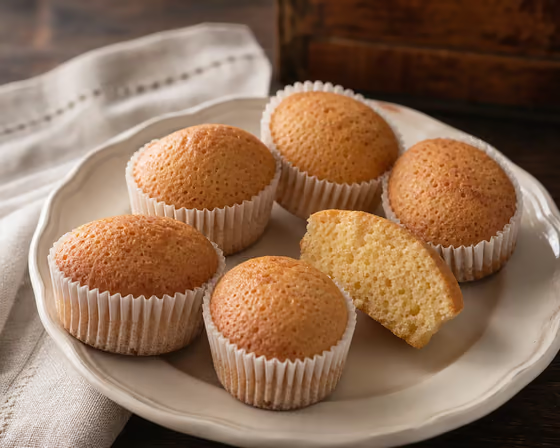 Catalogue image
 Amarantinos
Small egg, lemon and cinnamon cakes whose historical identity is not told consistently by the sources.
The North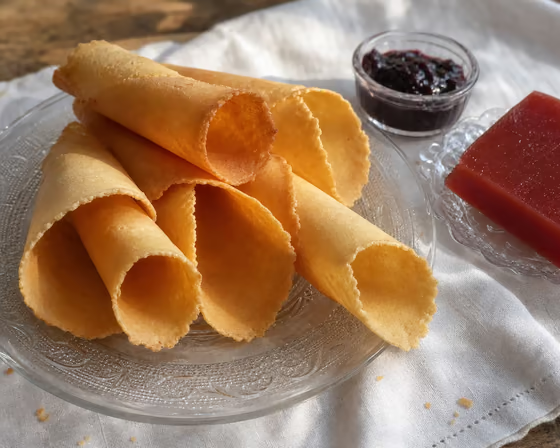 Catalogue image
 Vieira do Minho Cone Wafers
Paper-thin crisp wafers, iron-baked and rolled by hand while still hot.
The North