Aldeia das Dez Corn-Flour Cavacas
Also known as: Aldeia das Dez Corn-Flour Cavacas
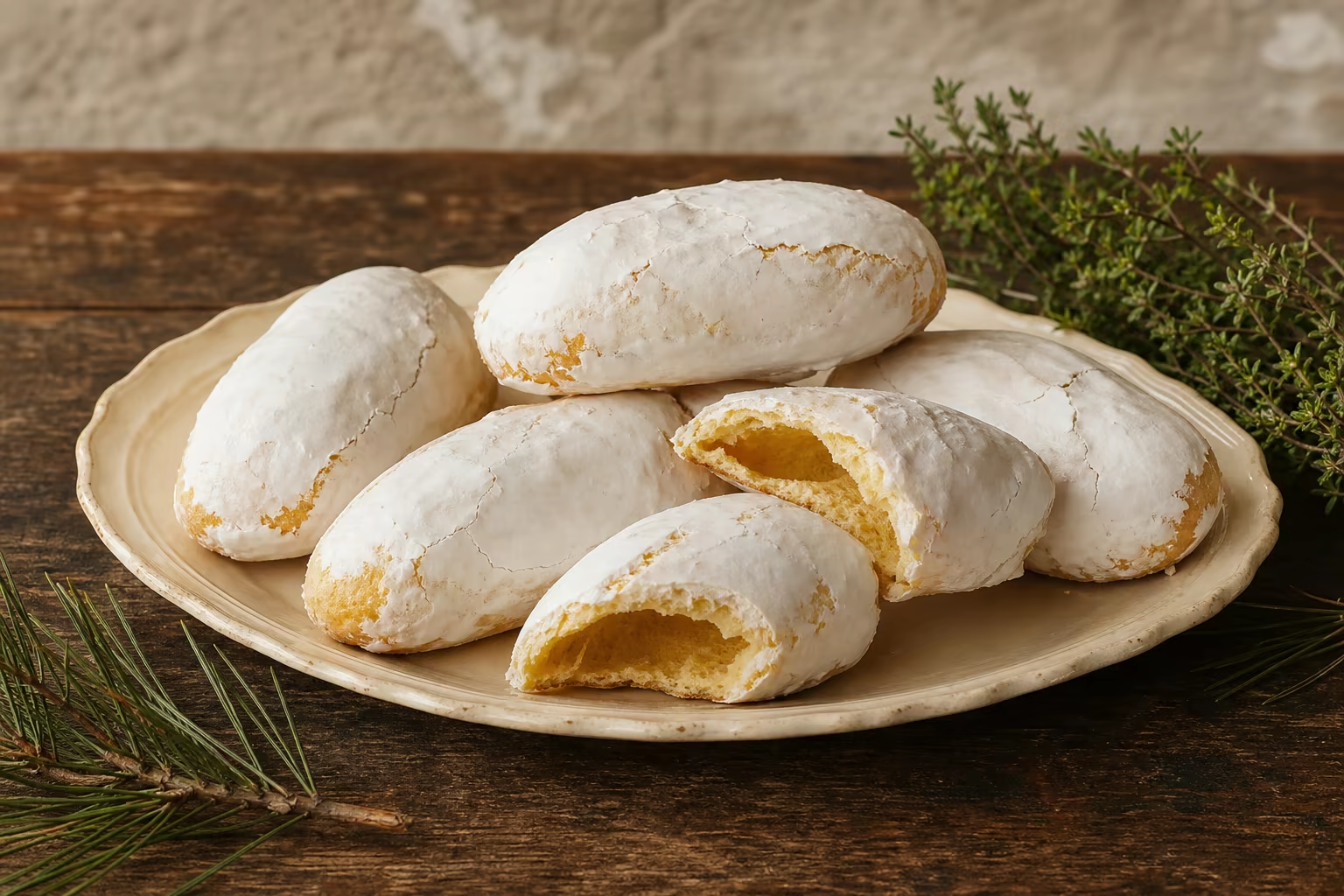
Hollow corn-flour cavacas, wood-fired and coated with lemon sugar icing.
- Origin
- Aldeia das Dez · Alva Valley, Oliveira do Hospital
- Place
- Aldeia das Dez · Oliveira do Hospital
- Region
- The Centre
- Category
- Festive & Seasonal
- Season
- Religious feasts · pilgrimages · weddings and baptisms
- Evidence
- Well documented
Cavacas de Aldeia das Dez are dry, hollow, lightweight cakes made with corn flour, eggs and olive oil. They bake in a wood-fired oven until risen and set into a golden shell, then receive a white coating of egg whites beaten at length with sugar and a little lemon juice.
Corn flour is the signature of this Alva Valley cavaca. Its dough should not be confused with wheat-flour cavacas elsewhere: the inside is dry and hollow, while the coating forms an opaque, sweet, citrus-scented and slightly brittle layer.
Traditionally the iced cakes dried in the sun on carqueja or pine needles. The finished sweets kept well, travelled easily and suited the abundant platters of pilgrimages, weddings and baptisms.
- Corn flour
- Eggs
- Olive oil
- Egg whites
- Sugar
- Lemon juice
Dry, light and brittle, with gentle corn and olive-oil notes beneath a very sweet white icing sharpened by lemon.
Size, irregular shape and icing thickness vary by maker. The essential marker is unmixed corn flour, distinguishing these cavacas from wheat-based versions in Coimbra, Caldas da Rainha, Resende and Lafões.
In Aldeia das Dez and other Alva Valley settlements, especially at feasts, pilgrimages and Oliveira do Hospital food events; traditional production may be seasonal or made to order.
Coffee, lemon tea or an Aldeia das Dez medronho liqueur.
The tradition belongs to the north of Oliveira do Hospital municipality and the Alva Valley settlements, though Aldeia das Dez became its best-known reference. Production was tied to religious feasts, pilgrimages, weddings and baptisms and depended on household ingredients: corn ground on millstones, olive oil and eggs.
Cavacas were made to order. Local memory also preserves an ingenious use for leftover icing: it was shaped into tiny pearls, threaded into sugar necklaces and sold to children after Sunday mass, a practice remembered at least into the 1960s.
Well documented
Identity supported by institutional, specialist or corroborating sources.
- turismodocentro.pt/artigo/pascoa-receitas-centro-de-portugal/ (opens in a new tab)
- enoturismo.pt/guia/cavacas/ (opens in a new tab)
- visitregiaodecoimbra.pt/wp-content/uploads/2023/01/ta-bua_oliveira_hospital_final_print_compressed.pdf (opens in a new tab)
- eubrdialogues.com/sites/default/files/acoes/documentos/049xlix_lista_de_produtos_tradicionais_portugueses_v_19_0.pdf (opens in a new tab)
Pastries from here — The Centre
 Catalogue image
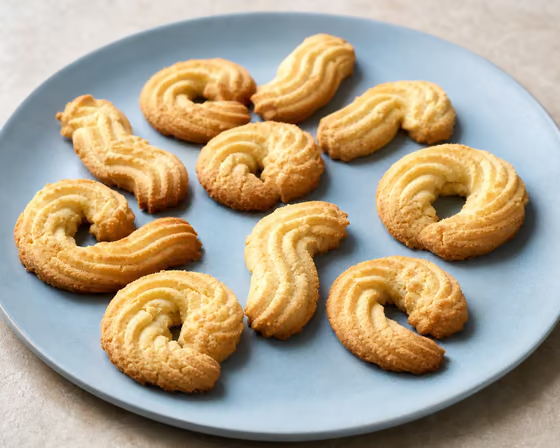
 Ílhavo Piped Butter Biscuits
Regional buttery biscuits piped into deeply ridged rings and curves.
The Centre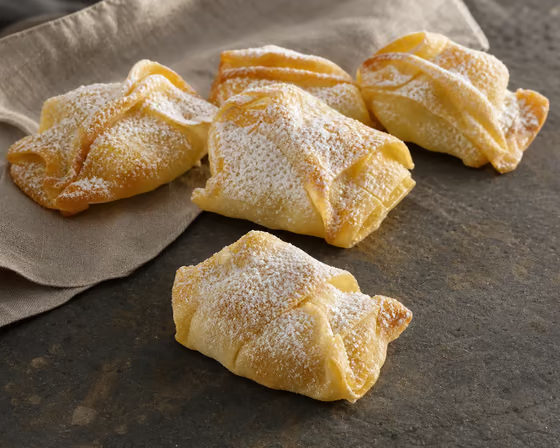 Catalogue image
 Saint Friar Gil’s Saddlebags
The small saddlebag-shaped pastry created at Vouzela’s vocational school and recognised as an innovative sweet.
The Centre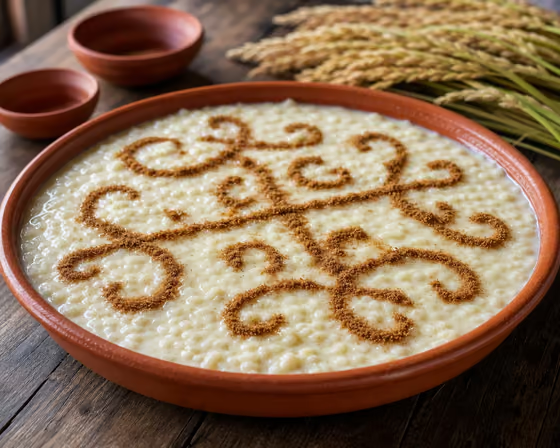 Catalogue image
 Baixo Mondego Rice Pudding
Mondego Carolino rice and Gândara milk, traced with cinnamon.
The Centre Catalogue image
 Arrufada de Coimbra
Coimbra's light, fragrant sweet bread, given by godparents at Easter.
The Centre