Cameos
Also known as: Walnut camafeus · Azorean cameos
Tiny sugar-and-walnut cameos, hand-set like jewels upon the table.
- Origin
- 19th century · Conventual confectionery of Terceira island (Angra do Heroísmo)
- Place
- Angra do Heroísmo
- Region
- The Azores
- Category
- Convent Sweets
- Season
- Year-round · especially at Christmas and festivities
- Evidence
- Well documented
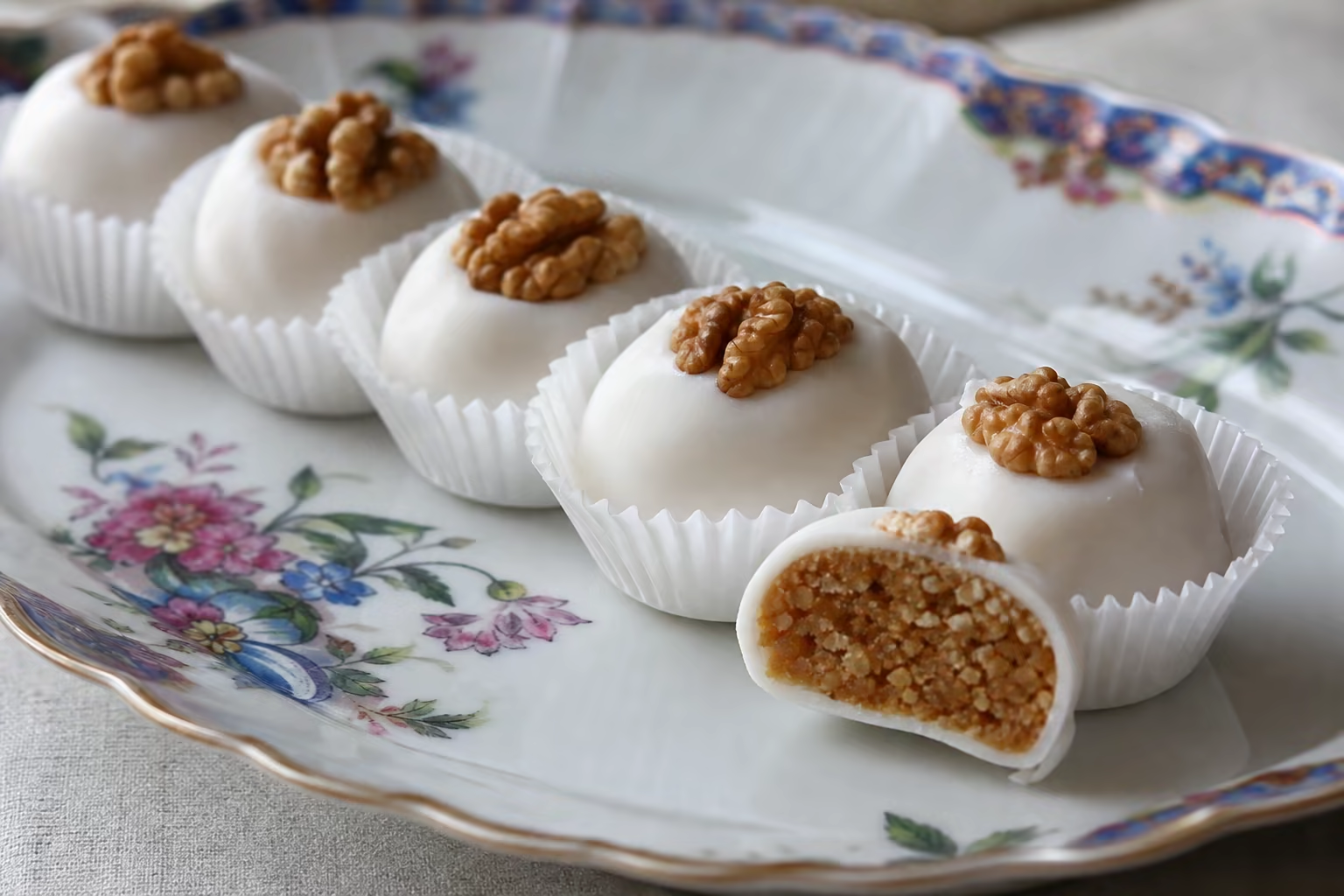
The camafeus are tiny sweets from Terceira island, no bigger than a walnut, concentrating the full intensity of the Azorean nut. The filling begins with a sugar syrup brought to the right stage, to which grated walnuts and eggs are added, stirred over the heat until the paste is firm enough to be shaped by hand into perfect little balls.
Each ball is dipped in a beaten sugar icing that, as it dries, dresses the sweet in a white, matt mantle perfumed with a few drops of lemon. On top sits a walnut half, placed in relief in a gesture that gives the sweet its name and its jewel-like silhouette.
They are served in small paper doily cases, lined up in boxes like miniature pieces of goldsmithery — proper to celebration tables, baptisms and the Terceira Christmas.
- Ground walnuts
- Sugar
- Egg yolks
- Egg whites
- Water
- Lemon juice
- Walnut halves (to decorate)
Intensely walnut and deeply sweet: the centre is soft and faintly grainy, wrapped in a glacé shell that crackles lightly and melts into sugar. A whisper of lemon cuts the sweetness just enough to keep it lively.
The classic version always uses walnut, but you will find camafeus scented with cinnamon or a touch of liqueur, and each Angra pastry shop guards its own syrup stage and thickness of glaze.
Seek them out in the traditional pastry shops of Angra do Heroísmo on Terceira, such as Athanásio or O Forno, and at Azorean celebration tables, especially at Christmas.
They call for a strong coffee or a small glass of Pico wine or liqueur, which balance their concentrated sweetness.
The camafeu belongs to the rich conventual confectionery of Terceira, heir to the convents of Angra do Heroísmo — among them the Convent of São Gonçalo, the city's oldest, and the Convent of Esperança. When the religious orders were suppressed in Portugal in 1834, the nuns' recipes passed to the women who worked in the convents and, with them, into the domestic and commercial confectionery of the island, sustained by the sugar that arrived in abundance and by the egg yolks plentiful in a land of great egg production.
The name evokes cameos — small pieces of carved stone, in bas-relief, that adorned the jewellery and feminine ornaments of the nineteenth century, worn at the breast on ribbons. The walnut half crowning the white icing recreates, in edible miniature, that figure in relief, and fixed the sweet as one of the emblems of Terceira confectionery.
Well documented
Identity supported by institutional, specialist or corroborating sources.
- tradicional.dgadr.gov.pt/pt/cat/doces-e-produtos-de-pastelaria/696-camafeus (opens in a new tab)
- myangra.com/docaria-conventual-na-ilha-terceira/ (opens in a new tab)
- cozinhaacoriana.pt/camafeus/ (opens in a new tab)
Pastries from here — The Azores
 Catalogue image
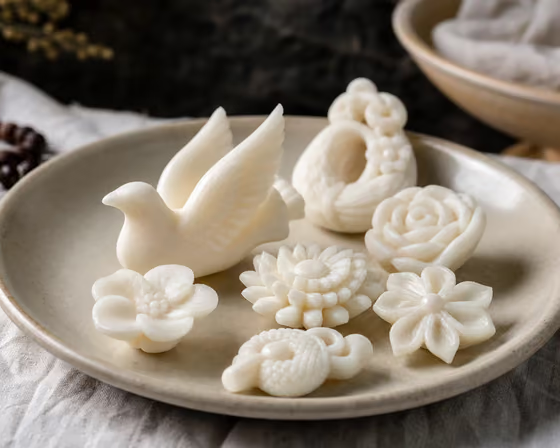
 Alfenim Pulled Sugar
Hand-pulled sugar shaped into animals, flowers, hearts and votive figures.
The Azores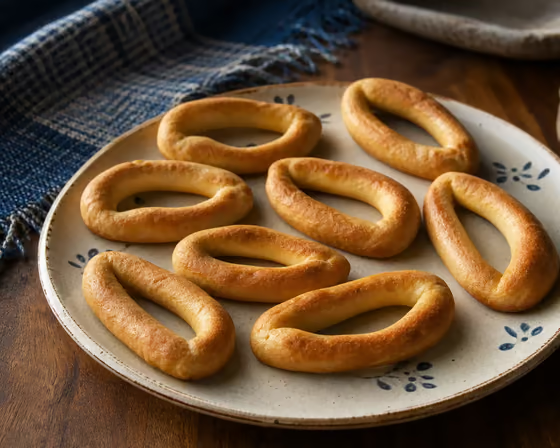 Catalogue image
 Brandy Biscuits
Crisp Santa Maria rings kneaded with eggs, rich fats and a glass of brandy.
The Azores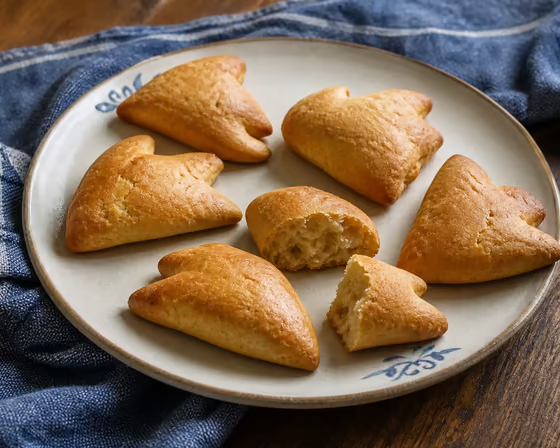 Catalogue image
 Ear-Shaped Biscuits
Santa Maria's triangular enriched biscuits, clipped at the tips like little ears.
The Azores Catalogue image
 Santa Maria Encanelado Biscuits
Santa Maria's yeasted rings under a thick white sugar glaze.
The Azores