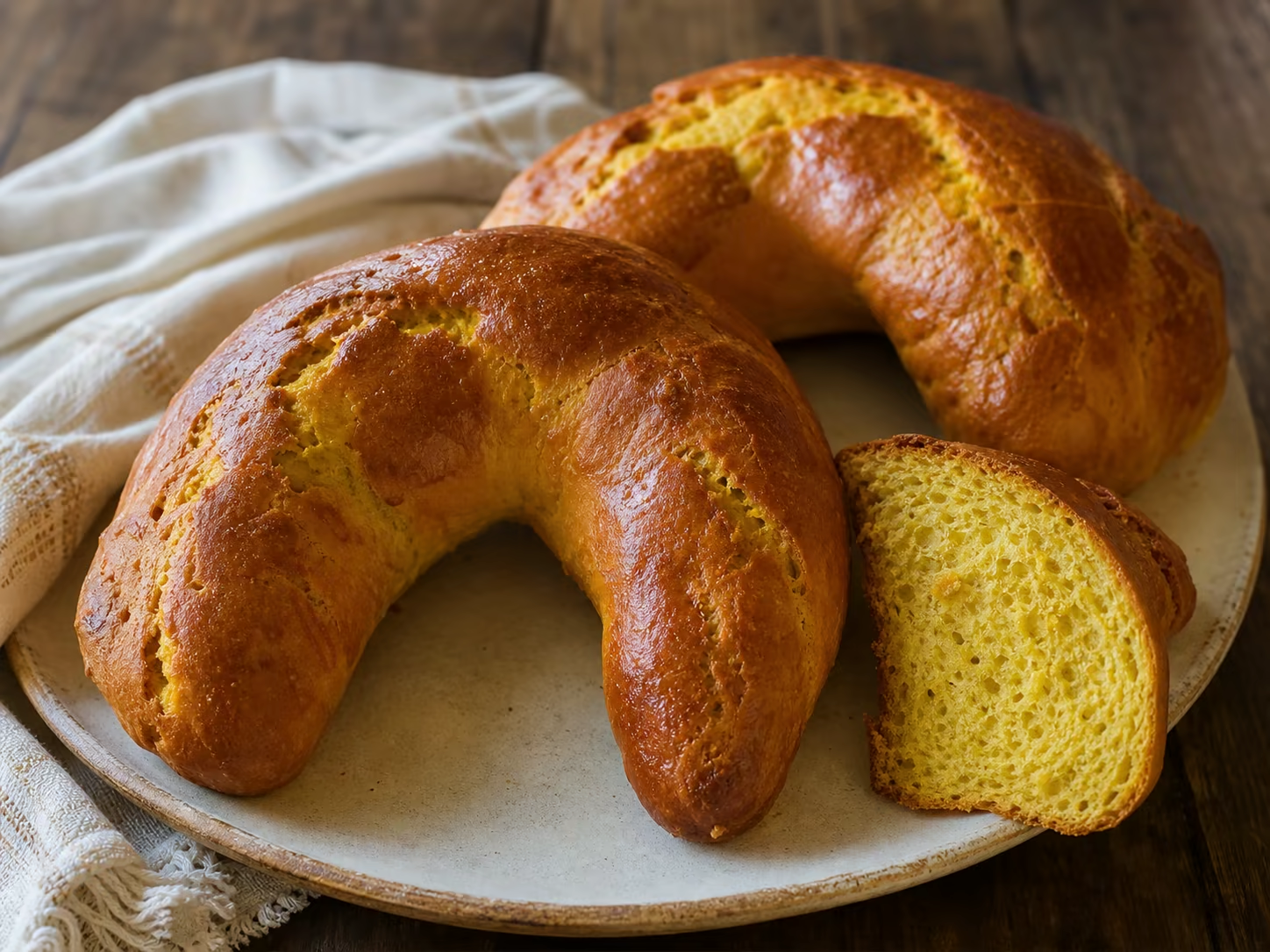
Vale de Prados Calço
Also known as: Vale de Prados Calço · Macedo Horseshoe Sweet Bread · Dormido Sweet Bread
A horseshoe Easter sweet bread scented with olive oil and orange and slowly leavened.
- Origin
- Vale de Prados · Macedo de Cavaleiros · Trás-os-Montes
- Place
- Vale de Prados · Macedo de Cavaleiros
- Region
- Trás-os-Montes
- Category
- Festive & Seasonal
- Season
- Easter; now also available at other times
- Evidence
- Well documented
Calço de Vale de Prados is a large horseshoe-shaped sweet bread with a deep golden-brown crust and a yellow crumb that is firm yet tender. It begins with flour, eggs, olive oil and baker's yeast or sourdough; sugar or honey provides sweetness, while orange juice or zest perfumes the dough. Some families add aguardente.
Its open U shape distinguishes it from a closed ring and explains the name: it resembles the curved shoe or chock of a horseshoe. The enriched dough needs time to rise and may ferment overnight before baking, producing a substantial bread intended for slicing.
- wheat flour
- eggs
- olive oil
- baker's yeast or sourdough
- sugar or honey
- orange juice and zest
- aguardente in some recipes
A gently sweet citrus-scented bread rich in egg and olive oil, with a toasted crust and substantial crumb.
Every household keeps its own proportions: some sweeten with sugar, others with honey; some use orange juice and zest, while others add aguardente, cinnamon or an old sourdough starter.
In Vale de Prados and Macedo de Cavaleiros, especially at Easter and during the Calço Fair; traditional bakeries also sell it at other times.
Coffee, tea, Trás-os-Montes honey or mature cheese; once stale, it is also eaten toasted.
Calço belongs to the Easter table of Macedo de Cavaleiros and remains especially alive in Vale de Prados. Local memory recalls it as food carried to strenuous agricultural work such as opening the vineyards, and as a recipe passed from mothers to daughters, measured by eye rather than by scales.
It was also known as dormido—the sleeping one—a reference to dough left to rise all night. Since 2023 Vale de Prados has held a Calço Fair within its Easter of Former Times and Burning of Judas celebrations. The municipality has since begun a certification process identifying the product with Vale de Prados, collecting household recipes before setting a shared specification.
Well documented
Identity supported by institutional, specialist or corroborating sources.
- ondalivrefm.net/2023/04/10/dcalco-foi-o-rei-da-pascoa-doutrora-que-decorreu-na-aldeia-de-vale-de-prados/ (opens in a new tab)
- canaln.tv/video-doce-tradicional-transmontano-aguarda-certificacao/ (opens in a new tab)
- pascoadoutrora.pt (opens in a new tab)
- noponto.pt/tag/pao-doce/ (opens in a new tab)
- infopedia.pt/dicionarios/lingua-portuguesa/cal%C3%A7o (opens in a new tab)
- cm-macedodecavaleiros.pt/cmmacedocavaleiros/uploads/document/file/14816/acta_20_01_2025.pdf (opens in a new tab)
Pastries from here — Trás-os-Montes
 Catalogue image
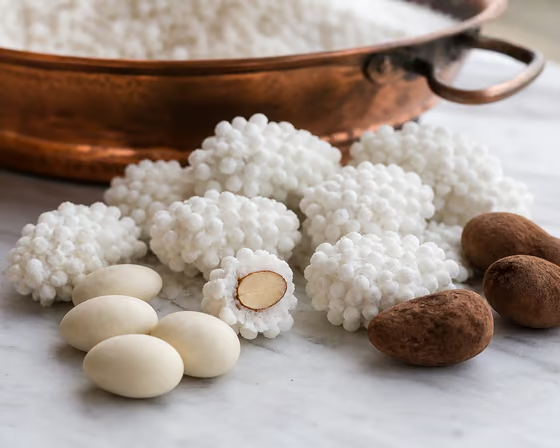
 Moncorvo Sugar-Coated Almonds
The queen of Trás-os-Montes sweets, spun from sugar and patience in copper.
Trás-os-Montes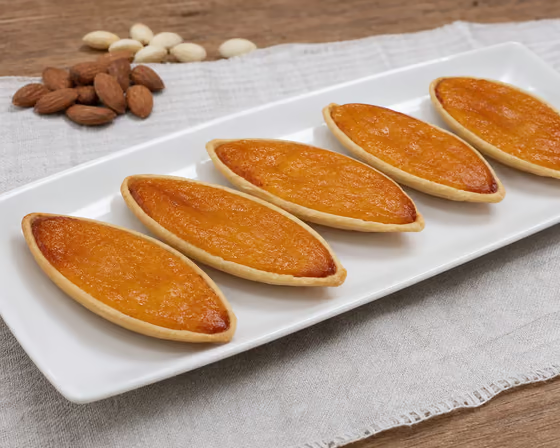 Catalogue image
 Alfândega da Fé Almond Boats
Pale pastry boats with a glossy filling of yolk and Trás-os-Montes almonds.
Trás-os-Montes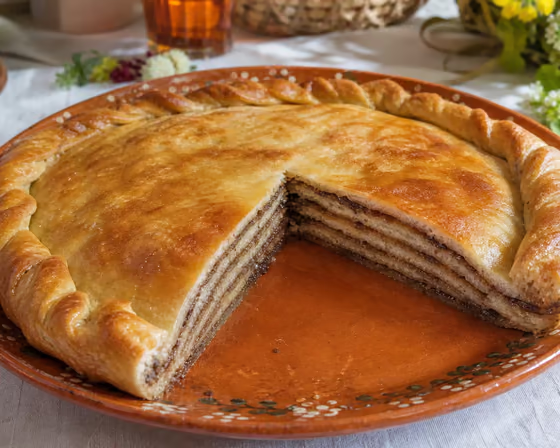 Catalogue image
 Mirandese Sweet Bola
The Easter bola that unravels in layers of sugar and cinnamon.
Trás-os-Montes Catalogue image
 Douro Port-Soaked Cake
A rich egg-and-butter cake soaked while hot in a generous Port-wine syrup.
Trás-os-Montes