Cacos (French Biscuits)
Also known as: French Biscuits · Valongo Cacos
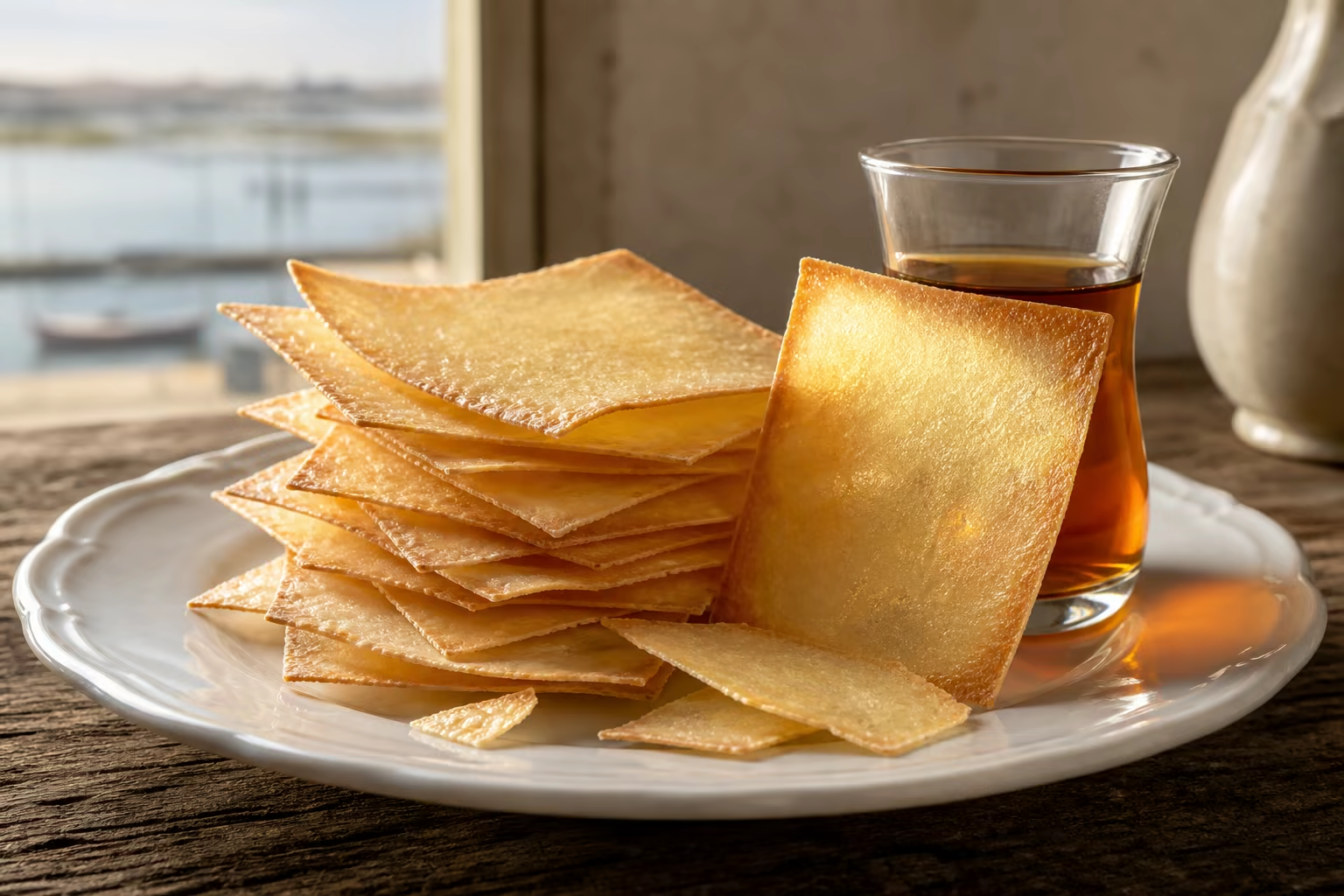
Valongo's French biscuit: exceptionally thin, square and crisp.
- Origin
- Valongo · contemporary circulation documented in Aveiro
- Place
- Valongo · documented circulation in Aveiro
- Region
- The North
- Category
- Cakes & Sweet Breads
- Season
- Year-round; stronger Easter and Christmas demand at one studied factory
- Evidence
- Well documented
Cacos are exceptionally thin, crisp biscuits from Valongo's biscuit-making tradition. The municipal council lists the full name Cacos ou Bolacha Francesa—Cacos or French Biscuits—among the municipality's local biscuits. A master's dissertation on breadmaking in Valongo confirms that the French biscuit is popularly known as cacos and documents a local factory using a roller to thin the dough.
Their form is firmly recorded through another route. In 2020, a Flor de Aveiro version won a Gold Medal in Portugal's National Traditional Simple Confectionery Competition: its specification describes almost transparent, delicate, crisp and crunchy squares measuring about six to seven centimetres but weighing only four to six grams. That award proves production and circulation in Aveiro, but does not automatically relocate the historically documented Valongo tradition to Aveiro.
- wheat flour
- sugar
- butter
- milk
- bicarbonate of soda
The award specification documents an exceptionally thin, delicate, crisp and crunchy texture. Gaby Doce's published commercial formula supports a simple flour, sugar, butter and milk profile; intensity and browning may vary between makers.
Valongo production and Flor de Aveiro's award-winning version share the name and exceptionally thin biscuit form. The sources do not establish that every formula is identical; thickness, dimensions, fat and baking may vary by maker.
Current production is documented in Valongo, including at Gaby Doce and the academically studied Fábrica de Biscoitos Diogo. Flor de Aveiro entered an award-winning version in 2020. Confirm opening hours and availability directly with each maker.
Tea or Port, pairings recorded in an Aldeias de Portugal feature on Valongo's confectionery.
Valongo Municipal Council describes Cacos as century-old biscuits and associates both the name French Biscuit and the word Cacos with the French Invasions: the latter would evoke either the noise made while eating them or places left in shards by Napoleonic armies. This is municipal heritage interpretation, not an etymology proven by a contemporary document.
Academic research provides more cautious independent evidence of production continuity: it records the French biscuit, popularly called Cacos, in the present-day work of Fábrica de Biscoitos Diogo and documents the preservation of family recipes and artisanal production in Valongo. The consulted sources do not identify the first maker or an exact creation date.
Well documented
Identity supported by institutional, specialist or corroborating sources.
- cm-valongo.pt/diretorio-servicos/comunicacao/noticias/noticia/7-maravilhas-doces-de-portugal-nomeados-valongo (opens in a new tab)
- recipp.ipp.pt/bitstreams/171178db-7168-46e2-a4ce-5ca4df56c127/download (opens in a new tab)
- concursosnacionais.pt/wp-content/uploads/2020/03/Premiados-Do%C3%A7aria-Simples-2020.pdf (opens in a new tab)
- gabydoce.pt/produtos/cacos/ (opens in a new tab)
- aldeiasdeportugal.pt/aldeia/couce/ (opens in a new tab)
Pastries from here — The North
 Catalogue image
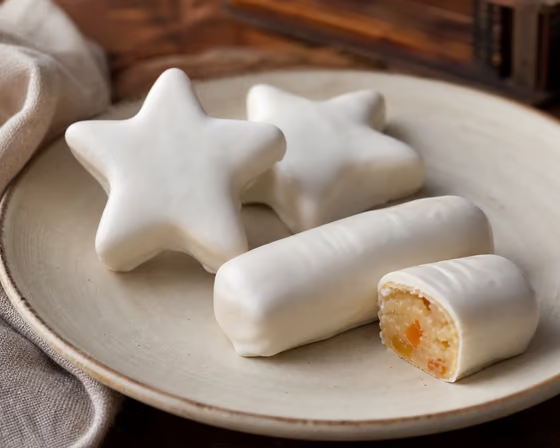
 A Bella Queijadinha de Barcelos
A white star of almond, preserved fruit and family memory.
The North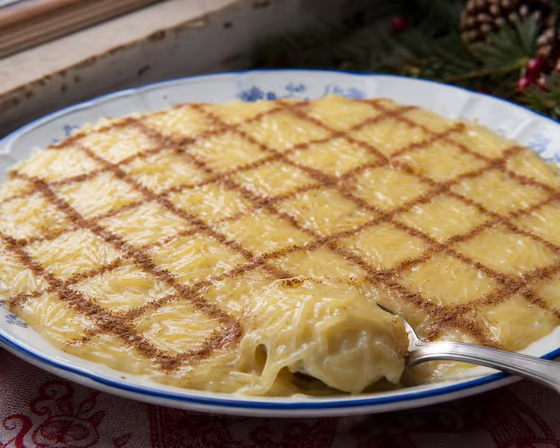 Catalogue image
 Sweet Vermicelli
Fine wheat threads simmered in milk and yolk, scored with cinnamon.
The North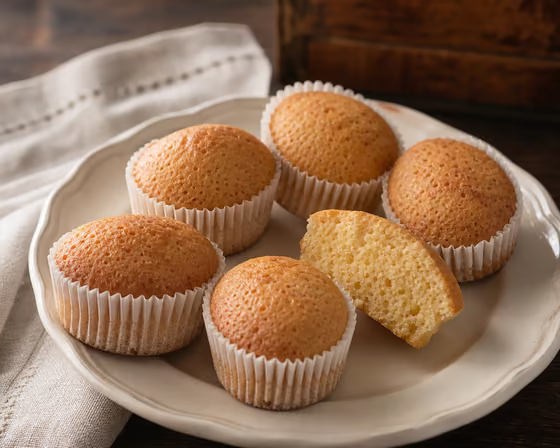 Catalogue image
 Amarantinos
Small egg, lemon and cinnamon cakes whose historical identity is not told consistently by the sources.
The North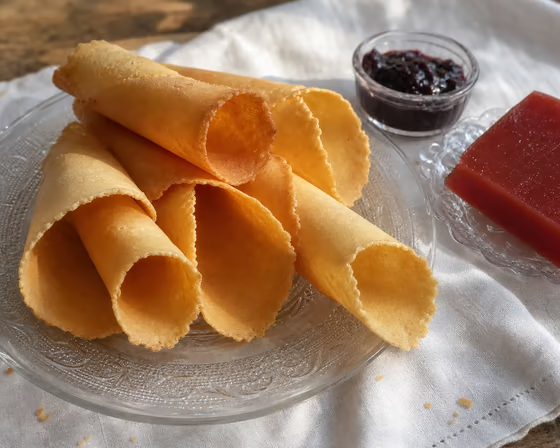 Catalogue image
 Vieira do Minho Cone Wafers
Paper-thin crisp wafers, iron-baked and rolled by hand while still hot.
The North