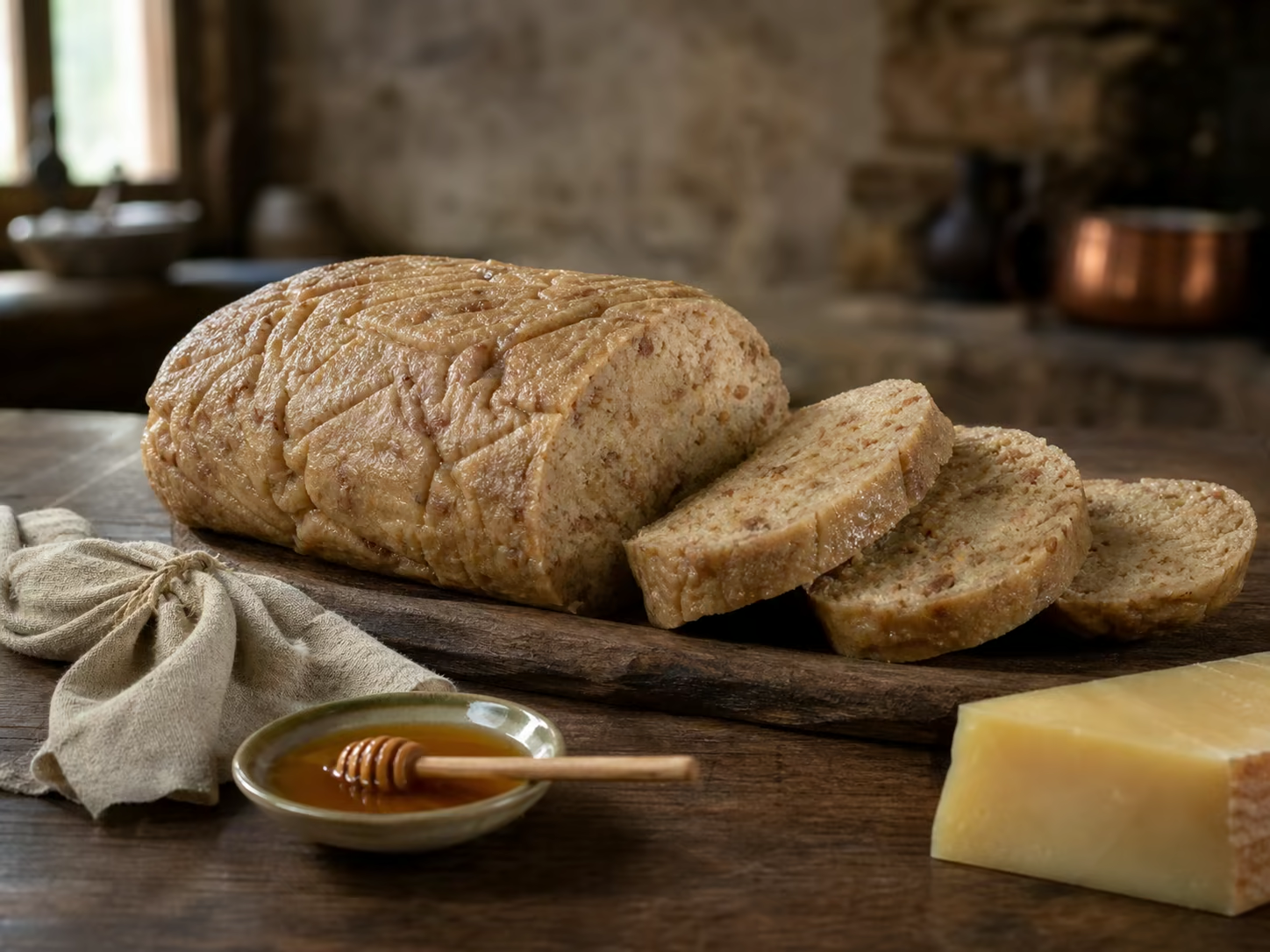
Melgaço Sweet Bucho
Also known as: Melgaço Sweet Bucho · Sweet False Sausage
A sweet false sausage of bread, eggs and cinnamon, cooked for Carnival tables.
- Origin
- Melgaço · Upper Minho
- Place
- Melgaço
- Region
- The North
- Category
- Festive & Seasonal
- Season
- Carnival and Lent
- Evidence
- Well documented
Bucho Doce de Melgaço turns crumbled bread, eggs, sugar, lard and cinnamon into a rich mixture that is enclosed and boiled in water. The finished form resembles a sturdy loaf; slices reveal a compact, moist and aromatic crumb.
Traditionally the casing was a pig's stomach, carefully cleaned and smoke-dried after the slaughter. Many makers now use linen bags, preserving the method of cooking the tightly enclosed mixture without requiring an animal casing.
- crumbled bread
- eggs
- sugar
- lard
- cinnamon
- pig stomach or linen bag
A dense moist crumb, warm cinnamon sweetness and the richness of eggs and lard.
It may be cooked in the traditional stomach casing or a linen bag and served plain, with honey, preserves, cheese or ice cream.
At restaurants, pastry shops and festivals in Melgaço, especially at Carnival; some establishments keep it on the menu year-round.
Honey, aged cheese and a glass of Melgaço Alvarinho.
The sweet grew from the household economy surrounding the pig slaughter: the stomach was reused as a casing, but the filling contained no meat. In Melgaço it remains associated with Carnival and Lent, when it symbolises household abundance. Municipal tourism presents it as the municipality's signature sweet, also served through the rest of the year.
Well documented
Identity supported by institutional, specialist or corroborating sources.
- discovermelgaco.pt/docaria-e-licor/ (opens in a new tab)
- cm-melgaco.pt/sessao-de-apresentacao-da-iniciativa-lampreia-do-rio-minho-um-prato-de-excelencia/ (opens in a new tab)
Pastries from here — The North
 Catalogue image
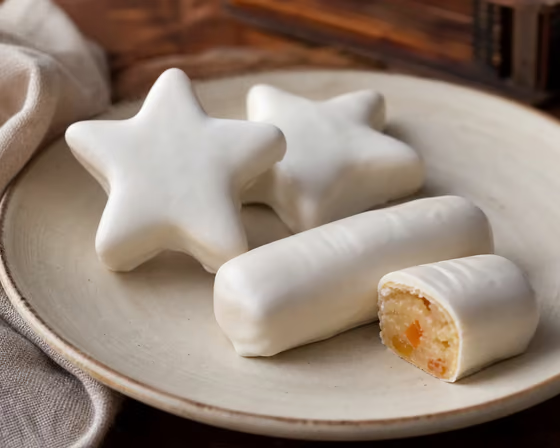
 A Bella Queijadinha de Barcelos
A white star of almond, preserved fruit and family memory.
The North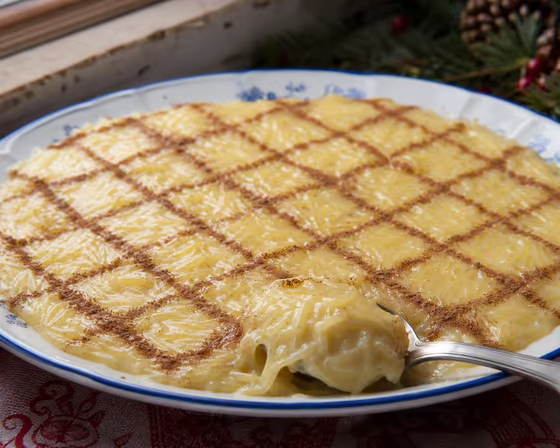 Catalogue image
 Sweet Vermicelli
Fine wheat threads simmered in milk and yolk, scored with cinnamon.
The North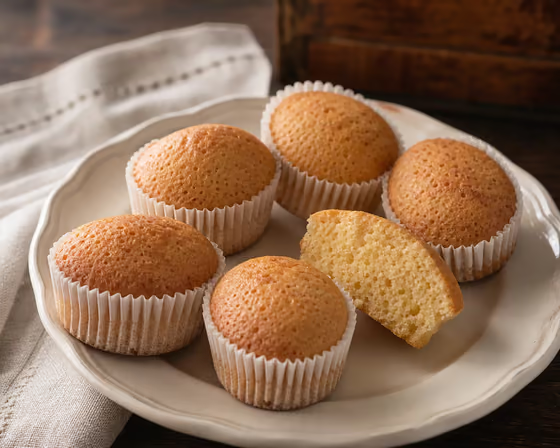 Catalogue image
 Amarantinos
Small egg, lemon and cinnamon cakes whose historical identity is not told consistently by the sources.
The North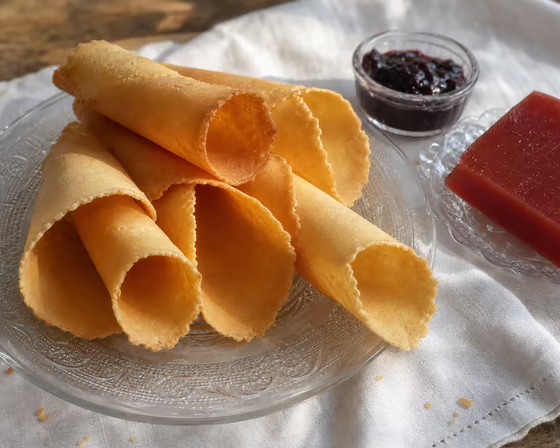 Catalogue image
 Vieira do Minho Cone Wafers
Paper-thin crisp wafers, iron-baked and rolled by hand while still hot.
The North