Tâmega Breeze Sweets
Also known as: Tâmega Breeze · Amarante Brisas
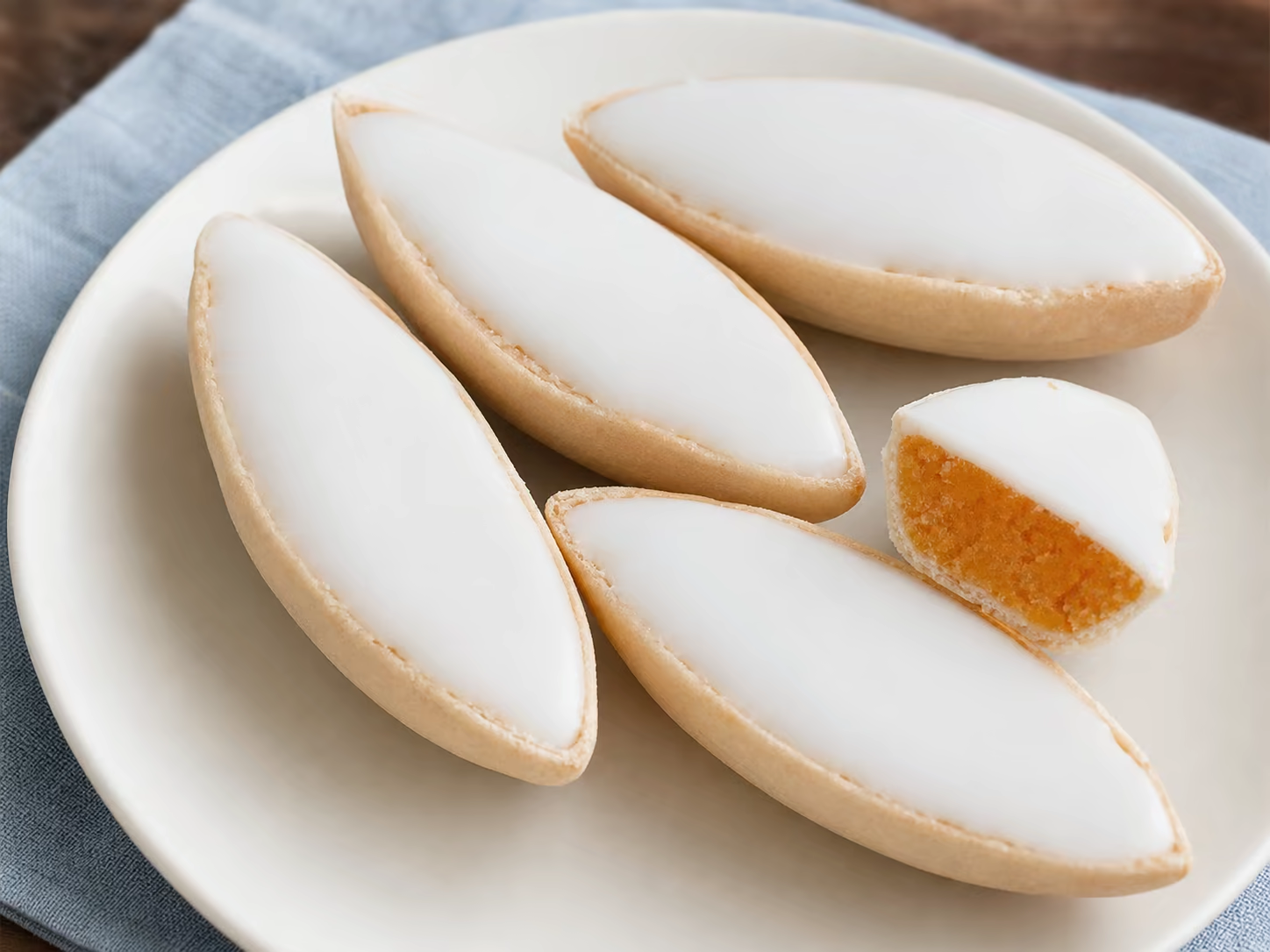
A vanilla-wafer boat filled with yolk and almond beneath a white sugar cap.
- Origin
- Amarante · Tâmega valley
- Place
- Amarante
- Region
- The North
- Category
- Convent Sweets
- Season
- Year-round; especially at Amarante’s Convent Sweets Fair
- Evidence
- Well documented
Brisas do Tâmega are small vanilla-wafer boats. Their cavities are filled to the rim with the same cooked paste of egg yolks, grated almonds and sugar syrup used for Amarante Papos de Anjo.
A thick sugar syrup, beaten until white, is placed over the filling. As it sets, it forms a smooth opaque cap contrasting with the thin wafer and orange interior. The curved boat profile and white topping make a Brisa immediately distinct from the round ‘brisas’ of other Portuguese cities.
- egg yolks
- blanched almonds
- sugar
- water
- vanilla-wafer boat
Dense yolk and almond, light vanilla wafer and a firm sugar topping that breaks on the first bite.
Sugar-cap thickness and the almond ratio vary; historic versions used host-wafer cups rather than boat-shaped vanilla wafers.
At Amarante’s traditional confectioneries and its Convent Sweets Fair.
Coffee, lemon tea or dry white Port.
The present form replaced small host-wafer cups used in the past: according to testimony collected in the specification, producers moved to vanilla-wafer boats. The name directly connects the sweet with the River Tâmega, an axis of Amarante’s landscape and history.
Well documented
Identity supported by institutional, specialist or corroborating sources.
- douroetamega.pt/ambt2/uploads/document/file/135/doces_conventuais_de_amarante_atualizado.pdf (opens in a new tab)
- cm-amarante.pt/eventos/fim-de-semana-gastronomico/ (opens in a new tab)
- docesconventuaisdeamarante.pt/historia/ (opens in a new tab)
- cm-terrasdebouro.pt/images/noticias/2023/3/12/fdsg23.pdf (opens in a new tab)
Pastries from here — The North
 Catalogue image
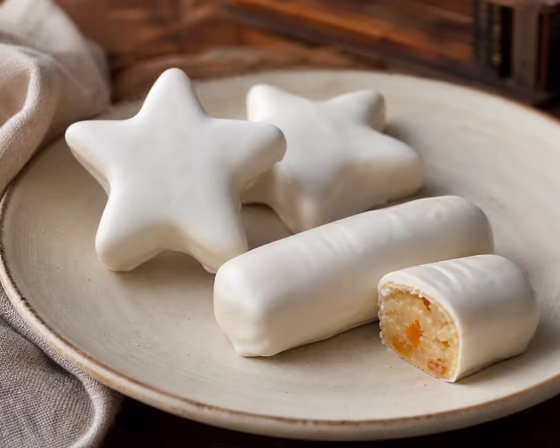
 A Bella Queijadinha de Barcelos
A white star of almond, preserved fruit and family memory.
The North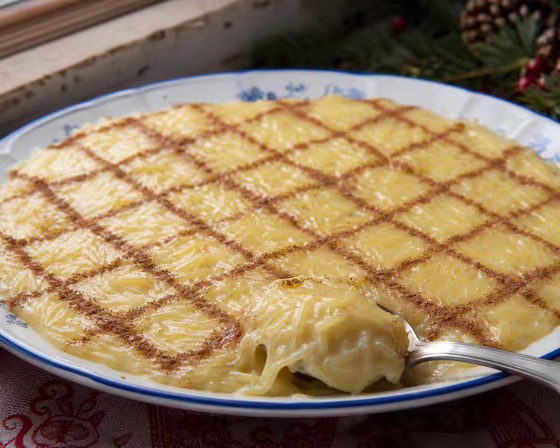 Catalogue image
 Sweet Vermicelli
Fine wheat threads simmered in milk and yolk, scored with cinnamon.
The North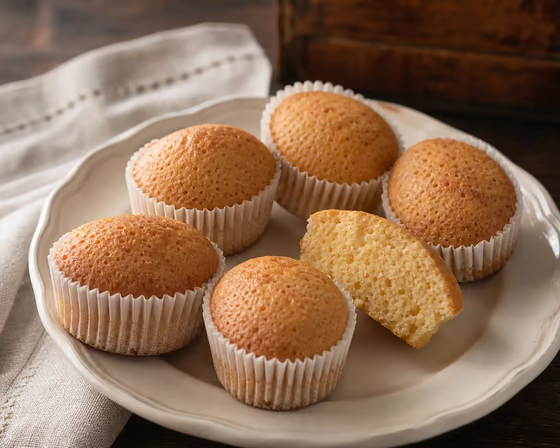 Catalogue image
 Amarantinos
Small egg, lemon and cinnamon cakes whose historical identity is not told consistently by the sources.
The North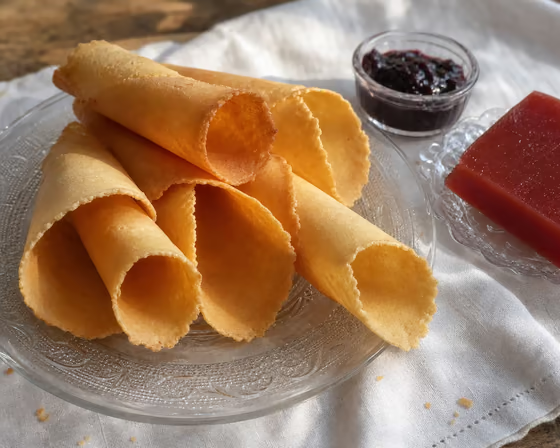 Catalogue image
 Vieira do Minho Cone Wafers
Paper-thin crisp wafers, iron-baked and rolled by hand while still hot.
The North