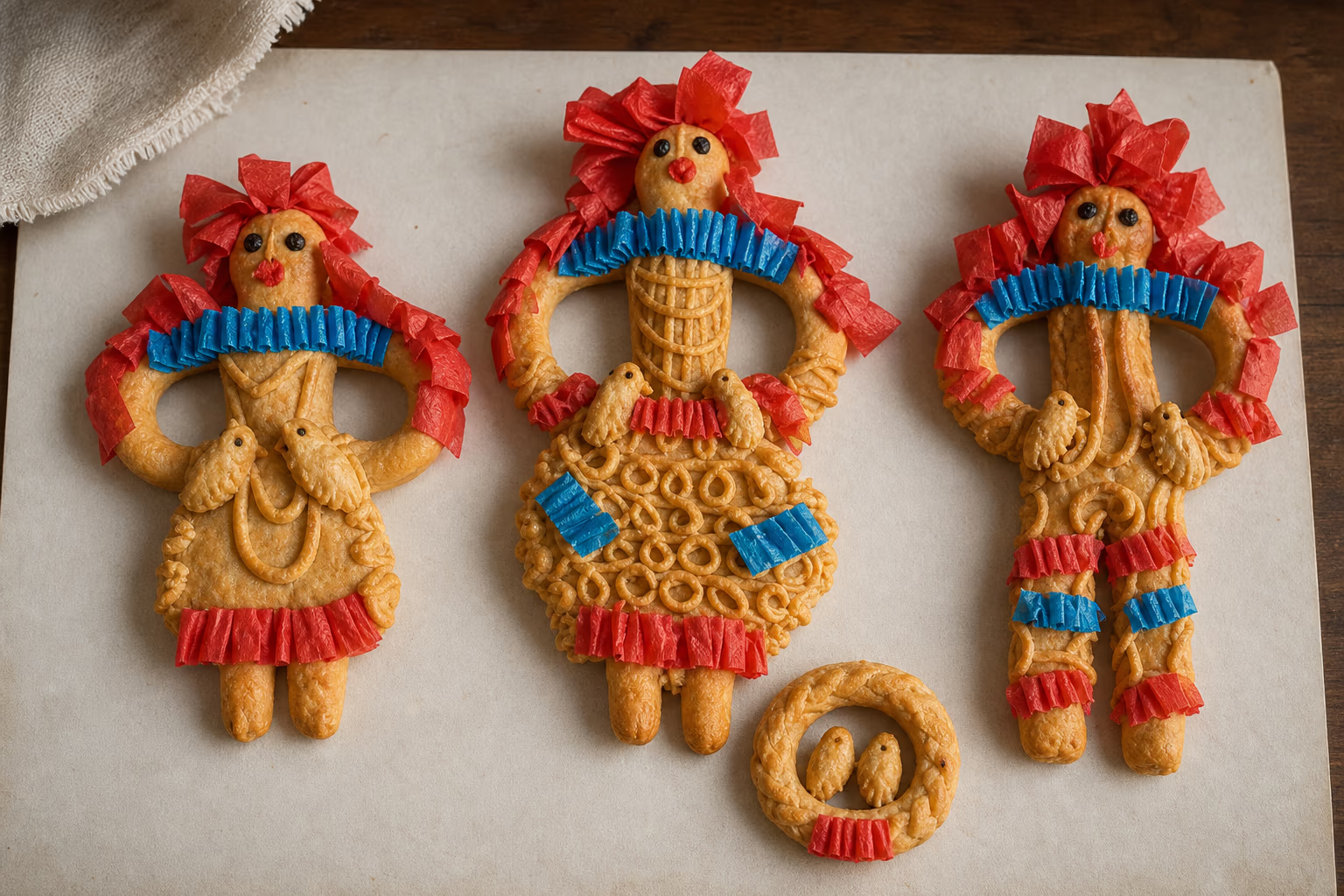
Madeira Dough Dolls
Also known as: Madeira Dough Dolls · Caniço Dough Dolls · Madeiran Festival Dough Figures
Yeasted-dough figures, red and blue paper and an artisan's precision, made for Madeira's festivals.
- Origin
- Exact origin and chronology unknown · Caniço · Santa Cruz · Madeira · a tradition of festivals and pilgrimages
- Place
- Caniço · Santa Cruz
- Region
- Madeira
- Category
- Festive & Seasonal
- Season
- Festivals and pilgrimages · festive calendar · Saint Amaro in the related tradition
- Evidence
- Well documented
Madeira's Bonecas de Massa are figures modelled from flour, water and yeast dough, coloured with egg and ornamented with red and blue tissue paper. Their historical name, maçapão, can mislead: in the traditional form documented by Madeira's Ethnographic Museum this is not almond marzipan but shaped and baked bread dough.
Forms include human couples, cockerels, bracelets and rings with little birds, and woven baskets. Strips, coils, bows and tiny birds are applied by hand before baking; pleated paper and dark seed eyes complete the figures. The result sits between food, offering and folk art.
- Wheat flour
- Water
- Yeast
- Egg or egg colouring for browning
- Red and blue tissue paper for decoration
- Seeds for eyes and small details
The historical base is a plain, firm bread dough; its main value lies in modelling and ritual rather than an elaborate filling or sweet flavour. Modern recreations made from true almond marzipan are a separate, sweeter and softer version.
Beyond dolls and couples, makers form cockerels, rings, bracelets, birds and baskets. Some present-day artists use almond marzipan; others recreate the shapes in clay, wood or modelling paste for permanence. Ribeira Brava's Boneco de Santo Amaro is a related tradition: a bread-dough figure carried from door to door at the close of Christmas.
Madeira's Ethnographic Museum in Ribeira Brava preserves examples and runs workshops; Caniço is the craft's territorial reference. Festival availability is irregular. Always confirm the material before tasting: many current pieces are non-edible craft objects, and paper and decorative seeds should be removed from dough versions.
Tradition centres on display, giving and festival ritual rather than a fixed food pairing.
Madeira's Ethnographic Museum states that the exact origin of these figures is unknown and suggests, as a hypothesis, that they may have arrived with the first settlers before changing in the hands of Madeiran artisans. In Caniço the craft travelled through families: Salomé Teixeira of Sítio da Mãe de Deus learned from her mother and became a regular presence at island festivals, while relatives from Sítio dos Barreiros kept the knowledge moving forward.
Their forms carry old symbols of fertility, protection, work and renewal. The couple represents fecundity; the cockerel, vigilance; the ring, return and eternity. The tradition gained national attention when the Caniço dolls were nominated for Portugal's Seven Wonders of Popular Culture in 2020, and the museum continues to teach them in workshops.
Well documented
Identity supported by institutional, specialist or corroborating sources.
- cultura.madeira.gov.pt/atividades-online1/1900-bonecas-de-ma (opens in a new tab)
- cultura.madeira.gov.pt/obras-e-artistas1/1658-o-%E2%80%9Cboneco-do-santo-amaro%E2%80%9D.html (opens in a new tab)
- dnoticias.pt/2020/5/13/52324-bonecas-de-massa-nomeadas-para-final-das-7-maravilhas-da-cultura-popular (opens in a new tab)
Pastries from here — Madeira
 Catalogue image
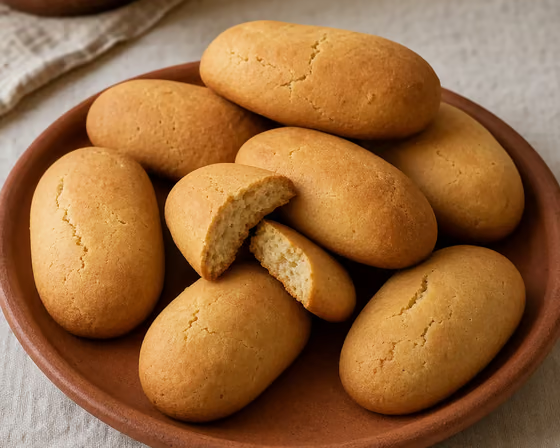
 Porto Santo Toasted Biscuits
Porto Santo's savoury biscuit, baked and then slowly toasted for hours.
Madeira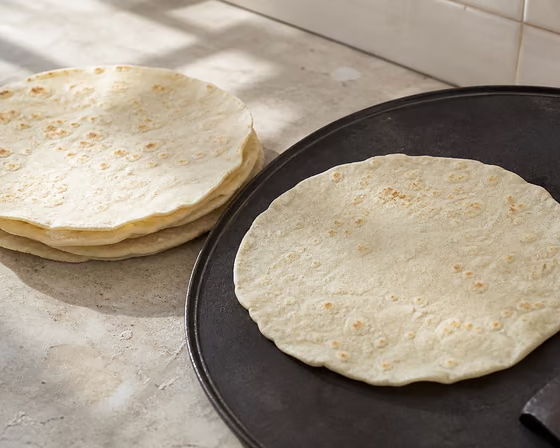 Catalogue image
 Porto Santo Jewish Unleavened Bread
A Porto Santo unleavened bread that one local source describes as barley, water and salt cooked on a griddle.
Madeira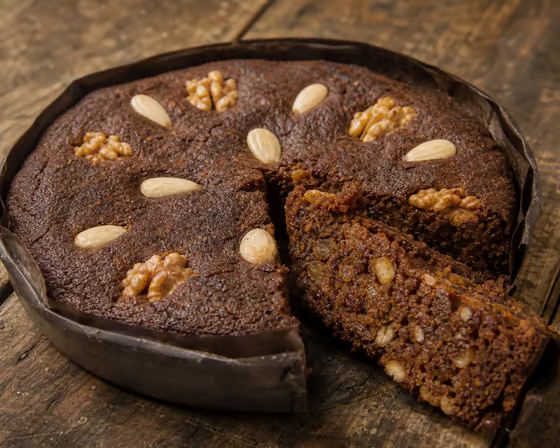 Catalogue image
 Madeira Honey Cake
Madeira's dark Christmas cake, broken by hand and good for months.
Madeira Catalogue image
 Madeira Bolo de Noiva
A spiced festive and wedding sweet bread baked as round portions on plant leaves.
Madeira