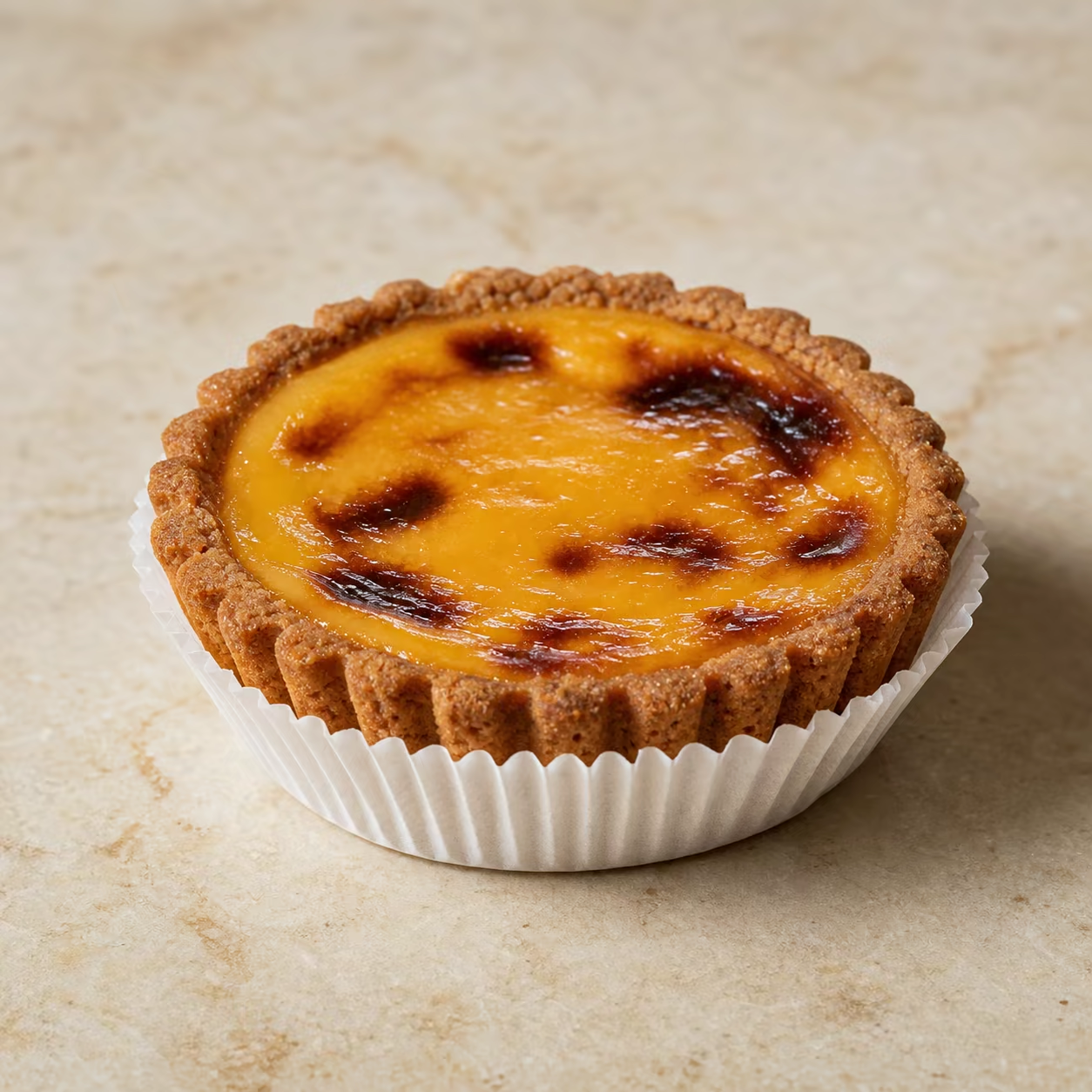
Portuguese Bom Bocado Custard Tart
Also known as: Portuguese Bom Bocado custard tart · Lemon custard Bom Bocado
Sweet shortcrust, custard and a clear fragrance of lemon.
- Origin
- Portuguese pastry tradition · possible lineage from early milk tarts
- Place
- Portugal
- Region
- Nationwide
- Category
- Custards & Creams
- Season
- Year-round
- Evidence
- Well documented
The pastry-counter Bom Bocado is a small round tart: a firm, crumbly sweet-pastry case holds custard similar to pastel de nata cream and scented with lemon. Its exposed top takes on toasted patches while the fluted rim retains a biscuit-like texture.
The shell is the decisive difference. Pastel de nata uses laminated puff pastry; Bom Bocado uses sweet shortcrust. Nor should it be confused with Bom-bocado do Convento de Jesus de Setúbal, a glazed cylindrical almond cake documented in a separate entry.
- Sweet shortcrust pastry
- Milk or cream
- Egg yolks and eggs
- Sugar
- Lemon
Rich soft custard, fresh lemon, a caramelised top and a firm buttery sweet shell.
Lemon intensity, custard depth and browning vary. Other regional bom-bocados may use almond, gila or milk and are not necessarily the same cake.
Pastelaria Versailles in Lisbon retains Bom Bocado on its menu. It also appears in traditional in-house pastry shops.
Espresso, with a little cinnamon if desired.
Fabrico Próprio suggests Bom Bocado may predate pastel de nata, noting similarities to the Pastel de Leite described in the sixteenth-century Caderno dos Manjares de Leite within Infanta Maria’s cookbook. This is a hypothesis of technical continuity, not proof that the modern recipe already existed under this name.
The speciality remains alive: Pastelaria Versailles currently lists Bom Bocado among its counter cakes. Its formal relationship to Alsaciano is also documented; the latter stretches the same idea into a much taller cylinder.
Well documented
Identity supported by institutional, specialist or corroborating sources.
- fabricoproprio.net/enciclopedia/bom-bocado/ (opens in a new tab)
- please.com.pt/lx1/pastelaria-versailles.html (opens in a new tab)
Pastries from here — Nationwide
 Catalogue image
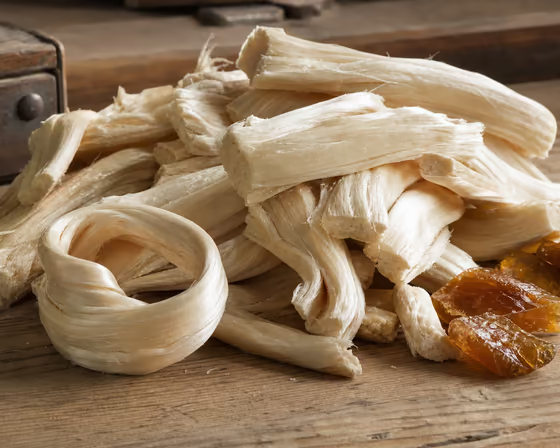
 Alféloa
Sugar or molasses cooked to a hard stage and worked until pale.
Nationwide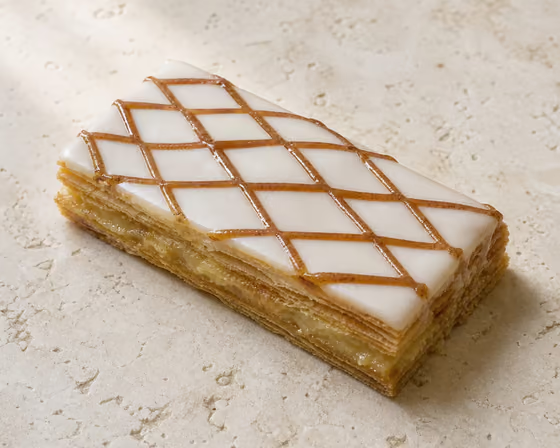 Catalogue image
 Portuguese Gila Allumette
A rectangular puff pastry with cream, gila and cinnamon beneath diamond-patterned royal icing.
Nationwide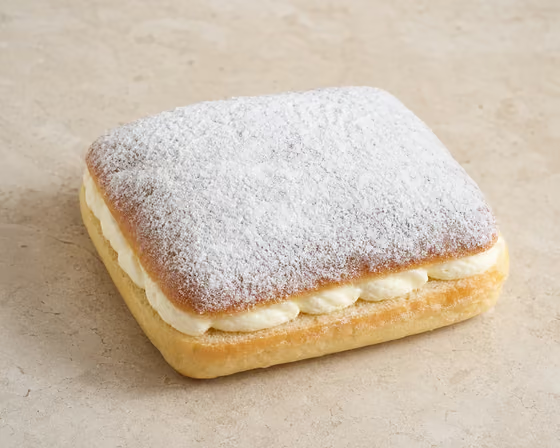 Catalogue image
 Portuguese Brioche Almofada
Light brioche dough, fresh buttercream and icing sugar.
Nationwide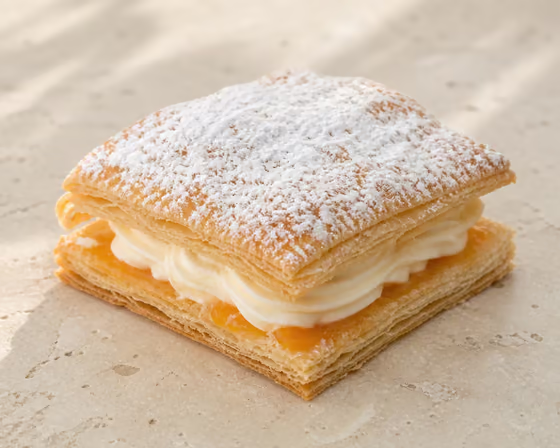 Catalogue image
 Portuguese Puff-Pastry Almofada
Puff pastry with white cream, egg sweet and icing sugar—the laminated Almofada variant.
Nationwide