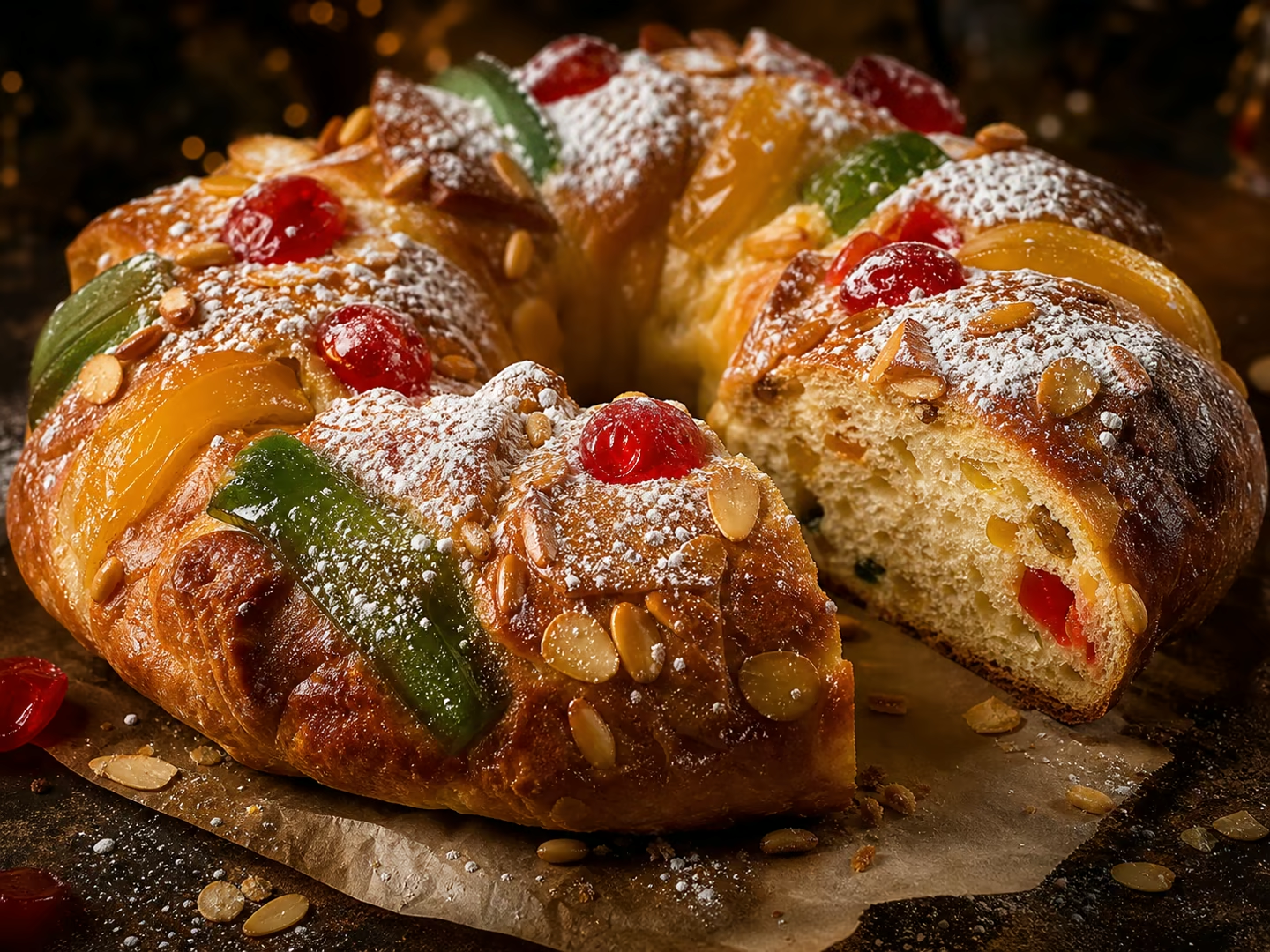
King Cake
Also known as: King's Cake · Three Kings Cake
A crown of soft brioche and candied fruit that reigns over the Christmas table.
- Origin
- Lisbon, 1875 — Confeitaria Nacional, from a French recipe
- Place
- Nationwide
- Region
- Nationwide
- Category
- Festive & Seasonal
- Season
- Christmas
- Evidence
- Well documented
Bolo-Rei is the centrepiece of Portuguese Christmas baking: a ring of soft, lightly perfumed leavened dough, crowned with glistening candied fruit, nuts and coarse sugar. Its round shape, with a hole in the middle, suggests a crown — hence the name.
More than a cake, it is a ritual that runs the length of the country from north to south. It appears in shop windows from early December and stays in homes until the Day of Kings, 6 January. Cutting the Bolo-Rei at the table, with the family gathered round, is one of the defining gestures of the season.
Tradition held that a dried fava bean and a small trinket were hidden in the dough: whoever got the bean was bound to buy next year's cake.
- Flour
- Baker's yeast
- Eggs
- Butter
- Sugar
- Candied fruit
- Nuts (walnuts, pine nuts, almonds)
- Raisins
- Lemon and orange zest
The crumb is light, airy and gently sweet, with a citrus aroma and sometimes a whisper of Port wine or brandy. The fluffy interior plays against the sticky candied fruit on top and the crunch of nuts and coarse sugar. It is a balanced sweet, more fragrant than cloying.
Its most famous relative is the Bolo-Rainha ("Queen Cake"), made with the same dough but without the candied fruit and loaded with nuts instead, for those who dislike the coloured fruit. There are also chocolate, squash-jam and filled versions, plus many homemade and regional variants.
The Confeitaria Nacional, on Lisbon's Rossio square, is the historic address and still makes its Bolo-Rei by the house tradition. For the best one, seek out pastelarias and bakeries that make the cake from scratch with a slow rise, rather than the industrial supermarket ones — you can tell at once from the lightness of the crumb and the real fruit.
It calls for a glass of Port, Moscatel or sparkling wine, or simply a coffee or tea in the late afternoon. On the Night of Kings, it goes well with a digestif liqueur.
Lisbon's municipal documentation dates the introduction of Bolo-Rei in Portugal to 1875. Baltazar Castanheiro Júnior of the Confeitaria Nacional brought the recipe and a French confectioner from Paris; other accounts of the house identify that specialist as Gregório. Confeitaria Nacional was therefore the first known Portuguese establishment to sell it. The recipe was adapted to local taste, and the crown-shaped cake became indispensable on Portuguese Christmas and Epiphany tables. The hidden bean symbolically selected a 'king' and obliged its finder to buy the following year's cake.
Well documented
Identity supported by institutional, specialist or corroborating sources.
- pt.wikipedia.org/wiki/Bolo-rei (opens in a new tab)
- en.wikipedia.org/wiki/King_cake (opens in a new tab)
- lojascomhistoria.pt/lojas/confeitaria-nacional (opens in a new tab)
- lisboa.pt/fileadmin/informacao/publicacoes/agenda_cultural/ACL_janeiro_2023.pdf (opens in a new tab)
- lisboa.pt/fileadmin/portal/temas/urbanismo/planeamento_urbano/patrimonio/portaria_613_2020.pdf (opens in a new tab)
- pingodoce.pt/frescos/padaria/bolo-rei-rainha-origens-receitas/ (opens in a new tab)
- rtp.pt/noticias/pais/brinde-no-bolo-rei-e-tradicao-nao-proibicao_n1050031 (opens in a new tab)
- jornaleconomico.sapo.pt/noticias/estas-foram-as-leis-que-impediram-o-brinde-no-bolo-rei-529114/ (opens in a new tab)
Pastries from here — Nationwide
 Catalogue image
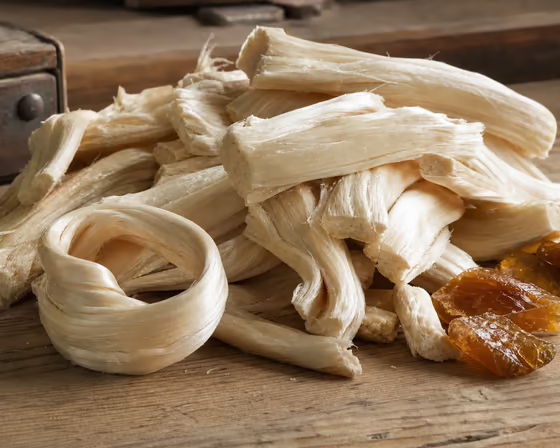
 Alféloa
Sugar or molasses cooked to a hard stage and worked until pale.
Nationwide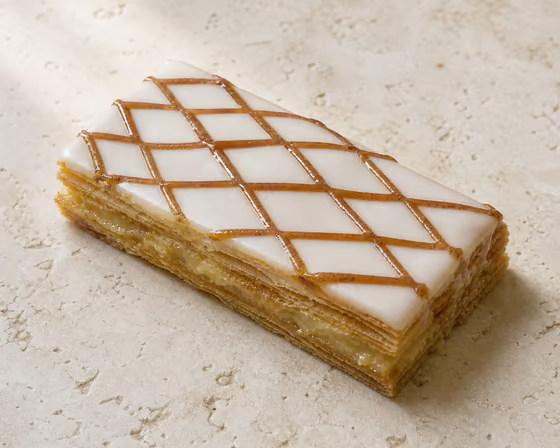 Catalogue image
 Portuguese Gila Allumette
A rectangular puff pastry with cream, gila and cinnamon beneath diamond-patterned royal icing.
Nationwide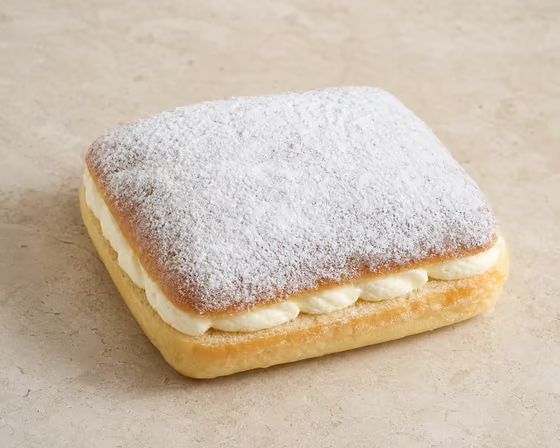 Catalogue image
 Portuguese Brioche Almofada
Light brioche dough, fresh buttercream and icing sugar.
Nationwide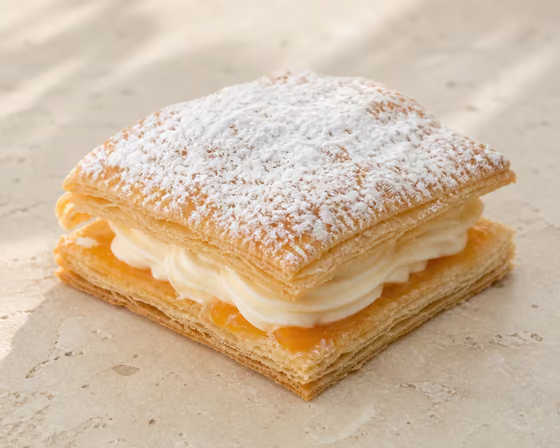 Catalogue image
 Portuguese Puff-Pastry Almofada
Puff pastry with white cream, egg sweet and icing sugar—the laminated Almofada variant.
Nationwide