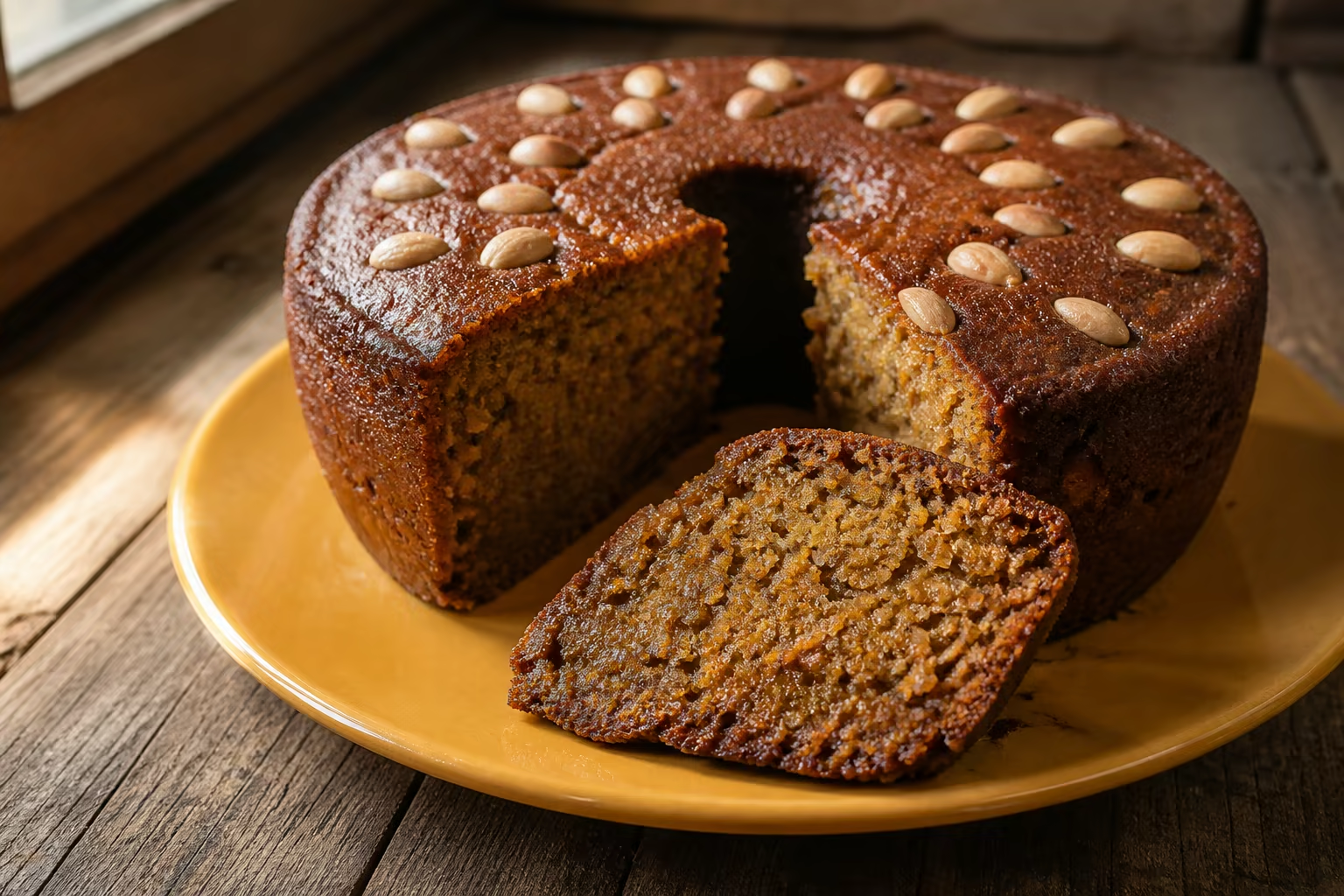
Bolo Podre
Also known as: Bolo Podre Alentejano · Conventual Bolo Podre
The olive-oil-and-honey cake that darkens, deepens and keeps for weeks.
- Origin
- Alentejo; convent sweet, traditionally attributed to nuns (16th century).
- Place
- Alentejo
- Region
- The Alentejo
- Category
- Festive & Seasonal
- Season
- Autumn and Winter (especially Christmas)
- Evidence
- Well documented
Bolo podre is an Alentejo classic: a dense, moist cake of olive oil, honey and cinnamon in which oil replaces butter. Slow baking gives it a dark brown-green cast that explains its unflattering name—“rotten cake”—although nothing about it is spoiled.
Scented with orange and brandy, it belongs especially to autumn, winter and the Alentejo Christmas table. Served in slices at a festive meal or afternoon snack, it improves after resting. It remains above all a family cake, preserved in handwritten recipes marked by generations of honey and use.
- Wheat flour
- Olive oil
- Honey
- Sugar
- Eggs
- Ground cinnamon
- Orange zest
- Aguardente (brandy)
Moist, dense and deeply aromatic. The olive oil lends a fruity softness, the honey a warm dark sweetness, and cinnamon with orange lift it all. The crumb is compact and almost fudgy, with a lingering whiff of brandy.
There are almost as many versions as families. Many are topped with almonds, others add clove or lean more on honey and less on sugar. Beja and Évora each claim their own recipes, and some cooks also use walnuts or aniseed.
Found in traditional bakeries and pastry shops across the Alentejo, especially in Beja and Évora, and at convent-sweet fairs. The best is usually homemade: ask at village cafés and tea houses, or seek out confectioners that still make convent sweets the old-fashioned way.
It calls for a warm fortified wine: a Moscatel de Setúbal, an Alentejo vinho abafado, or a homemade liqueur. At teatime, it pairs nicely with a strong coffee or a herbal tea.
Bolo podre is rooted in Alentejo convent baking, where regional olive oil replaced butter and honey supplied part of the sweetness. Tradition connects versions of the cake to several convents, including Nossa Senhora da Esperança, Santa Clara and religious houses in Beja and Évora.
Slow baking and generous olive oil and honey gave the cake exceptional keeping quality. Rural households could bake it about a month before Christmas and store it in closed iron pots until the festive table was set.
Well documented
Identity supported by institutional, specialist or corroborating sources.
- tradicional.dgadr.gov.pt/pt/cat/doces-e-produtos-de-pastelaria/166-bolo-podre (opens in a new tab)
- portugalnummapa.com/bolo-podre/ (opens in a new tab)
- iguaria.com/sobremesa/bolo/bolo-podre-alentejano/ (opens in a new tab)
Pastries from here — The Alentejo
 Catalogue image
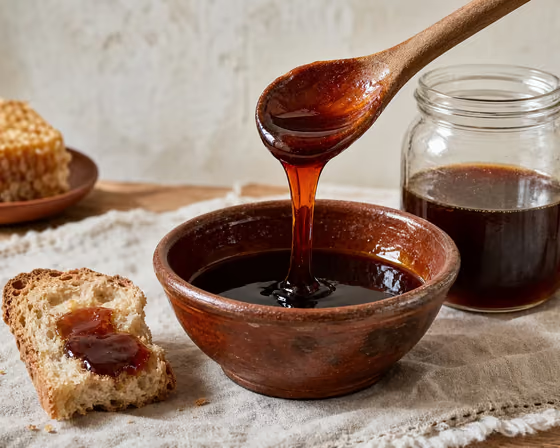
 Portuguese Água-mel Syrup
Water that recovers honey from combs after extraction, filtered and reduced for hours to 70–77° Brix.
The Alentejo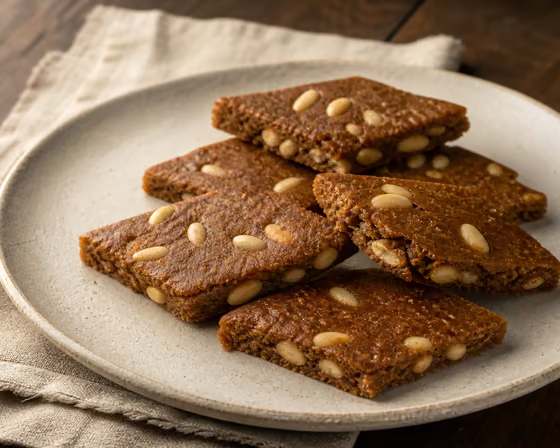 Catalogue image
 Alcomonias
Toasted coarse wheat flour, honey and pine nuts spread and cut into diamonds.
The Alentejo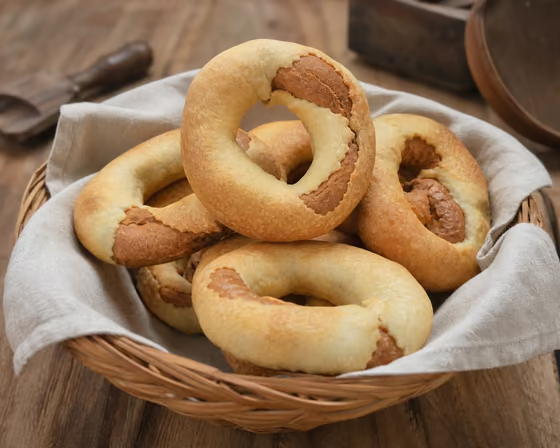 Catalogue image
 Amoreiras-Gare Alcôncoras
A large circular honey-and-olive-oil biscuit born from Amoreiras-Gare's promise-pole tradition.
The Alentejo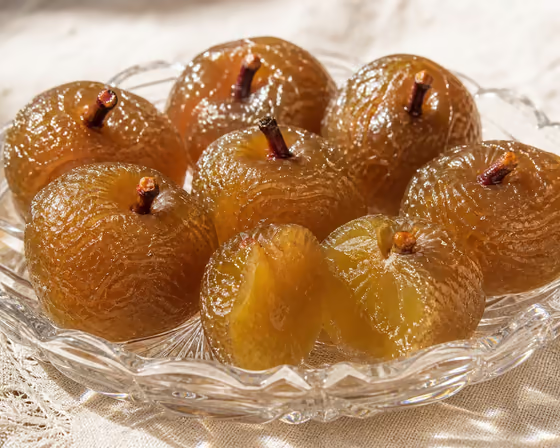 Catalogue image
 Elvas Plums
Protected Rainha Cláudia Verde greengages sold fresh, dried or candied—the sweet form requires at least seven days of slow candying.
The Alentejo