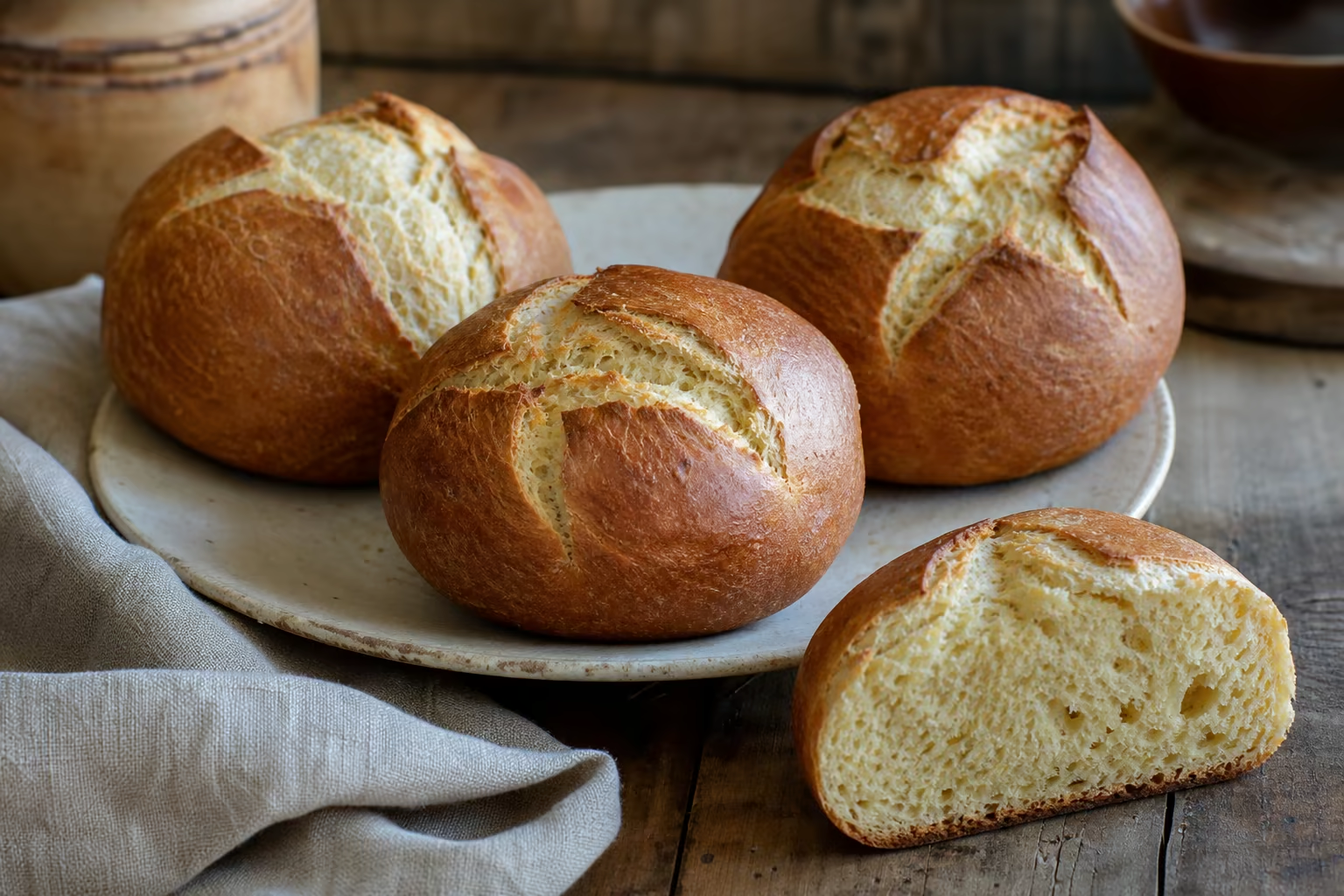
Portalegre Bolo Finto
Also known as: Portalegre Easter Sweet Bread · Bolo Finto Sweet Bread
Upper Alentejo's slow-risen sweet bread, scenting Easter with fennel.
- Origin
- Portalegre and Upper Alentejo
- Place
- Portalegre · Upper Alentejo
- Region
- The Alentejo
- Category
- Festive & Seasonal
- Season
- Year-round; especially Easter
- Evidence
- Well documented
Bolo Finto from Portalegre is a tall, round, yeasted sweet bread with a smooth golden crust. Before baking it is cut with a cross and brushed with egg; in the oven the cross opens to expose its pale fibrous crumb. The dough combines flour, eggs, sugar, milk, olive oil and baker's yeast with aguardente, cinnamon, fennel and lemon zest.
It is less rich and decorated than an egg-topped folar and entirely different from tray-baked boleima. Its character lies in the long rise, firm exterior, sweet-bread crumb and warm aromatics. It is served in slices, plain or buttered, and keeps better than a moist cake.
- wheat flour
- eggs
- sugar
- baker's yeast
- milk
- olive oil
- aguardente
- cinnamon
- fennel
- lemon zest
- salt
Moderately sweet with a firm yet tender crumb, citrus notes and a leading fennel-and-cinnamon perfume; aguardente remains chiefly as aroma.
Some formulas use lard and orange zest or juice, while the hotel-school version uses olive oil and lemon. The usual form is round with a cross cut; at Easter some Elvas bakeries shape lizards, chicks and dolls, sometimes using an egg and black-eyed peas for facial details.
At bakeries and pastry shops in Portalegre and Upper Alentejo, with the widest availability at Easter. Portalegre's Traditional and Convent Confectionery Fair has also hosted children's bolo-finto workshops.
Coffee, herbal tea or a lightly toasted slice with butter.
Portalegre municipality lists bolo finto alongside boleimas, queijadas and sugared almonds among the city's popular-origin sweets. Its exact origin is not documented in the sources consulted, but the process preserves a clue to the name: the Portalegre hotel-school recipe tells the dough to 'fintar' for about four hours before a second rise of one to two hours. It is now eaten year-round while remaining strongly associated with Easter. Bakeries across the district also preserve figurative versions—dolls, chicks and lizards—made especially for children. In 2019, Bolo Finto de Portalegre joined the 420 nominees for Portugal's Seven Wonders of Sweets.
Well documented
Identity supported by institutional, specialist or corroborating sources.
- cm-portalegre.pt/visitantes/turismo/gastronomia/docaria-conventual-e-tradicional/ (opens in a new tab)
- noticiasdecastelodevide.blogspot.com/2021/04/escola-de-hotelaria-de-portalegre.html (opens in a new tab)
- cm-portalegre.pt/blog/2015/04/27/xv-feira-de-docaria-conventual-e-tradicional-de-portalegre/ (opens in a new tab)
- 24.sapo.pt/vida/artigos/bolos-em-forma-de-lagartos-bonecas-e-pintos-sao-tradicao-na-pascoa-em-elvas (opens in a new tab)
- paodasao.pt (opens in a new tab)
- sulinformacao.pt/wp-content/uploads/2019/04/Lista-de-Nomeados-do-Alentejo.pdf (opens in a new tab)
Pastries from here — The Alentejo
 Catalogue image
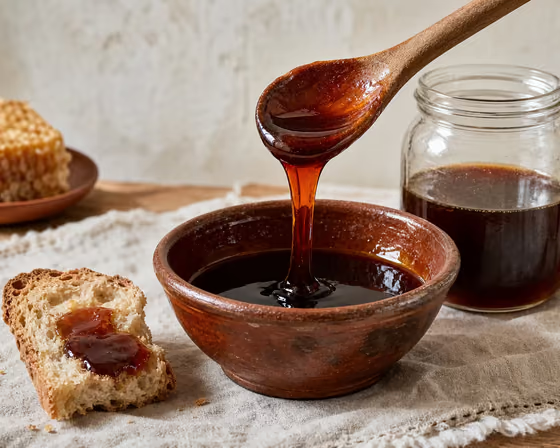
 Portuguese Água-mel Syrup
Water that recovers honey from combs after extraction, filtered and reduced for hours to 70–77° Brix.
The Alentejo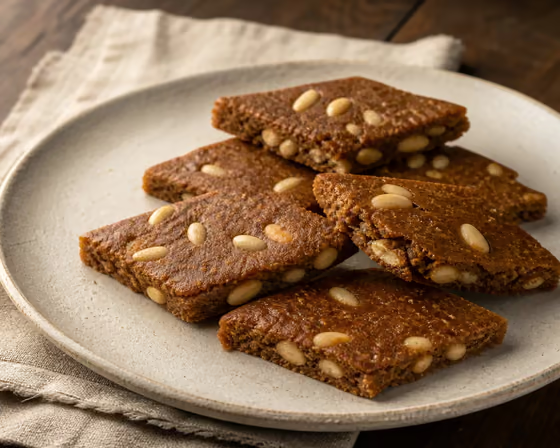 Catalogue image
 Alcomonias
Toasted coarse wheat flour, honey and pine nuts spread and cut into diamonds.
The Alentejo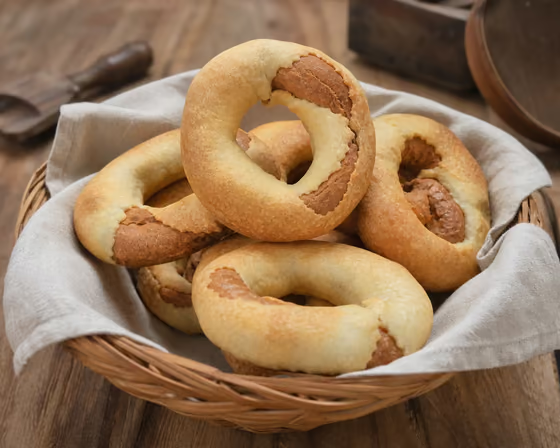 Catalogue image
 Amoreiras-Gare Alcôncoras
A large circular honey-and-olive-oil biscuit born from Amoreiras-Gare's promise-pole tradition.
The Alentejo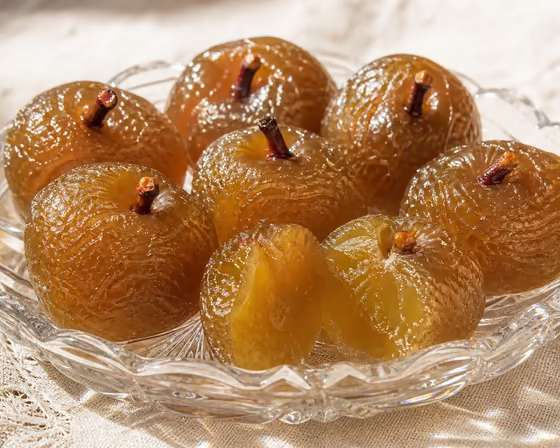 Catalogue image
 Elvas Plums
Protected Rainha Cláudia Verde greengages sold fresh, dried or candied—the sweet form requires at least seven days of slow candying.
The Alentejo