Portuguese Pastry-Counter Rum Baba
Also known as: Rum baba · Portuguese pastry-counter baba · Baba with chantilly
Yeasted cake soaked in rum syrup and opened for a whirl of chantilly.
- Origin
- Central-European and French pastry integrated into Portuguese confectionery
- Place
- Portugal
- Region
- Nationwide
- Category
- Custards & Creams
- Season
- Year-round
- Evidence
- Well documented
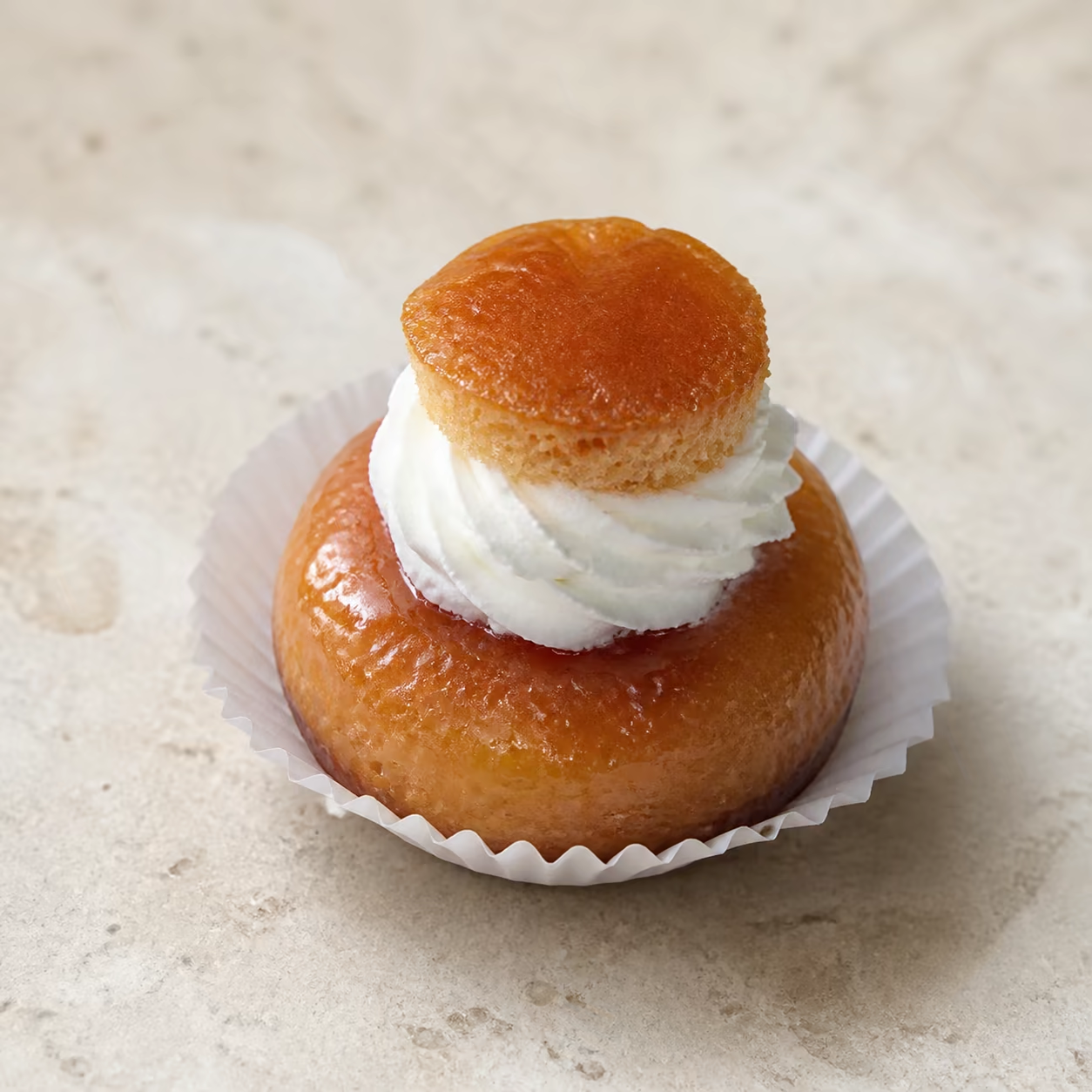
The Portuguese counter Babá is a very porous yeasted cake, often baked as a low ring and soaked until glossy in rum-flavoured syrup. Its centre receives a generous chantilly rosette; some shops place a small cap of the same cake on top.
The correct texture is neither dry bread nor fried cake: its crumb must absorb abundant liquid without collapsing. Pastry paper contains the syrup while chantilly balances alcohol and sweetness.
- Yeasted baba dough
- Sugar syrup
- Rum
- Chantilly
Very moist, sweet and aromatic, with warm rum notes and cool milky chantilly.
It may be a ring, cylinder or small crown; rum quantity varies. Fresh or preserved fruit appears internationally, while the Portuguese counter reference is plain with chantilly.
Historic Versailles in Lisbon includes Babá in its selection. The reopened Pastelaria Suíça has also received recent mentions of the chantilly version. Confirm the day’s production.
Espresso without added sugar.
The classic account attributes Babá to Stanisław Leszczyński, deposed Polish king and eighteenth-century Duke of Lorraine, who supposedly soaked kugelhopf and linked the name to Ali Baba. French professional literature repeats the tradition, but its precise theatrical details contain legendary elements and do not prove an individual invention.
The consolidation of baba au rhum as a French pastry classic and its adoption into Portugal's repertoire are documented. Fabrico Próprio describes the national counter version, and Lisbon's Versailles continues to list Babá. The Pastelaria Suíça review source proves only customer-reported availability, not historical continuity.
Well documented
Identity supported by institutional, specialist or corroborating sources.
- fabricoproprio.net/enciclopedia/baba/ (opens in a new tab)
- academiedugout.fr/recettes/la-pate-a-baba_5262_2 (opens in a new tab)
- academiedugout.fr/recettes/baba-au-rhum_4959_2 (opens in a new tab)
- please.com.pt/lx1/pastelaria-versailles.html (opens in a new tab)
- tripadvisor.pt/Restaurant_Review-g189158-d27514528-Reviews-Pastelaria_Suica-Lisbon_Lisbon_District_Central_Portugal.html (opens in a new tab)
Pastries from here — Nationwide
 Catalogue image
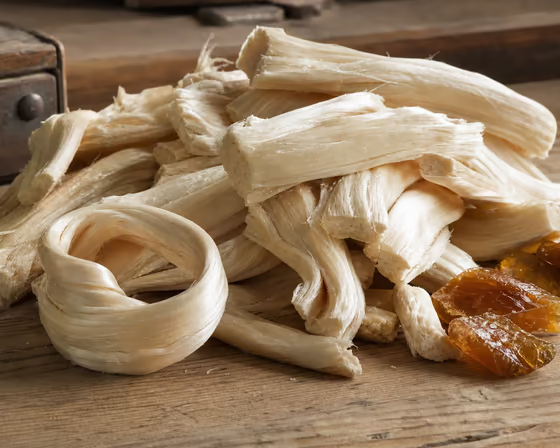
 Alféloa
Sugar or molasses cooked to a hard stage and worked until pale.
Nationwide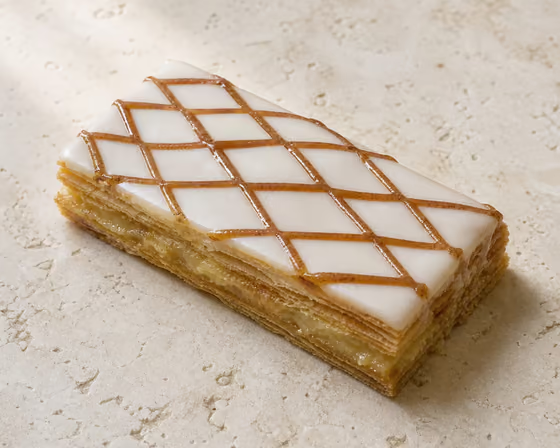 Catalogue image
 Portuguese Gila Allumette
A rectangular puff pastry with cream, gila and cinnamon beneath diamond-patterned royal icing.
Nationwide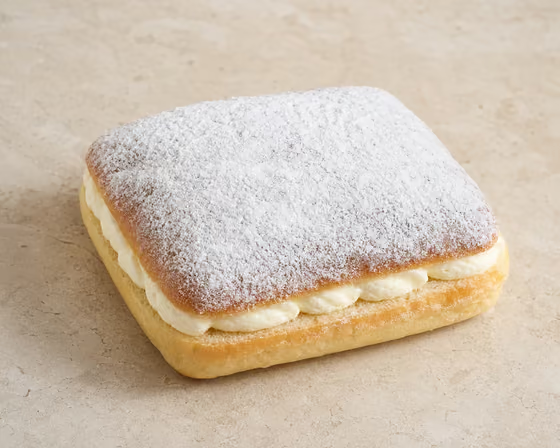 Catalogue image
 Portuguese Brioche Almofada
Light brioche dough, fresh buttercream and icing sugar.
Nationwide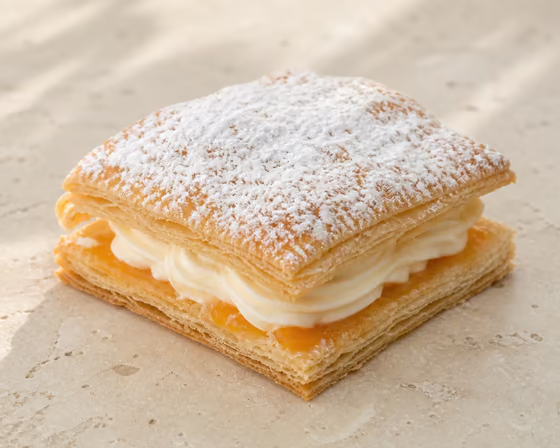 Catalogue image
 Portuguese Puff-Pastry Almofada
Puff pastry with white cream, egg sweet and icing sugar—the laminated Almofada variant.
Nationwide