Portuguese Rice Pudding
Also known as: Rice with milk · Sweet rice · Perre Rice Pudding
The Sunday dessert of the whole country, signed in cinnamon.
- Origin
- Mediterranean and Near Eastern roots, brought to the Iberian Peninsula through the Arab presence; popularised in Portugal from the 16th-17th centuries
- Place
- Nationwide
- Region
- Nationwide
- Category
- Puddings & Spoon Sweets
- Season
- Year-round
- Evidence
- Well documented
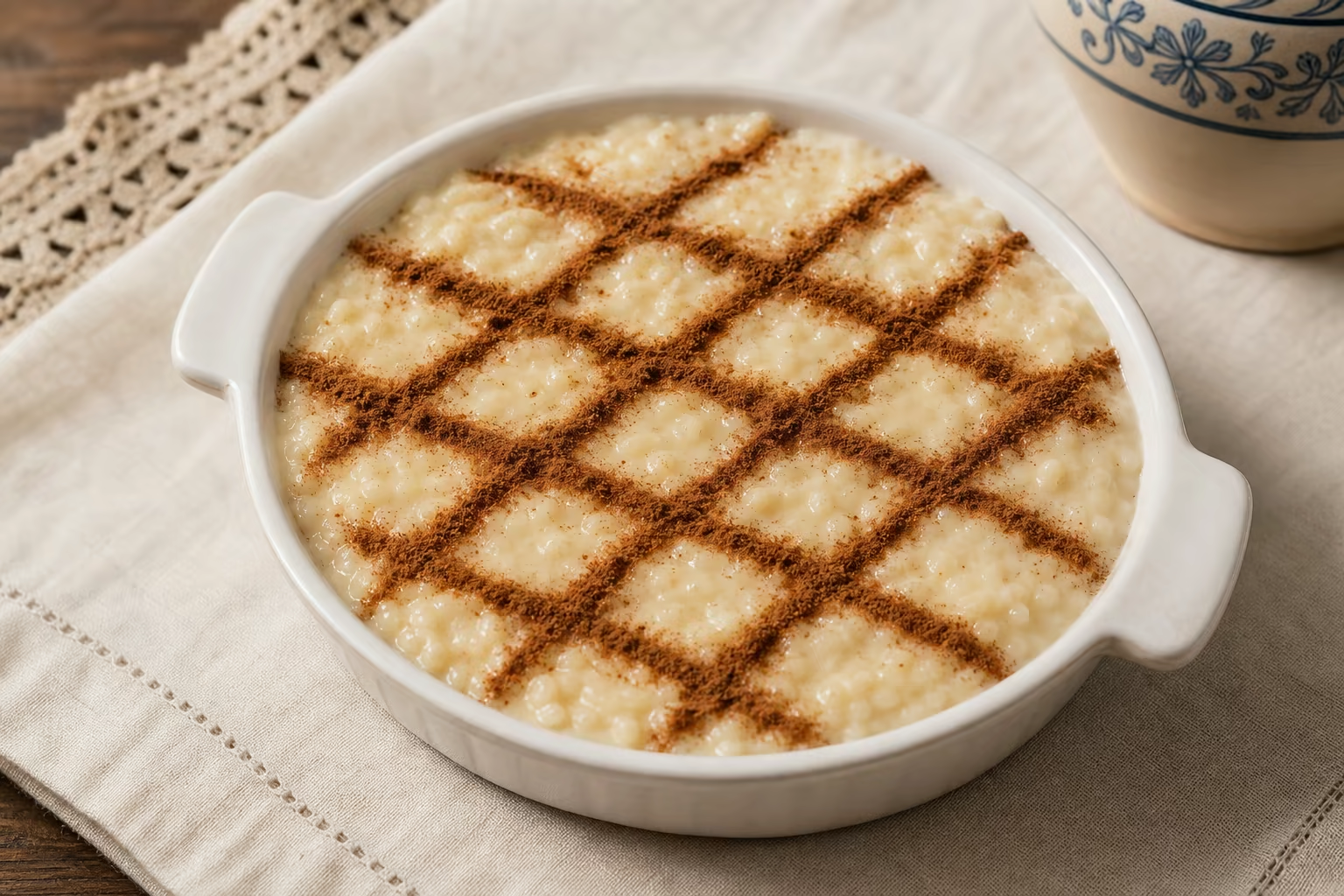
Few sweets are at once as Portuguese and as universal as arroz-doce. It appears at Sunday lunches, village festivals and weddings, served warm or chilled in a deep dish beneath its unmistakable dusting of cinnamon.
In the classic version, rice cooks slowly in sweetened milk scented with lemon peel and often a cinnamon stick. Egg yolks give it a golden colour and velvety richness while the grains stay soft but distinct. The final cinnamon pattern—diamonds, stripes or someone's initials—is almost a household signature.
- Rice (short-grain or carolino)
- Milk
- Sugar
- Egg yolks
- Lemon peel
- Cinnamon stick
- A pinch of salt
- Ground cinnamon (for dusting)
Sweet but balanced, with the citrus perfume of lemon and the warmth of cinnamon cutting through the richness of the milk. Texture is the secret: creamy and enveloping, the rice grains soft yet distinct, never mushy. The egg yolks lend a golden, almost custardy depth; the cinnamon dusting adds a warm aroma to every spoonful.
The great divide is between arroz-doce with egg yolks — golden, richer and creamier — and white arroz-doce, eggless, lighter and looser. Some use orange instead of lemon, some add a knob of butter or a splash of Port, and preferences run from firm grains to fully creamy. Some serve it warm, others well chilled. The cinnamon on top is the one point everyone agrees on. Perre has no single standardised formula: its living heritage lies in family recipes from across the parish, ranging from creamy spoonable versions to puddings firm enough to serve by the slice.
You'll find it from north to south: in taverns and traditional restaurants as the house dessert, in neighbourhood bakeries and, best of all, at any Portuguese grandmother's table. In Coimbra, the Confraria do Arroz-Doce champions and celebrates the recipe. To experience the Minho tradition in its community setting, look for the Festival do Arroz Doce de Perre in Viana do Castelo. The truly good version is recognised by its creaminess and generous cinnamon layer — be wary of overly firm, ice-cold individual cups.
It stands happily on its own as comfort food, but is traditionally paired with a strong espresso or, on festive occasions, a glass of Port or Moscatel de Setúbal that echoes its sweet, citrusy notes.
The combination of rice, milk and sugar reached the Iberian Peninsula through an Arab-influenced Mediterranean and Middle Eastern tradition of cooking rice in milk. Portuguese arroz doce grew popular in the sixteenth and seventeenth centuries as sugar entered wealthy and monastic kitchens, then spread rapidly into domestic cooking.
Over time it became a sweet for everyone. Lemon or orange peel and decorative cinnamon became its signature, while every region and family settled on a preferred texture and recipe. Its cultural importance is now celebrated by the Confraria do Arroz-Doce, founded in Almalaguês, Coimbra, in 2019.
In Perre, Viana do Castelo, rice pudding has an especially strong communal expression. Its local festival brings together cooks from 14 places within the parish, and the municipality has supported the event for its symbolic and heritage value to the community. Arroz Doce de Perre also reached the 140 finalists of Portugal's 7 Maravilhas Doces in 2019—recognition of a local tradition, not evidence that all Portuguese rice pudding originated there.
Well documented
Identity supported by institutional, specialist or corroborating sources.
- pt.wikipedia.org/wiki/Arroz-doce (opens in a new tab)
- cigala.pt/blog/arroz-doce-origem/ (opens in a new tab)
- noticiasdecoimbra.pt/confraria-do-arroz-doce-celebra-historia-sabor-e-inovacao-em-coimbra/ (opens in a new tab)
- radiocampanario.com/arroz-doce-tem-uma-historia-que-nunca-acaba-confraria-ja-descobriu-mais-de-100-receitas-desta-iguaria/ (opens in a new tab)
- casalmisterio.com/sabia-que-o-primeiro-arroz-doce-levava-leite-de-amendoa/ (opens in a new tab)
- nutrada.com/blog/ceylon-cinnamon-cassia-cinnamon (opens in a new tab)
- cm-viana-castelo.pt/cmvianadocastelo/uploads/document/file/1374/reuniao_ordinaria_de_11_de_julho_de_2019.pdf (opens in a new tab)
- cm-viana-castelo.pt/cmvianadocastelo/uploads/document/file/226/reuniao_ordinaria_de_26_de_junho_de_2023.pdf (opens in a new tab)
- radiogeice.com/2019/06/artista-plastico-ctemporane-pintou-1-000-pratos-para-festival-do-arroz-doce-de-perre/ (opens in a new tab)
- aevc.pt/tres-doces-de-viana-do-castelo-podem-ser-eleitos-as-7-maravilhas-da-docaria/ (opens in a new tab)
- caruspinus.pt/wp-content/uploads/2019/05/LISTA_7MDOCESP_140_NOMEADOS_2ELIMINATORIA.pdf (opens in a new tab)
Pastries from here — Nationwide
 Catalogue image
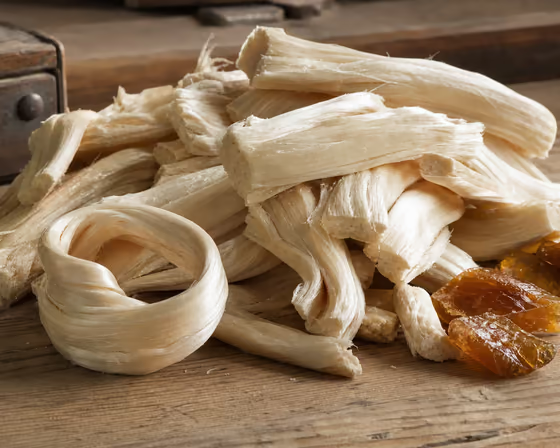
 Alféloa
Sugar or molasses cooked to a hard stage and worked until pale.
Nationwide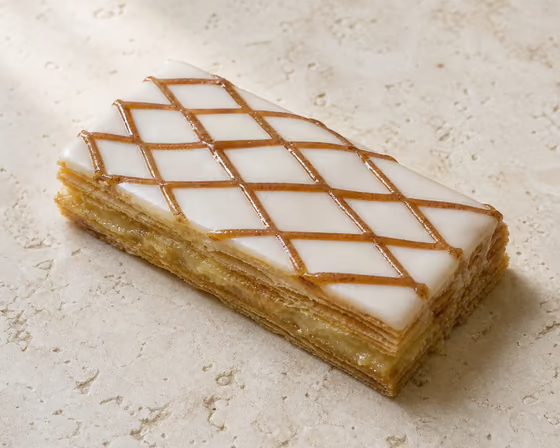 Catalogue image
 Portuguese Gila Allumette
A rectangular puff pastry with cream, gila and cinnamon beneath diamond-patterned royal icing.
Nationwide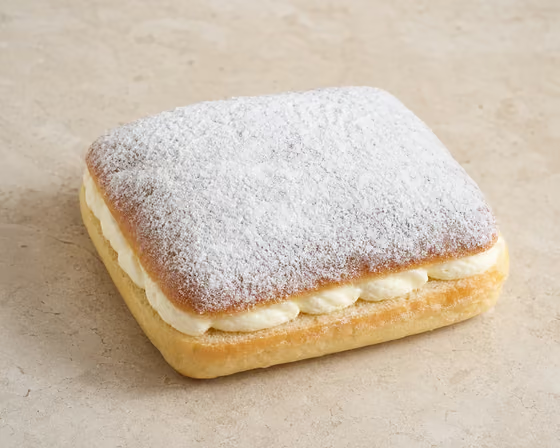 Catalogue image
 Portuguese Brioche Almofada
Light brioche dough, fresh buttercream and icing sugar.
Nationwide Catalogue image
 Portuguese Puff-Pastry Almofada
Puff pastry with white cream, egg sweet and icing sugar—the laminated Almofada variant.
Nationwide