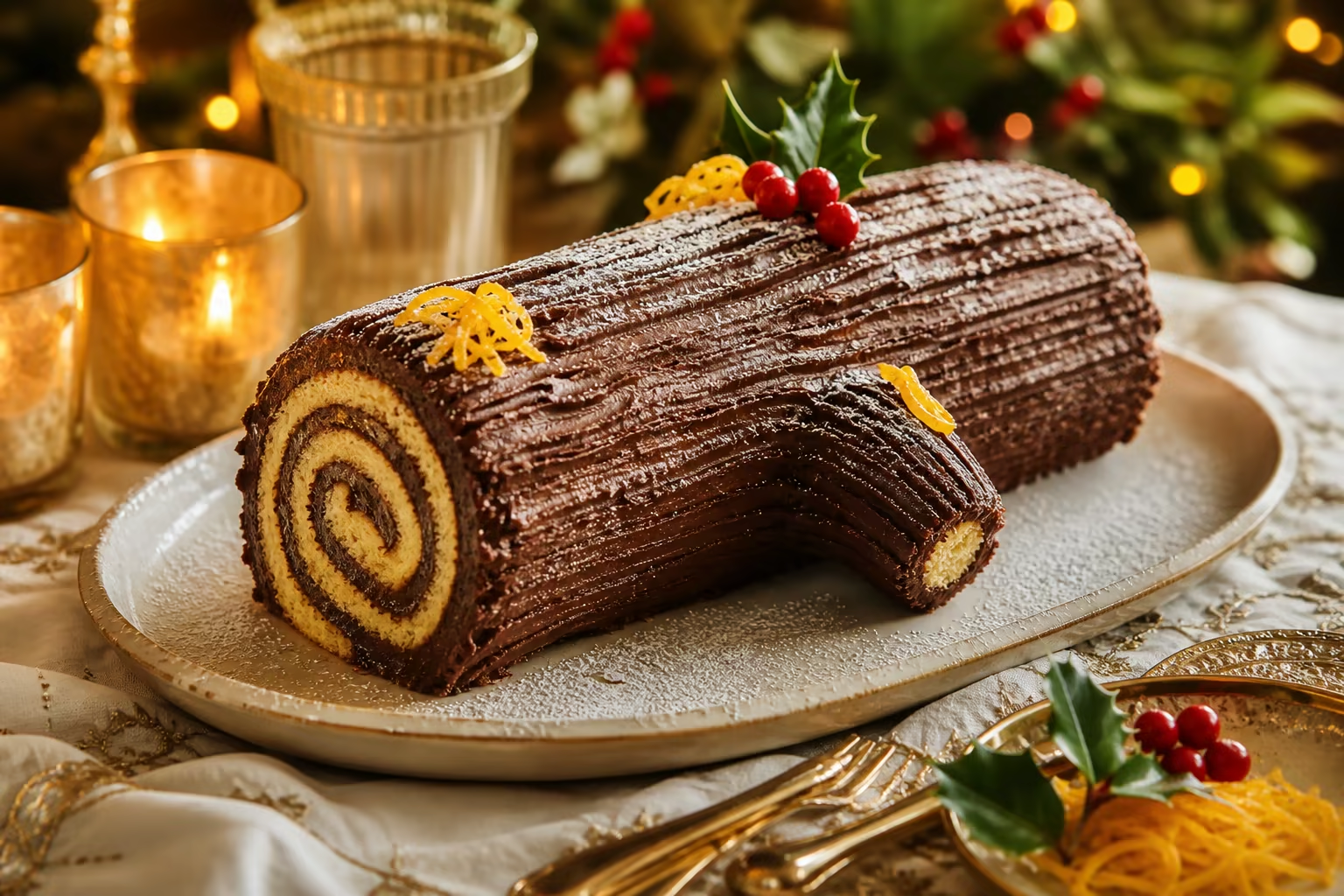
Yule Log
Also known as: Bûche de Noël · Christmas log · Yule log cake
A Christmas cake shaped and decorated as a log, with documented Portuguese formulas that differ markedly.
- Origin
- France · a Christmas sweet also incorporated into Portugal’s repertoire; date and route of Portuguese adoption unknown
- Place
- Nationwide
- Region
- Nationwide
- Category
- Festive & Seasonal
- Season
- Christmas
- Evidence
- Well documented
Portugal’s Tronco de Natal belongs to the French bûche de Noël family: a composed cake shaped and decorated to imitate a wooden log. Its place in the national repertoire is supported by the Portuguese Traditional Products List and Portuguese Christmas-recipe pages. That does not, however, establish a single national formula.
Teleculinária publishes a flour, sugar and egg roulade filled and covered with a cream of butter, sugar, chocolate powder and egg yolks. 24Kitchen publishes a markedly different composition: almonds, brown sugar and seventeen eggs, coated with an egg-yolk sweet. Log form and Christmas context link these versions; sponge, filling, coating, decoration and method may differ.
This page treats the product as a family of Christmas cakes. It does not turn one recipe’s chocolate buttercream into a universal feature or present an unproven twentieth-century bakery diffusion narrative as fact.
- Cake base — flour, sugar and eggs in one formula; almonds, brown sugar and eggs in another
- Filling and coating — chocolate buttercream or egg-yolk sweet, depending on the version
- Fat and sugar for preparation and finishing, as specified by each formula
There is no single profile: Teleculinária’s version combines a sweet roulade with chocolate buttercream, whereas 24Kitchen’s is dominated by almonds and egg-yolk sweet. Texture, richness and chocolate intensity depend on the chosen formula.
The two consulted Portuguese formulas demonstrate structural rather than merely decorative variation. One is a flour roulade with chocolate cream; the other uses almonds, brown sugar and many eggs with an egg-yolk-sweet coating. Other versions may exist, but they should not be merged into a canonical recipe without evidence.
The sources confirm home preparation during the Christmas season, but this review did not verify a national producer network or permanent availability. In December, check directly with bakeries or local services before travelling.
The consulted sources establish no traditional pairing. Coffee, fortified wine or a digestif would be editorial suggestions rather than documented parts of the cake’s identity.
France.fr links the bûche de Noël to the custom of burning a large log at Christmas and to the decline of hearths in the late nineteenth century, when pastry cooks began representing the log as cake. The same page attributes a pastry version to Pierre Lacam in Paris in the late nineteenth century; this is the source’s attribution, not an authorship independently confirmed here. The Bibliothèque nationale de France documents the wider setting of French Christmas tables and imagery.
In Portugal, the national traditional-products list includes Tronco de Natal, while contemporary culinary sources publish versions for the season. The consulted evidence does not establish when it reached Portugal, the route by which it was adopted, the first Portuguese formula, or when it became nationally distributed. Portuguese chronology before the current publications therefore remains unknown.
Well documented
Identity supported by institutional, specialist or corroborating sources.
- eubrdialogues.com/sites/default/files/acoes/documentos/049xlix_lista_de_produtos_tradicionais_portugueses_v_19_0.pdf (opens in a new tab)
- france.fr/de/artikel/buche-noel-traditioneller-kuchen-der-weihnachtszeit/ (opens in a new tab)
- classes.bnf.fr/iconographie/grandenfants/ico_0016.htm (opens in a new tab)
- teleculinaria.pt/receitas/tronco-de-natal/ (opens in a new tab)
- 24kitchen.pt/receita/tronco-natal (opens in a new tab)
- turismodocentro.pt/artigo/doces-de-natal-no-centro-de-portugal/ (opens in a new tab)
Pastries from here — Nationwide
 Catalogue image
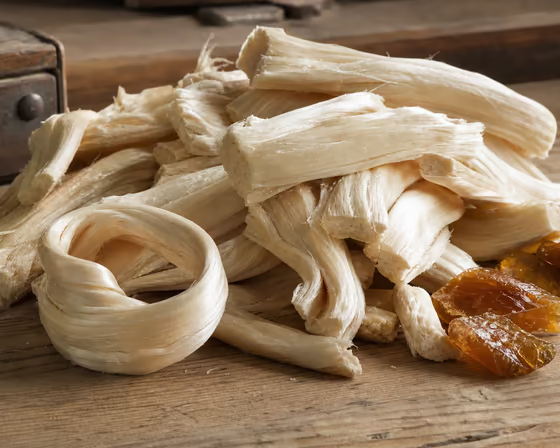
 Alféloa
Sugar or molasses cooked to a hard stage and worked until pale.
Nationwide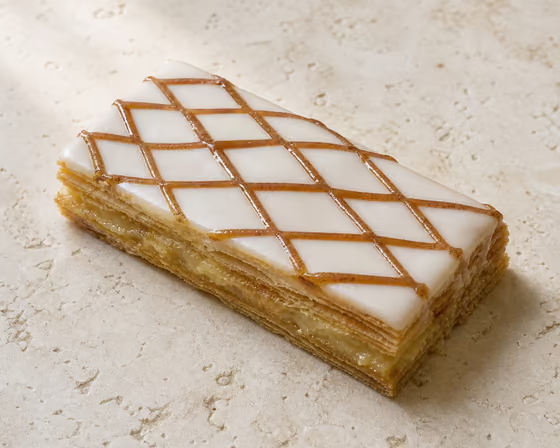 Catalogue image
 Portuguese Gila Allumette
A rectangular puff pastry with cream, gila and cinnamon beneath diamond-patterned royal icing.
Nationwide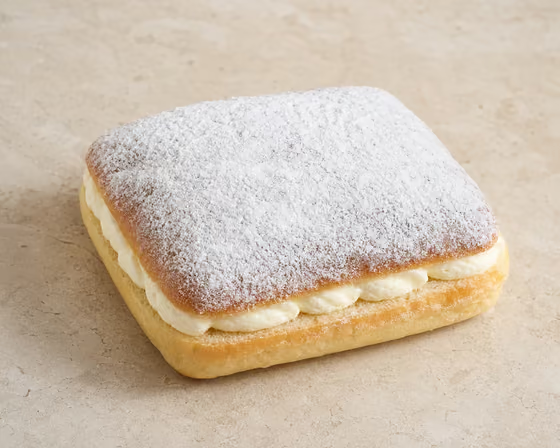 Catalogue image
 Portuguese Brioche Almofada
Light brioche dough, fresh buttercream and icing sugar.
Nationwide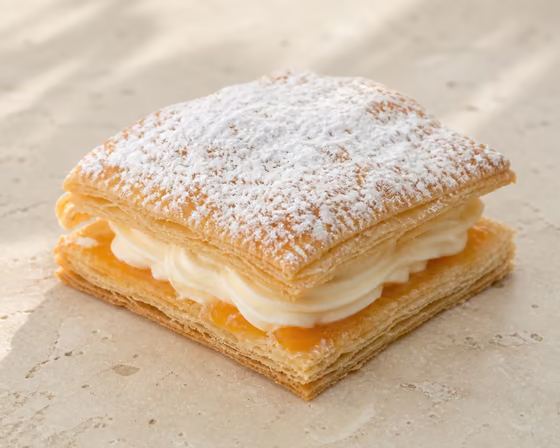 Catalogue image
 Portuguese Puff-Pastry Almofada
Puff pastry with white cream, egg sweet and icing sugar—the laminated Almofada variant.
Nationwide