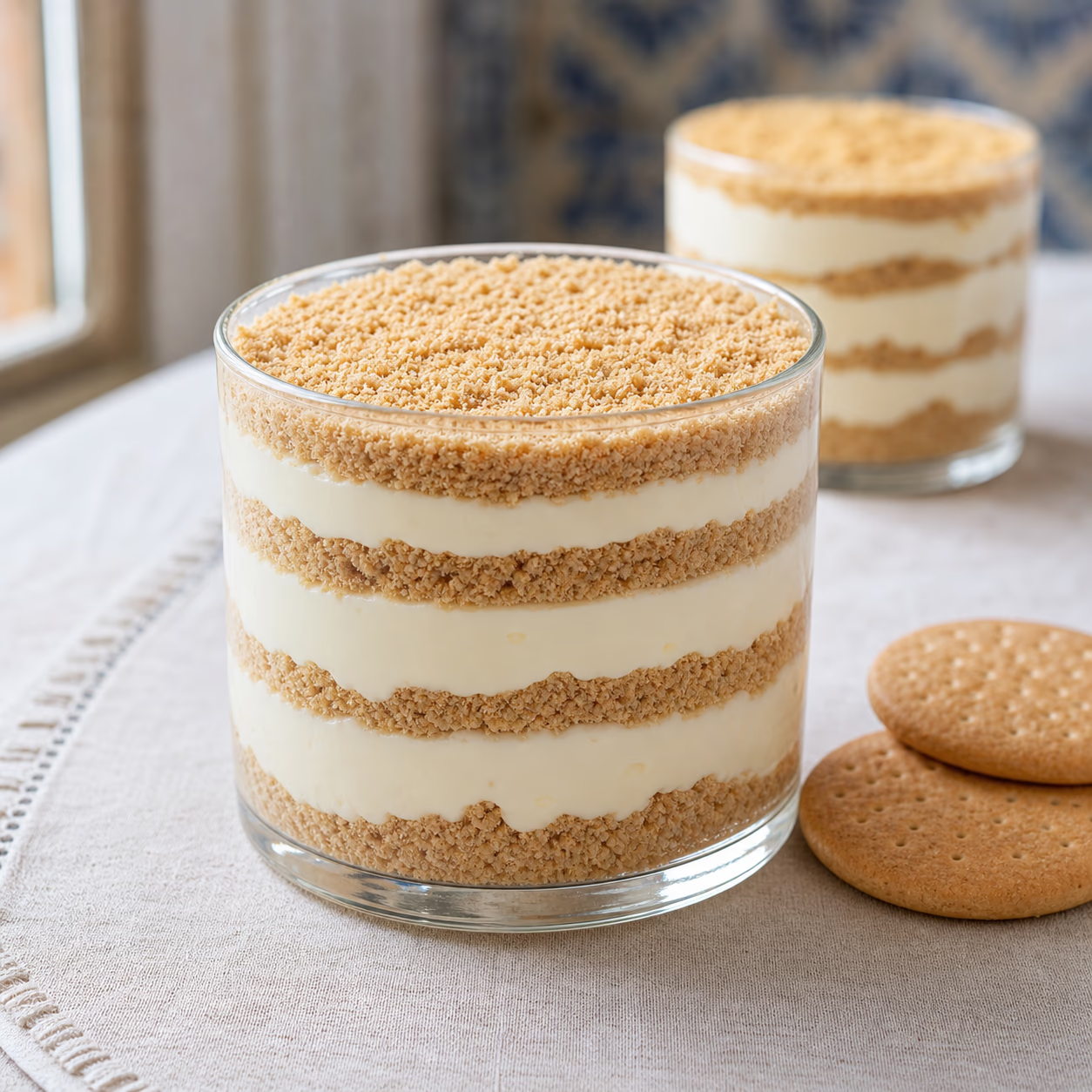
Portuguese Sawdust Pudding
Also known as: Sawdust Pudding · Portuguese Serradura · Macau Sawdust Dessert
Chilled layers of cream and condensed milk divided by Maria biscuit crumbs resembling sawdust.
- Origin
- Portugal · also deeply established in Macao
- Place
- Portugal and Macao
- Region
- Nationwide
- Category
- Puddings & Spoon Sweets
- Season
- Year-round · especially welcome in summer
- Evidence
- Well documented
Serradura is a chilled three-ingredient sweet made from very finely crushed Maria biscuits, whipped cream and condensed milk. Alternating layers are assembled in a bowl or clear glass and finished with a generous covering of crumbs whose appearance gives the dessert its “sawdust” name.
The biscuit remains sandy and gently crisp while the cream is soft and airy. Simplicity defines it: when a yellow egg-yolk cream is added on top, the dessert is closer to Natas do Céu, a distinct Portuguese sweet.
- Maria biscuits
- Whipping cream
- Condensed milk
Cool sweet dairy cream contrasted with fine, sandy layers of toasted biscuit.
Firmer versions use gelatine, while frozen, coffee and chocolate variants also exist. The core version retains biscuit, cream and condensed milk.
In Portuguese restaurants and homes, and in Portuguese–Macao bakeries and restaurants in Macao.
Espresso or lightly sweetened black tea.
Serradura is identified as a Portuguese dessert and has also become a sweet emblem of Macao. The Macao Government Tourism Office lists it among the city's best-known Portuguese desserts, describing soft whipped cream with biscuit pieces, eaten with a spoon.
Movement between Portugal and Macao explains its dual modern identity. In Portugal it remained a quick home and restaurant dessert; in Macao it gained enormous prominence, including frozen and flavoured versions. The consulted sources confirm this Portuguese–Macao connection but do not securely establish a date or inventor.
Well documented
Identity supported by institutional, specialist or corroborating sources.
- macaotourism.gov.mo/pt/dining/taste-of-macao/macanese-and-portuguese-dishes (opens in a new tab)
- saboreiaavida.nestle.pt/cozinhar/receita/serradura (opens in a new tab)
- teleculinaria.pt/receitas/serradura/ (opens in a new tab)
Pastries from here — Nationwide
 Catalogue image
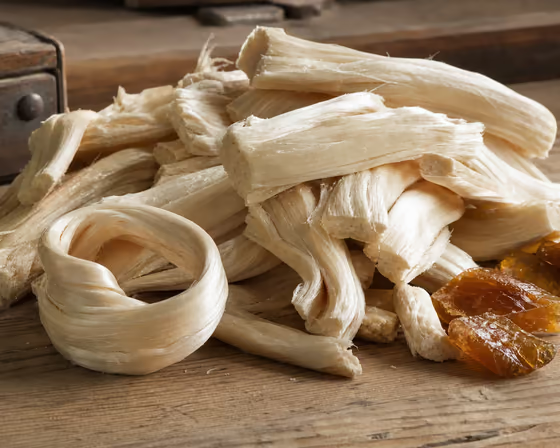
 Alféloa
Sugar or molasses cooked to a hard stage and worked until pale.
Nationwide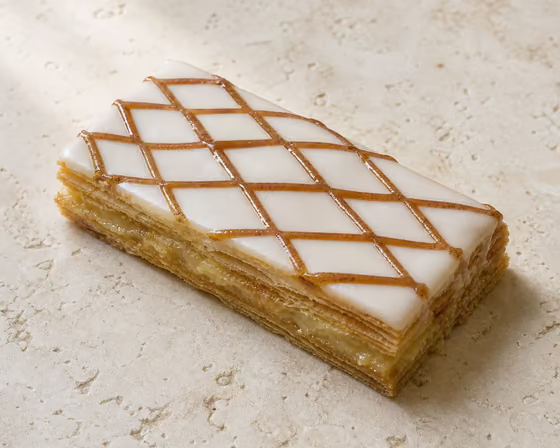 Catalogue image
 Portuguese Gila Allumette
A rectangular puff pastry with cream, gila and cinnamon beneath diamond-patterned royal icing.
Nationwide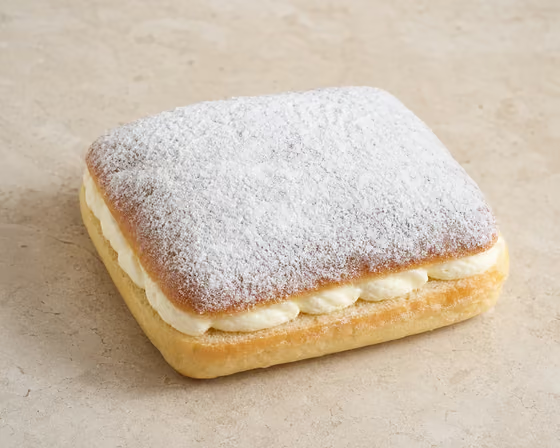 Catalogue image
 Portuguese Brioche Almofada
Light brioche dough, fresh buttercream and icing sugar.
Nationwide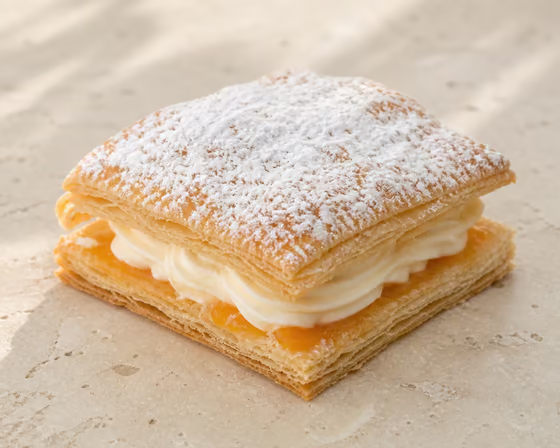 Catalogue image
 Portuguese Puff-Pastry Almofada
Puff pastry with white cream, egg sweet and icing sugar—the laminated Almofada variant.
Nationwide