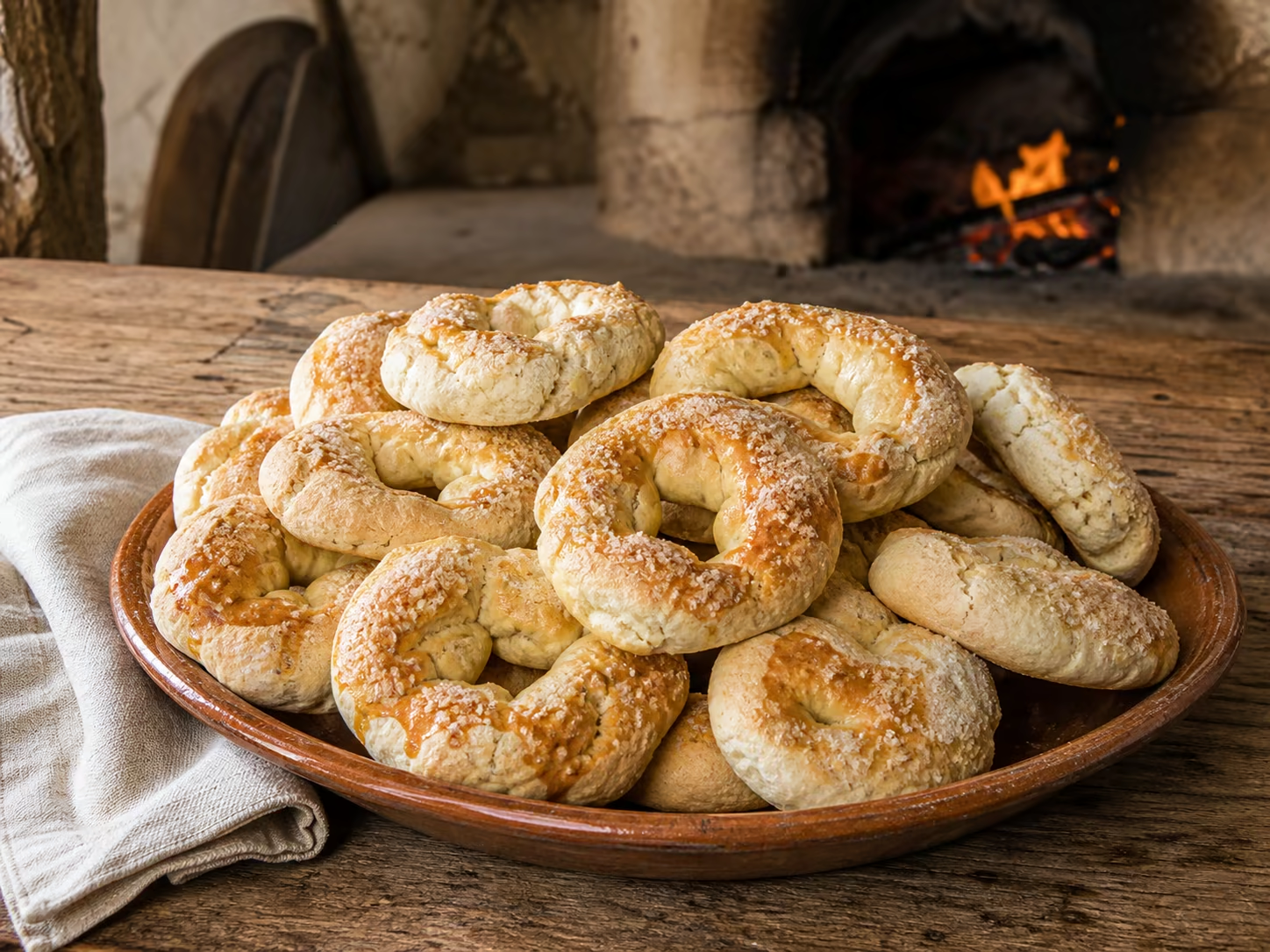
Mogadouro Baked Rosquilhas
Also known as: Mogadouro Baked Rosquilhas · Mogadouro Sweet Rings
Baked rings tied to the confectionery and festive rituals of Mogadouro's villages.
- Origin
- Mogadouro · Trás-os-Montes
- Place
- Mogadouro · Trás-os-Montes
- Region
- Trás-os-Montes
- Category
- Festive & Seasonal
- Season
- Confirm commercial availability · Soutelo Bitórró on the third Sunday of January · Azinhoso Rosquilhas Festival documented in May 2023
- Evidence
- Well documented
Rosquilhas de Mogadouro are sweet baked rings documented in several settlements across the municipality. The council identifies them in the gastronomy of Azinhoso and Soutelo, while Mogadouro Parish lists them, alongside bolos económicos, among the area's traditional sweets. The sources establish the name, ring form and territorial context but do not publish one municipality-wide formula.
The ORIGEM:MOGADOURO platform documents artisan production at Casa das Cruzes in Travanca: products are kneaded by hand in a trough and baked in a wood-fired oven. The page names local flour, eggs and olive oil among the producer's principal ingredients but does not unambiguously assign all of them to the rosquilha recipe. For accuracy, this record does not present an ingredient list as an established formula.
The image on this page is an editorial interpretation of rustic oven-baked rings. It is not the producer's photograph and does not prove the shape, finish or ingredients of an authenticated example.
The consulted sources publish neither a product-specific sensory description nor a formula for Rosquilhas de Mogadouro. Their sweetness, aromatics and crumb texture cannot be established safely.
Shapes range from a ring to an almost closed knot, and browning changes with brushing and oven heat. ‘Rosquilha’ names very different sweets across Portugal: Mogadouro's should not be merged with Rosquilhas de Argozelo from Vimioso municipality, whose formula is separately documented by DGADR.
Casa das Cruzes in Bairro das Cruzes, Travanca, lists baked rosquilhas among its traditional products and accepts direct order enquiries. They may also appear at municipal fairs and celebrations; confirm availability before travelling.
No traditional pairing was identified in the sources consulted; any suggested drink would be editorial.
The festive association is documented in detail. O Culto do Pão, a master's dissertation submitted by Sofia Sales to the School of Education of Bragança in 2010, describes Soutelo's Bitórró festival, held on the third Sunday of January in honour of the Holy Name of Jesus. Village women made the rings during the preceding week; on Saturday they assembled them into a crowned, pyramid-shaped tree carried into Mass and the procession and later auctioned. Some rosquilhas were kept throughout the year as amulets.
The municipality's 2023 calendar also records a Festa das Rosquilhas in honour of Nossa Senhora do Carrasco at Azinhoso. In 2019, Rosquilhas de Mogadouro appeared among the 420 Seven Wonders of Portuguese Sweets nominees in the 'Festive Sweets' category. This evidence establishes continuity and ritual purpose but does not date the recipe's creation. Casa das Cruzes confirms contemporary commercial production in Travanca and dates Rita Gonçalves's first sales to the 2008 Feira Franca dos Produtos da Terra.
Well documented
Identity supported by institutional, specialist or corroborating sources.
- bibliotecadigital.ipb.pt/bitstreams/86db10d4-0cf7-40f8-8604-67f47aadb210/download (opens in a new tab)
- mogadouro.pt/cmmogadouro/uploads/document/file/2377/agenda_municipal_2otrimestre_2023.pdf (opens in a new tab)
- mogadouro.pt/pages/215 (opens in a new tab)
- mogadouro.pt/pages/231 (opens in a new tab)
- origemmogadouro.pt/casa-das-cruzes/ (opens in a new tab)
- freguesiademogadouro.com/gastronomia (opens in a new tab)
- brigantia.pt/node/289898 (opens in a new tab)
- gazetarural.com/wp-content/uploads/2019/04/7-Maravilhas-Doces-de-Portugal-Lista-de-Nomeados.pdf (opens in a new tab)
Pastries from here — Trás-os-Montes
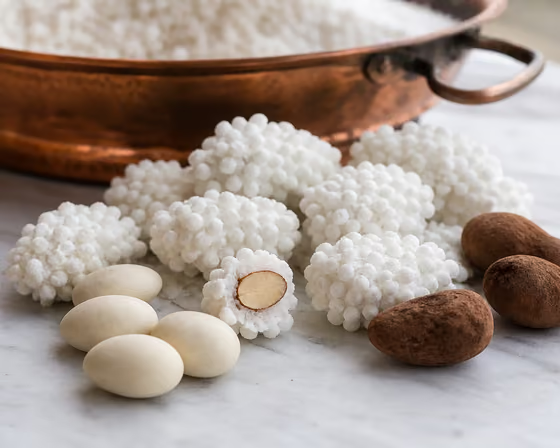 Catalogue image
 Moncorvo Sugar-Coated Almonds
The queen of Trás-os-Montes sweets, spun from sugar and patience in copper.
Trás-os-Montes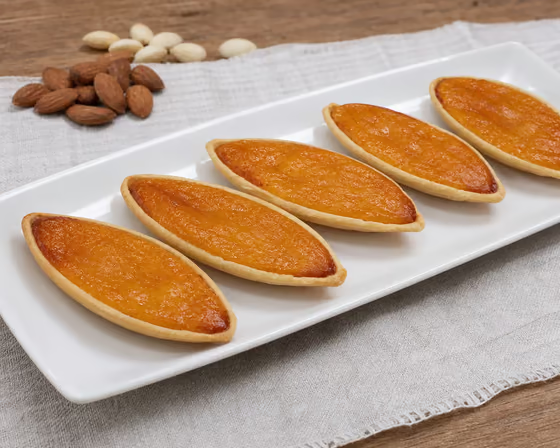 Catalogue image
 Alfândega da Fé Almond Boats
Pale pastry boats with a glossy filling of yolk and Trás-os-Montes almonds.
Trás-os-Montes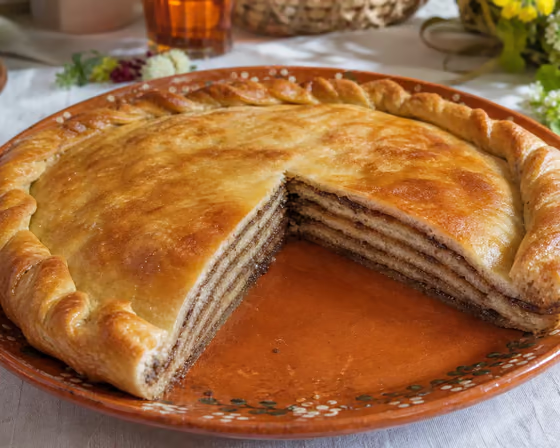 Catalogue image
 Mirandese Sweet Bola
The Easter bola that unravels in layers of sugar and cinnamon.
Trás-os-Montes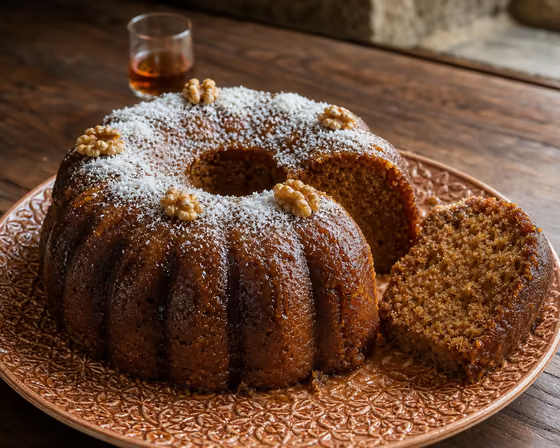 Catalogue image
 Douro Port-Soaked Cake
A rich egg-and-butter cake soaked while hot in a generous Port-wine syrup.
Trás-os-Montes