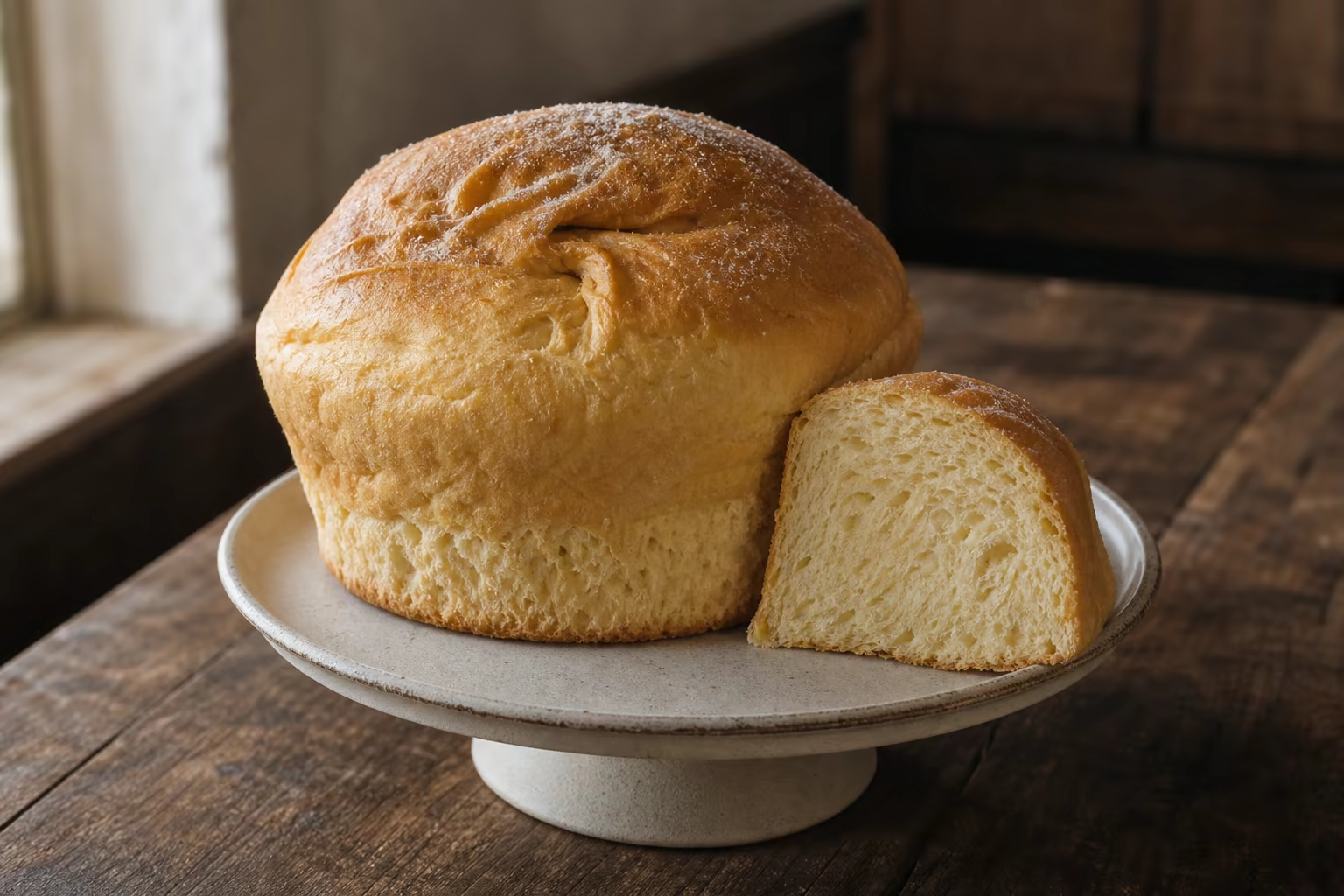
Saint Bernard Sweet Bread
Also known as: Saint Bernard Sweet Bread · Saint Bernard Cake
A tall, round convent sweet bread enriched with eggs and olive oil and linked to Arouca's Bernardine nuns.
- Origin
- Arouca · Aveiro district
- Place
- Arouca
- Region
- The North
- Category
- Convent Sweets
- Season
- Year-round
- Evidence
- Well documented
Pão de São Bernardo is a sweet leavened bread from Arouca: large, tall and rounded, with a golden crust and pale crumb. Its dough combines flour and baker's yeast with eggs, sugar and olive oil, adding richness without losing its bread-like structure.
After proving, the enriched dough is placed in a round mould, dusted with sugar and baked until it rises above the rim. The result is a soft, rustic dome, lightly split on top and quite distinct from the region's small individual cakes.
- wheat flour
- eggs
- sugar
- olive oil
- water
- baker's yeast
- salt
Gently sweet, with a soft elastic crumb, egg aroma and the fruity note of olive oil.
It may be called pão, bola or bolo de São Bernardo. Sweetness, mould size and surface sugar vary, while the egg-and-olive-oil enriched yeast dough remains defining.
At bakeries and convent-sweet shops in Arouca, where it is generally sold whole and sliced to serve.
Milky coffee, tea or a plain slice at breakfast.
Tradition attributes the sweet to the repertoire of Arouca Monastery and its Cistercian nuns, known as Bernardines because they followed the reform of Saint Bernard of Clairvaux. The name preserves that religious connection. Regional tourism sources also record the names Bola and Bolo de São Bernardo.
Well documented
Identity supported by institutional, specialist or corroborating sources.
- aroucageopark.pt/gastronomia-e-vinhos/ (opens in a new tab)
- montanhasmagicas.pt/en/magic-mountains/culture/gastronomy-and-wines/local-products/conventual-sweets/ (opens in a new tab)
- e-konomista.pt/receitas-de-arouca/ (opens in a new tab)
- cm-terrasdebouro.pt/images/noticias/2023/3/12/fdsg23.pdf (opens in a new tab)
Pastries from here — The North
 Catalogue image
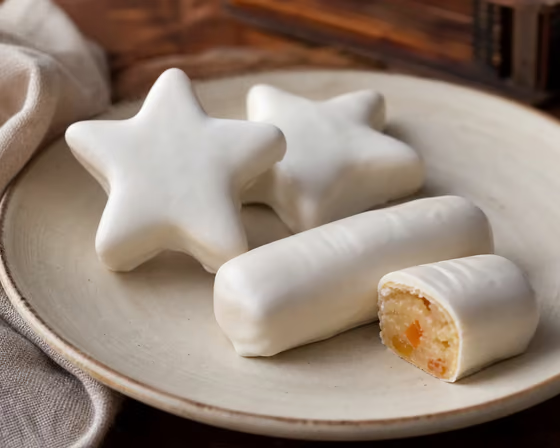
 A Bella Queijadinha de Barcelos
A white star of almond, preserved fruit and family memory.
The North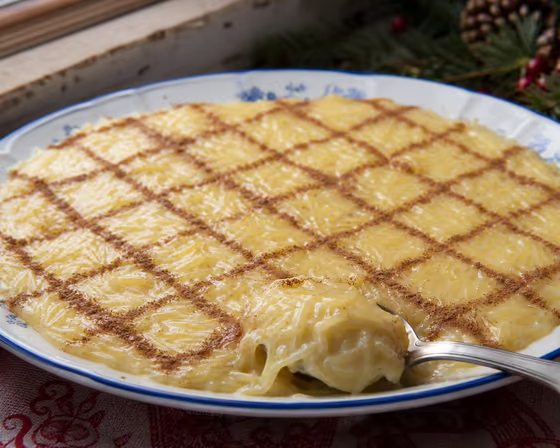 Catalogue image
 Sweet Vermicelli
Fine wheat threads simmered in milk and yolk, scored with cinnamon.
The North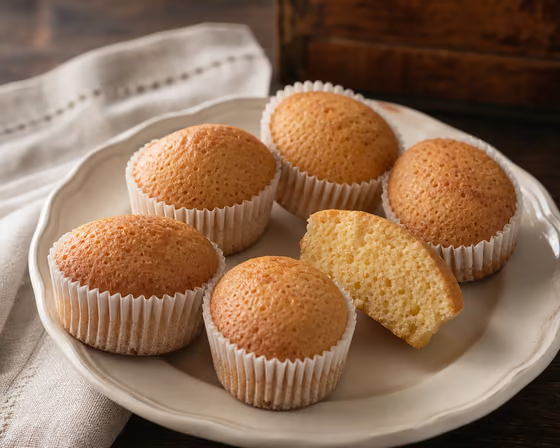 Catalogue image
 Amarantinos
Small egg, lemon and cinnamon cakes whose historical identity is not told consistently by the sources.
The North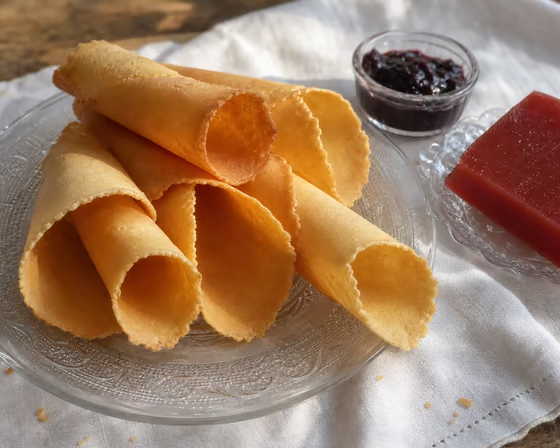 Catalogue image
 Vieira do Minho Cone Wafers
Paper-thin crisp wafers, iron-baked and rolled by hand while still hot.
The North