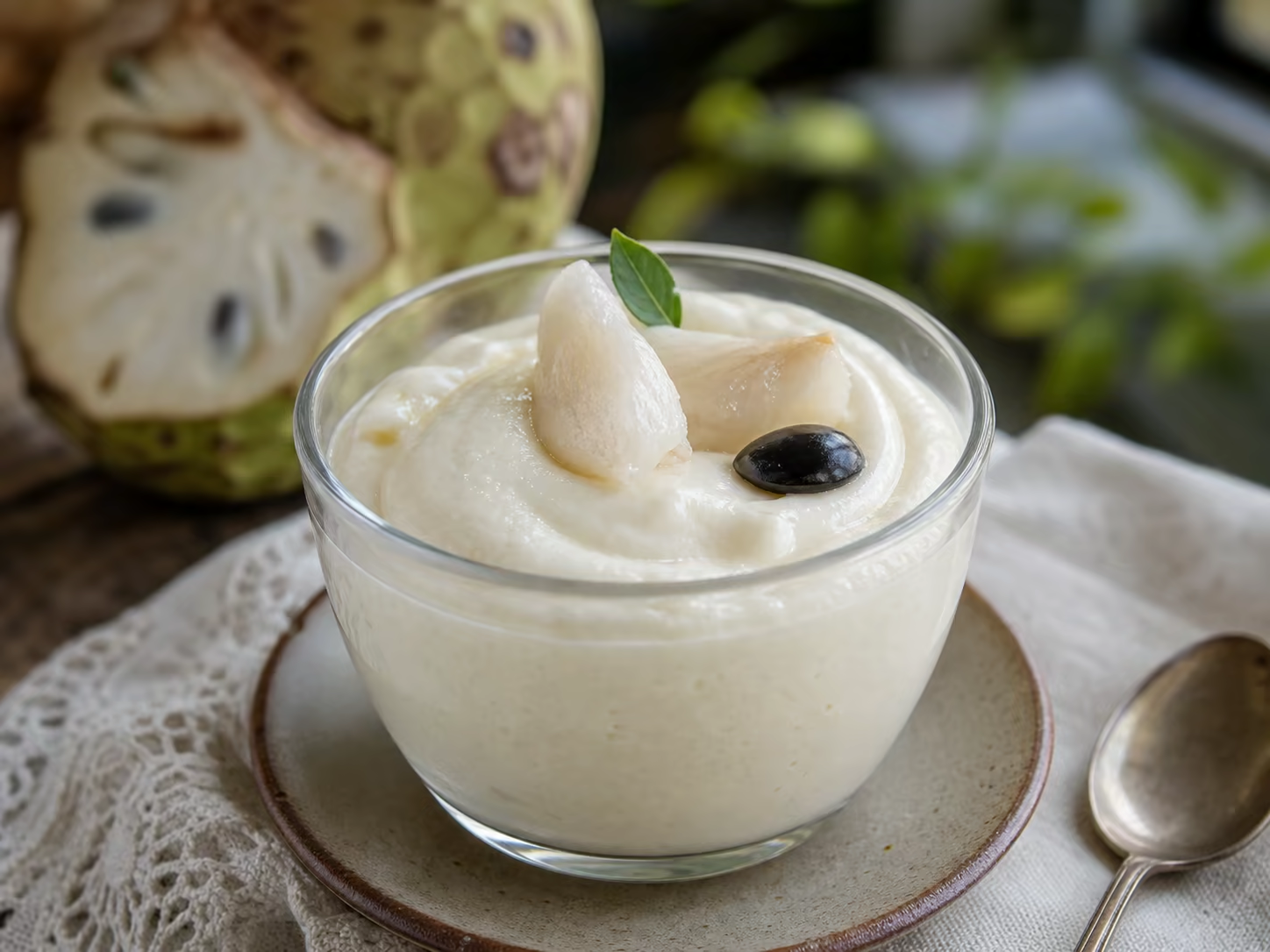
Madeira Cherimoya Mousse
Also known as: Madeira Cherimoya Mousse · Custard Apple Mousse
Madeira cherimoya at the centre of a fresh, light and creamy dessert.
- Origin
- Madeira Island · a regional speciality whose exact chronology is unknown
- Place
- Madeira Island
- Region
- Madeira
- Category
- Puddings & Spoon Sweets
- Season
- Associated with cherimoya availability; the dessert sources establish no serving season
- Evidence
- Well documented
Madeira Cherimoya Mousse is presented by the region’s official tourism body as an island gastronomic speciality. Its institutional description is deliberately simple: a fresh, light, creamy and smooth dessert in which cherimoya, abundant on Madeira, is the central ingredient.
That identity is documented; a single regional formula is not. The Madeiran sources reviewed do not say whether its base uses cream, yoghurt, condensed milk or another ingredient, nor do they publish proportions and a method. This page therefore separates the recognised speciality from generic cherimoya-mousse recipes circulating publicly.
- Cherimoya flesh; the regional formula’s remaining ingredients are unpublished
Visit Madeira characterises the dessert as fresh, light, creamy and smooth. Depending on the variety, DGADR describes Anona da Madeira PDO flesh as white, sweet and dense or white, juicy, soft and mildly sweet; there is no documentary basis for adding more specific tasting notes to the mousse.
The Regional Cherimoya Exhibition itself documents a family repertoire, not a standard recipe. A public 2008 formula explicitly calls itself improvised and uses yoghurt, fructose and gelatine; a 2023 Fitness Factory Alcobaça recipe uses cream, stevia, gelatine and lemon. A FORAVE school PDF from Vila Nova de Famalicão reproduces an almost identical formula with sugar. These versions demonstrate variation, not Madeiran provenance.
Visit Madeira recognises the dessert as an island speciality but names no current producer or establishment. Faial’s Regional Cherimoya Exhibition documents mousse among the preparations shared by families; availability at a future edition or on a restaurant menu should be confirmed directly.
The regional sources reviewed do not establish a canonical accompaniment.
Anona da Madeira PDO belongs to the species Annona cherimola Mill.; DGADR dates the fruit’s introduction to the island to the seventeenth century. That belongs to the history of the fruit and does not establish the age of the mousse.
Visit Madeira now includes Cherimoya Mousse in its official presentation of regional sweets. In March 2025, the school in Faial recorded families sharing cherimoya recipes—including mousse, cream, tart, cake, liqueur, ice cream and pudding—during the 34th Regional Cherimoya Exhibition. Neither source dates the mousse’s creation or publishes a chain of transmission; the dessert’s chronology remains unknown.
Well documented
Identity supported by institutional, specialist or corroborating sources.
- visitmadeira.com/pt/o-que-fazer/apreciadores-de-gastronomia-e-vinho/gastronomia-tradicional/docaria-e-sobremesas/ (opens in a new tab)
- visitmadeira.com/en/what-to-do/food-and-wine-enthusiasts/traditional-madeira-food/sweets-and-desserts/ (opens in a new tab)
- visitmadeira.com/pt/o-que-fazer/apreciadores-de-gastronomia-e-vinho/gastronomia-tradicional/produtos-regionais/ (opens in a new tab)
- tradicional.dgadr.gov.pt/pt/cat/frutos-frescos/940-anona-da-madeira-dop (opens in a new tab)
- tradicional.dgadr.gov.pt/en/categories/fresh-fruit/941-anona-da-madeira-pdo (opens in a new tab)
- escoladigital.madeira.gov.pt/eb1pefaials/ (opens in a new tab)
- forave.pt/images/Projetos_Turma/anona.pdf (opens in a new tab)
- forave.pt/index.php/apresentacao (opens in a new tab)
- fitnessfactory.pt/blog/nutricao/mousse-de-anona (opens in a new tab)
- cozinha-da-risonha.blogspot.com/2008/07/mousse-de-anona.html (opens in a new tab)
Pastries from here — Madeira
 Catalogue image
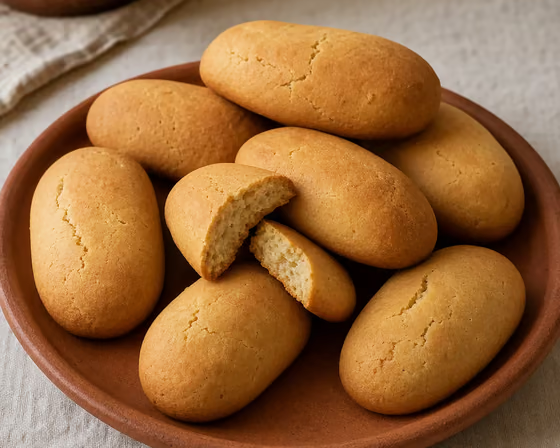
 Porto Santo Toasted Biscuits
Porto Santo's savoury biscuit, baked and then slowly toasted for hours.
Madeira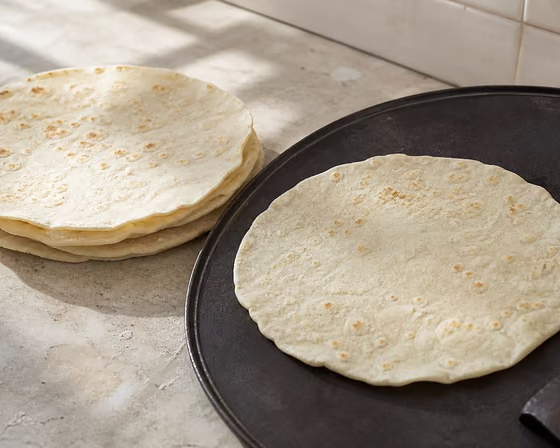 Catalogue image
 Porto Santo Jewish Unleavened Bread
A Porto Santo unleavened bread that one local source describes as barley, water and salt cooked on a griddle.
Madeira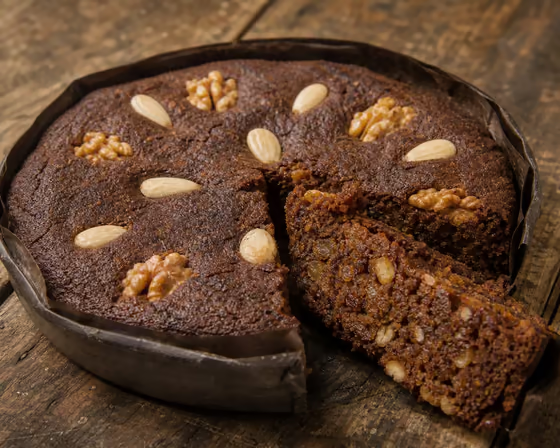 Catalogue image
 Madeira Honey Cake
Madeira's dark Christmas cake, broken by hand and good for months.
Madeira Catalogue image
 Madeira Bolo de Noiva
A spiced festive and wedding sweet bread baked as round portions on plant leaves.
Madeira