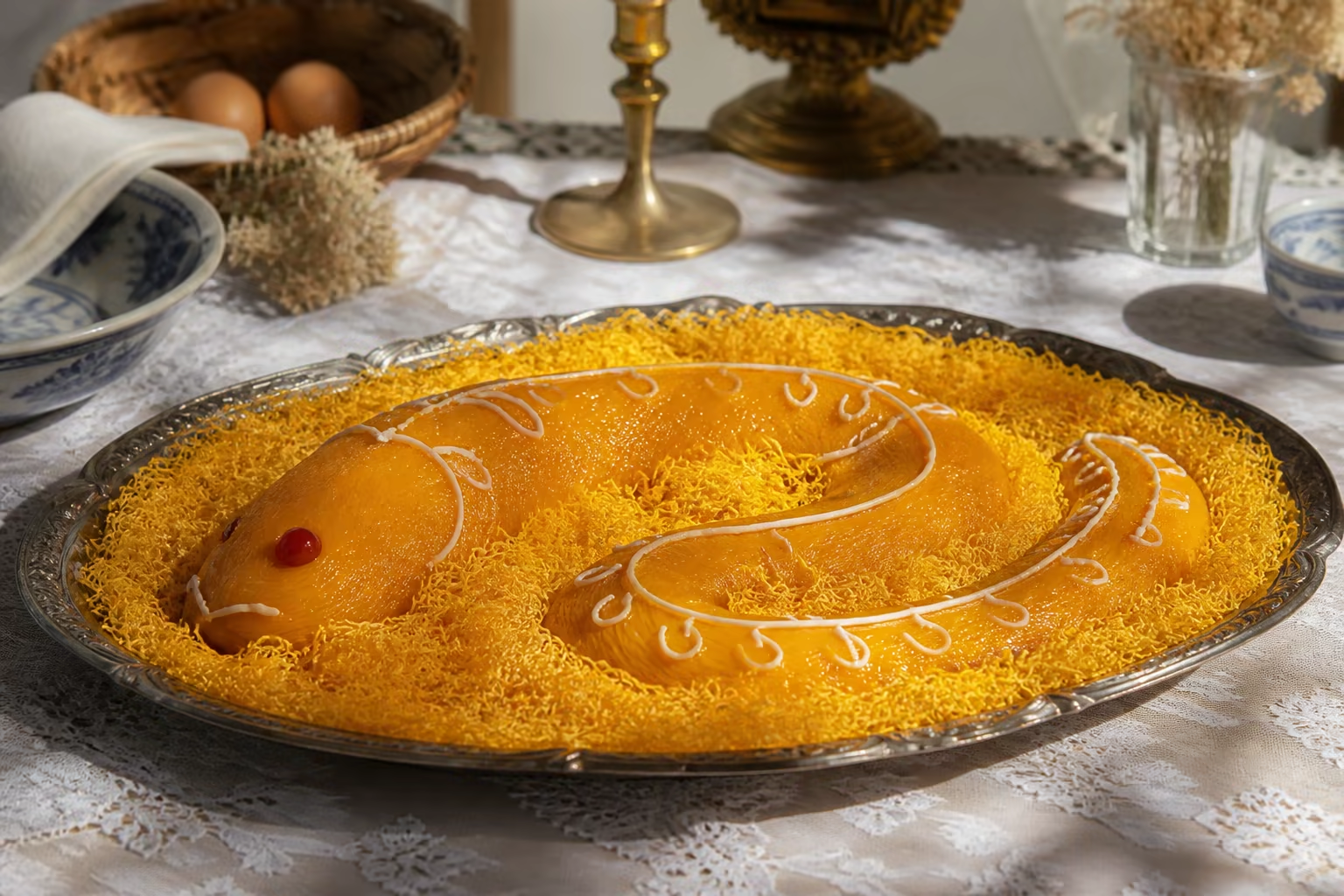
Egg Lamprey
Also known as: Sweet lamprey · Egg-yolk lamprey
Egg sheets, threads and yolk sweet shaped into a Christmas lamprey.
- Origin
- Portugal · exact place of origin unknown
- Place
- Portugal
- Region
- Nationwide
- Category
- Egg-Yolk Sweets
- Season
- Christmas; some recipes also associate it with Easter and other celebrations
- Evidence
- Well documented
Lampreia de Ovos is a sculptural Portuguese confection shaped like the long-bodied fish that gives it its name. One published formula combines egg threads, egg-yolk sheets and a body mixture of yolks, sugar and a small quantity of almond. The sheets wrap the body, the threads fill the platter, and candied fruit, almonds and icing form eyes, teeth and other details. It contains no fish.
Its composition varies. The recipe reproduced by Atlas Obscura, collected from a confectionery family in Chamusca, uses at least 42 yolks across the threads, sheets and body. Another Portuguese commercial formula uses threads and sheets, 20 yolks in the body, ground almond, preserved pear, cherries and icing. These examples document a family of techniques, not a single national specification.
- Egg yolks and some whites
- Sugar
- Water
- Ground almonds
- Egg threads
- Egg-yolk sheets
- Candied or preserved fruit
- Icing
Very sweet and dominated by egg yolk and sugar syrup, with almond in the reviewed formulas. Threads, sheets and yolk paste create different textures in the same piece.
Proportions, filling and decoration vary among recipes and confectioners. Portalegre's almond lamprey is a specific regional tradition, coiled into a spiral and covered with marzipan; it has its own entry in this catalogue and should not be used as the source defining the entire national category.
It is documented as a Christmas sweet in several regions and is made both by small confectioners and in industrial versions. A Chamusca family maintains a recipe transmitted across five generations, according to a 2021 report updated in 2022. Availability and composition should be confirmed directly with each producer.
Not documented in the sources reviewed.
Confectionery historian João Pedro Gomes of the University of Coimbra says that it is not possible to determine when or where Lampreia de Ovos originated. He points to the development of animal-shaped sweets during the Renaissance and records of the basic egg-working techniques in a late-seventeenth-century cookbook as possible context.
Evidence predates the earliest known recipe: the sweet is mentioned in the 1878 novel ‘O Primo Basílio’ and depicted in an 1884 painting. The earliest recipe located by Gomes appears in the 1903 ‘Tratado Completo de Cozinha e de Copa’, using almond-and-sugar paste, egg sheets, raisins and red preserve for the eyes and mouth. Some hypotheses place its creation in central Portugal—Coimbra, Chamusca or Tentúgal—but neither convent authorship nor the exact locality has been demonstrated. Its association with Christmas is now widely documented.
Well documented
Identity supported by institutional, specialist or corroborating sources.
- atlasobscura.com/articles/lampreia-de-ovos-egg-lamprey-christmas (opens in a new tab)
- saboreiaavida.nestle.pt/cozinhar/receita/lampreia-de-ovos (opens in a new tab)
- cuf.pt/mais-saude/o-lado-saudavel-do-natal (opens in a new tab)
- uc.pt/site/assets/files/874232/20090601_patrimonio_edificado_com_intersse_cultural.pdf (opens in a new tab)
Pastries from here — Nationwide
 Catalogue image
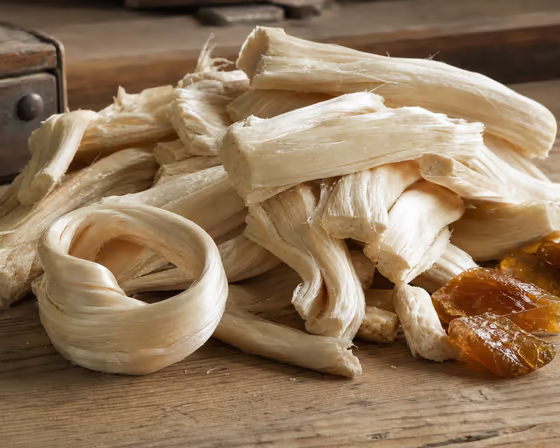
 Alféloa
Sugar or molasses cooked to a hard stage and worked until pale.
Nationwide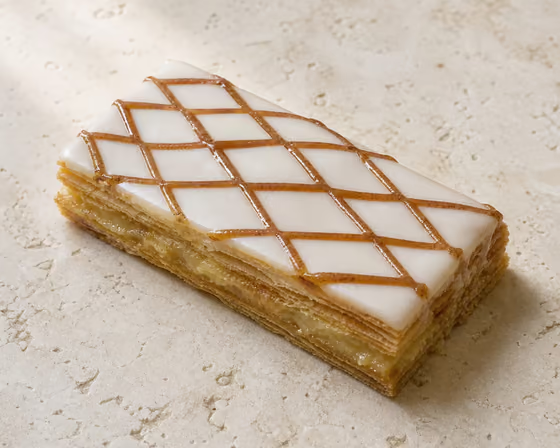 Catalogue image
 Portuguese Gila Allumette
A rectangular puff pastry with cream, gila and cinnamon beneath diamond-patterned royal icing.
Nationwide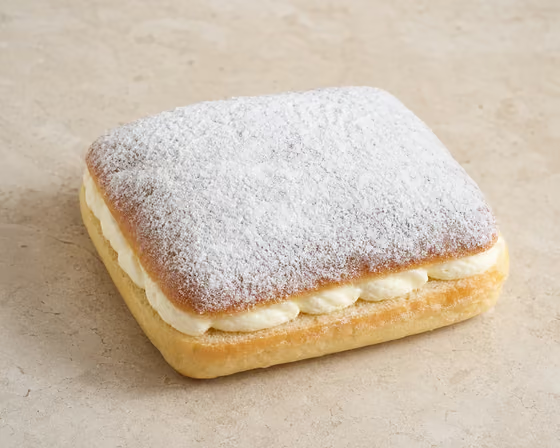 Catalogue image
 Portuguese Brioche Almofada
Light brioche dough, fresh buttercream and icing sugar.
Nationwide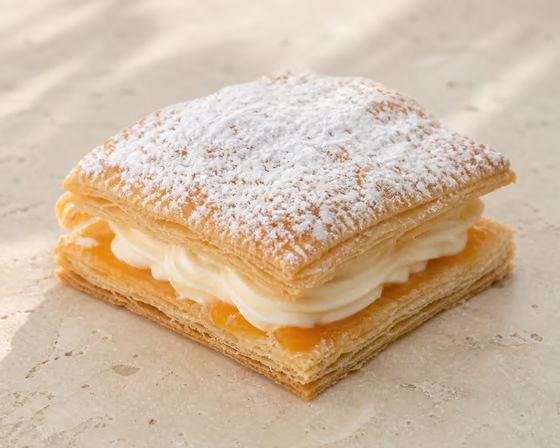 Catalogue image
 Portuguese Puff-Pastry Almofada
Puff pastry with white cream, egg sweet and icing sugar—the laminated Almofada variant.
Nationwide