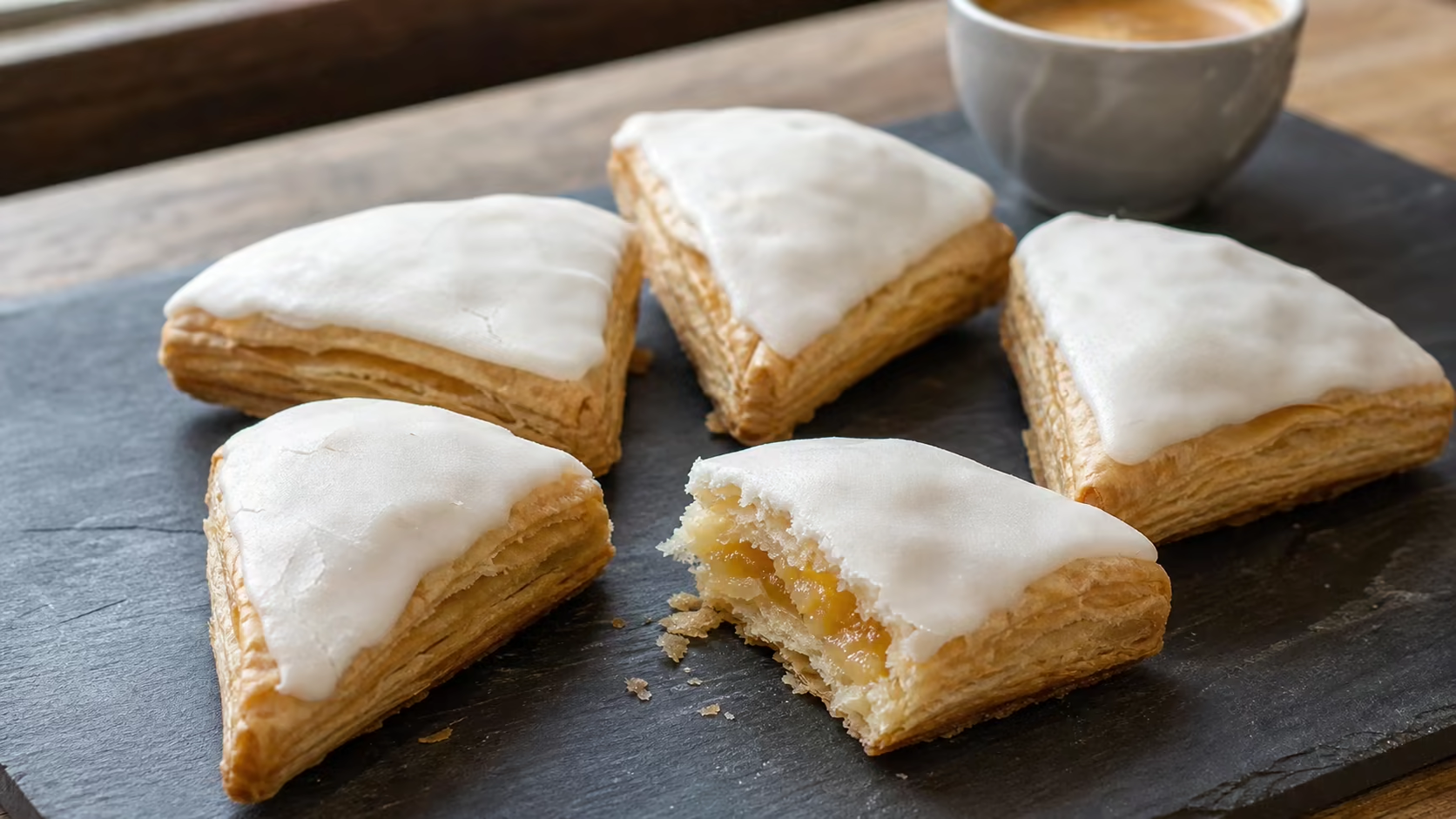
Jesuíta
Also known as: Jesuíta de Santo Tirso
A triangle of puff pastry and egg cream beneath a cloak of white icing.
- Origin
- Santo Tirso, late 19th century
- Place
- Santo Tirso
- Region
- The North
- Category
- Laminated & Fine Pastries
- Season
- Year-round
- Dough family
- Laminated puff pastry Layers created through repeated folds of dough and fat.
- Evidence
- Well documented
The jesuíta is a triangular pastry, with a filling of sweet egg cream tucked between crisp layers of puff pastry and crowned by a smooth, snow-white crust of icing. It is small, elegant and deceptively simple: it fits in the palm of your hand, yet packs in more than a century of pastry know-how.
Though now found across Portugal, the most celebrated jesuíta is the one from Santo Tirso, where it is said to have been born and where it is guarded with pride. The difference lies in the details — the thinness of the pastry, the set of the egg cream, and even, locals insist, the water the dough is made with.
It is a pastry-counter sweet, the kind you order with a coffee in the late afternoon and finish in a few bites, leaving flakes of pastry on the plate and a trail of sugar on your lips.
- Puff pastry
- Butter
- Eggs (sweet egg cream)
- Sugar
- Icing (egg white, sugar and lemon juice)
- Water
- Salt
Contrast is everything: the icing shell breaks with a sweet, almost crunchy snap, giving way to the buttery flakes of puff pastry and, at the centre, the soft, silky egg cream. It is frankly sweet, the richness of the eggs balancing the airy lightness of the pastry.
There are miniature versions served as petit-fours, and modern pastry takes that play with the filling. There are also close cousins, the so-called "seminaristas", of similar inspiration. But in Santo Tirso the triangular shape, the egg cream and the white icing remain all but untouchable.
In Santo Tirso, at the town's pastry shops — with Confeitaria Moura the house historically tied to the sweet, which still makes them daily. Look for the smooth white-iced triangle and well-defined puff pastry; a true jesuíta shows its egg cream at the tips and is never heavy or greasy.
A full coffee or a short espresso cut its sweetness perfectly. For a more leisurely afternoon, it pairs well with a plain black tea.
The jesuíta's origin is not settled and no written records pin it down, but the oral tradition of Santo Tirso points to the late 19th century and to Confeitaria Moura, the town's century-old house — open since around 1892 and still tied to the sweet today. The jesuíta is said to have been created by a Spanish pastry chef hired by the house, and the name is thought to come from his earlier time serving a community of Jesuit priests in Bilbao — though some prefer the simpler explanation that the white icing recalls the robes of the Society of Jesus. These are accounts passed down by word of mouth, without documentary confirmation.
Whatever the truth, the jesuíta became a symbol of the town. In 2007 the Confraria do Jesuíta was founded, dedicated to defending and promoting the sweet and the region's gastronomy — a measure of how seriously the town takes this small sweet triangle.
Well documented
Identity supported by institutional, specialist or corroborating sources.
- e-konomista.pt/jesuita/ (opens in a new tab)
- rtp.pt/noticias/pais/santo-tirso-cria-confraria-para-defender-o-apreciado-pastel-jesuita_n44955 (opens in a new tab)
- sapo.pt/noticias/vida/artigos/confeitaria-moura-a-casa-dos-jesuitas-e-liderada-ha-mais-de-100-anos-por-mulheres (opens in a new tab)
- receitascomsabor.pt/jesuitas-santo-tirso/ (opens in a new tab)
Pastries from here — The North
 Catalogue image
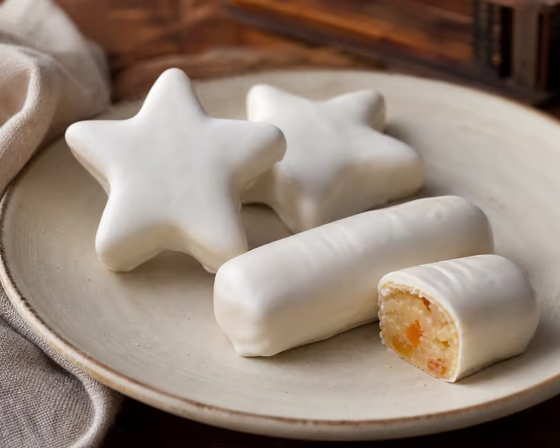
 A Bella Queijadinha de Barcelos
A white star of almond, preserved fruit and family memory.
The North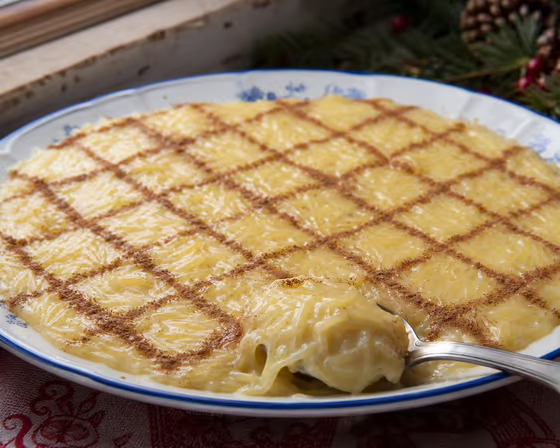 Catalogue image
 Sweet Vermicelli
Fine wheat threads simmered in milk and yolk, scored with cinnamon.
The North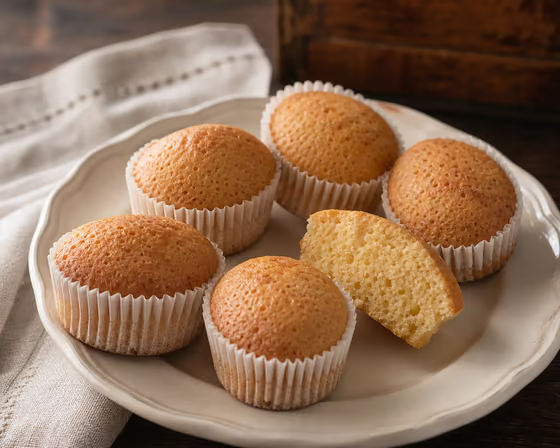 Catalogue image
 Amarantinos
Small egg, lemon and cinnamon cakes whose historical identity is not told consistently by the sources.
The North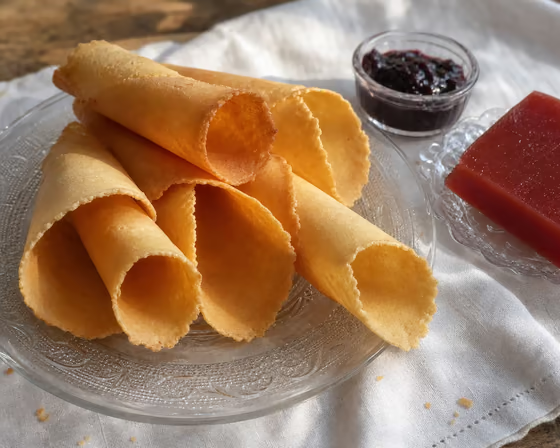 Catalogue image
 Vieira do Minho Cone Wafers
Paper-thin crisp wafers, iron-baked and rolled by hand while still hot.
The North