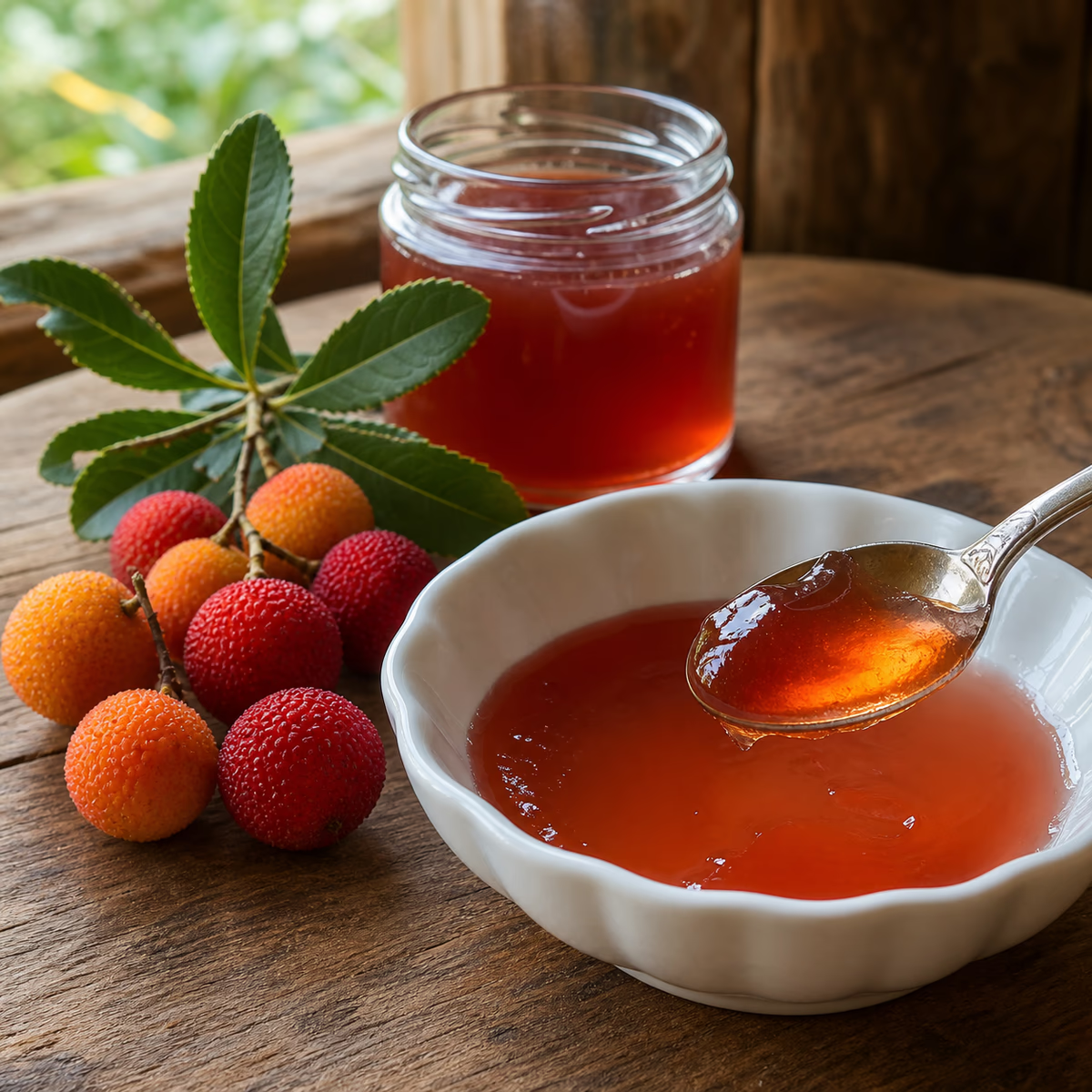
Portuguese Strawberry-Tree Jelly
Also known as: Strawberry-tree fruit jelly · Medronho jelly
Strawberry-tree fruit, water and sugar in a jelly studied by the University of Algarve.
- Origin
- Portuguese strawberry-tree fruit preserve studied with fruit from Serra do Caldeirão; its first creation and chronology are unknown.
- Place
- Algarve hills
- Region
- The Algarve
- Category
- Fruit & Honey Sweets
- Season
- Fruit harvested in early December for the trial; jelly availability not documented
- Evidence
- Well documented
A University of Algarve dissertation studied jelly made with ripe Arbutus unedo fruit harvested in early December in Serra do Caldeirão, in the parish of Alte. Its so-called traditional formula used 1 kilogram / 2.2 pounds of fruit, 500 millilitres / 16.9 US fluid ounces of water and 1 kilogram / 2.2 pounds of white sugar; after processing, the jelly was sealed in glass jars and pasteurised.
The dissertation does not describe the processing step between combining the ingredients and filling the jars: it publishes no fruit preparation, vessel, temperature, duration, straining, or endpoint. This entry therefore does not claim that the pulp was strained or present the protocol as a complete domestic recipe.
- Ripe strawberry-tree fruit
- Water
- White sugar
In the study’s initial panel, appearance, aroma, texture, sweetness, acidity and flavour were rated ‘good’. The traditional version was firmer than the citric-acid-and-pectin version.
The experimental version added 0.1% citric acid and 1% pectin. The study concluded that those additions did not improve preservation as expected and were not justified in the tested protocol.
The research used fruit from Alte in Serra do Caldeirão, while the 2024 chapter documents jelly in Portugal’s national strawberry-tree value chain. The sources provide no current producer or retailer directory.
The academic sources fix no culinary accompaniments.
The dissertation, completed in 2012, sought to increase the value of strawberry-tree fruit for fresh use and jelly as alternatives to the better-known spirit production. It compared the traditional formula with an experimental version adding 1 gram / 0.04 ounce of citric acid and 10 grams / 0.35 ounce of commercial pectin.
A 2024 technical chapter confirms that Portugal’s strawberry-tree value chain includes non-fermented products such as compota, doce and geleia alongside fermented and distilled products. Neither source identifies the first medronho jelly or an origin date, so that chronology remains unknown.
Well documented
Identity supported by institutional, specialist or corroborating sources.
- sapientia.ualg.pt/bitstreams/1268967d-494d-4f83-b6de-f521ea6c6c68/download (opens in a new tab)
- sapientia.ualg.pt/entities/publication/57b73679-b8e8-458f-b56e-ff8bd03ba3a2 (opens in a new tab)
- ualg.pt/bio/acguerreiro (opens in a new tab)
Pastries from here — The Algarve
 Catalogue image
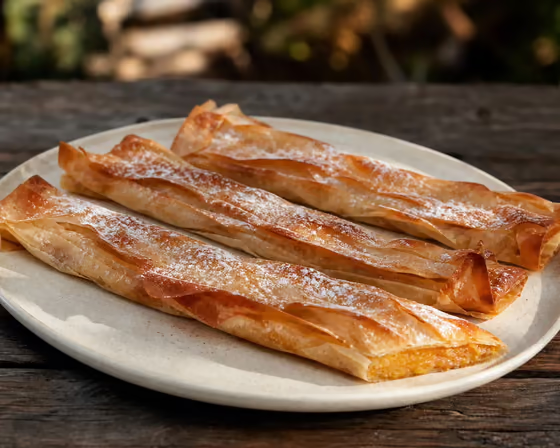
 Aljezur Sweet-Potato Pillows
A long pillow of crisp pastry leaves wrapped around Aljezur sweet potato.
The Algarve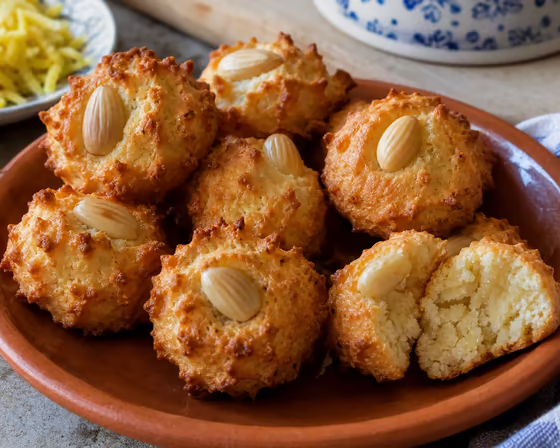 Catalogue image
 Almond Spiky Biscuits
Bristling peaks of almond, lemon and egg white, crisp outside and soft at the centre.
The Algarve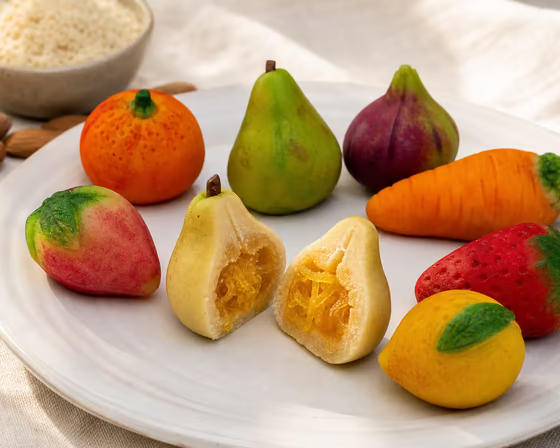 Catalogue image
 Silves Almond Sweets
Algarve figures hand-shaped and painted in almond paste.
The Algarve Catalogue image
 Algarve Nut Sweet Bread
An upland sweet bread enriched with olive oil, spices and walnuts or almonds.
The Algarve