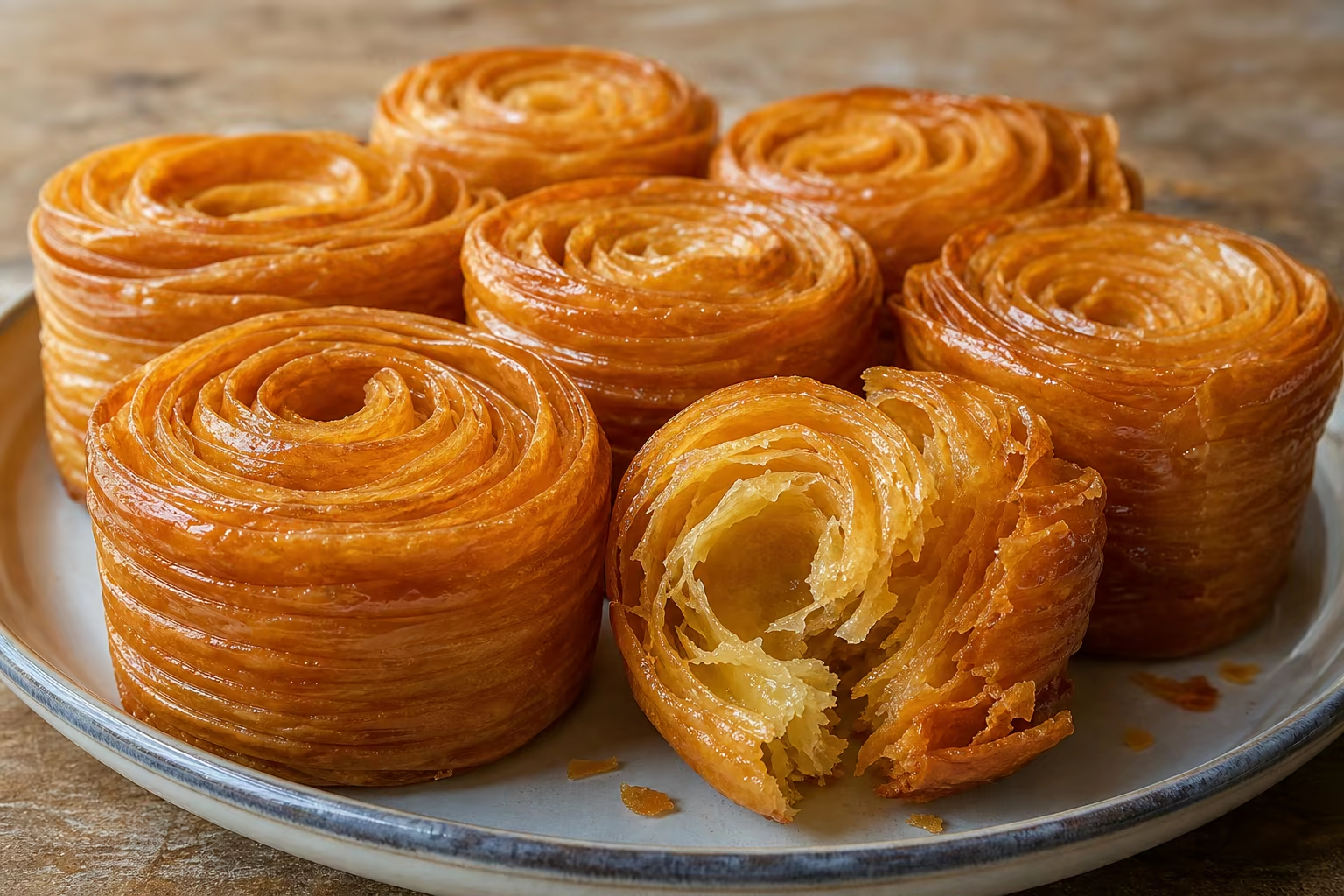
Tavira Puff Pastries
Also known as: Folded Cakes
Strips of puff pastry coiled and bathed in syrup — a convent sweet that Tavira never let slip away.
- Origin
- Tavira · oral tradition links the recipe to a convent at Largo da Atalaia; creation date unknown
- Place
- Tavira
- Region
- The Algarve
- Category
- Laminated & Fine Pastries
- Season
- Seasonal availability not stated by the cited sources
- Dough family
- Yeasted layered dough Yeasted dough worked or rolled to create leaves or spirals.
- Evidence
- Well documented
DGADR documents Folhados de Tavira as rounded cakes of rolled laminated pastry made with flour, margarine, lard and eggs. After baking they are coated in sugar syrup and wrapped in cellophane. The record gives approximately 10 cm / 3.9 in diameter, 7–8 cm / 2.8–3.1 in height and 90–100 g / 3.2–3.5 oz per piece.
The institutional method is concise: the pastry is cut into strips, wound around a small dowel to form the cake, baked and coated in syrup. The source states no quantities, temperature, duration or syrup stage.
A Vaqueiro formula supplies quantities for ten pieces and adds yeast and milk but omits the lard recorded by DGADR. It also takes the syrup to pearl stage. These differences are presented as documented versions rather than merged into a supposedly unique recipe.
- Flour
- Margarine
- Lard
- Eggs
- Baker's yeast
- Milk
- Sugar
- Water
The documented composition combines rolled, fat-rich pastry with a sugar-syrup coating. The cited sources publish no comparative tasting assessment; texture and sweetness vary with lamination, baking and syrup quantity.
The verifiable difference lies in the dough: DGADR lists margarine and lard, while the Vaqueiro formula uses margarine, milk and yeast without lard. Both retain rolled strips, baking and a syrup coating.
DGADR historically associates production with the Dias family and Pastelaria Gardy in Faro, but its underlying source dates from 2001. Confirm maker, opening hours, availability and ingredients directly before travelling.
The cited sources publish no traditional or required pairing.
DGADR presents as oral tradition—not documentary fact—the creation of the recipe at a convent established at Largo da Atalaia in 1509 and dissolved in 1862. The convent's foundation does not date the recipe; its creation date remains unknown.
Modern continuity is described more clearly: the record says the recipe passed through generations of the Dias family, associated with Pastelaria Gardy in Faro, and that the cakes were previously sold at the now-closed Café Cunha in Tavira. It attributes the change from Bolos Folhados to Folhados de Tavira to that café's regular customers. Current commercial status should be confirmed directly because the record derives from a 2001 publication.
Well documented
Identity supported by institutional, specialist or corroborating sources.
- tradicional.dgadr.gov.pt/pt/cat/doces-e-produtos-de-pastelaria/195-folhados-de-tavira (opens in a new tab)
- vaqueiro.pt/recipes/folhados-de-tavira-199343 (opens in a new tab)
- viagens.sapo.pt/saborear/gastronomia/artigos/folhados-de-tavira-uma-receita-que-resistiu-ao-tempo-gracas-a-familia-dias (opens in a new tab)
Pastries from here — The Algarve
 Catalogue image
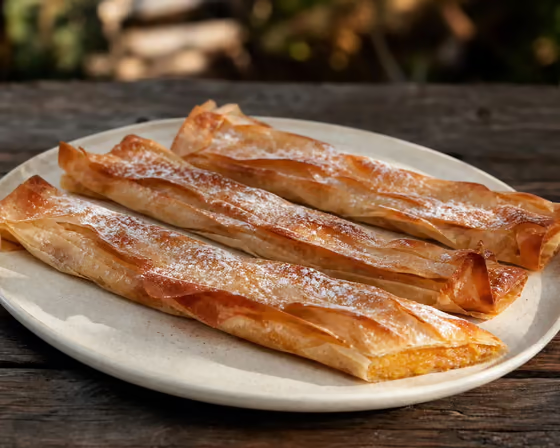
 Aljezur Sweet-Potato Pillows
A long pillow of crisp pastry leaves wrapped around Aljezur sweet potato.
The Algarve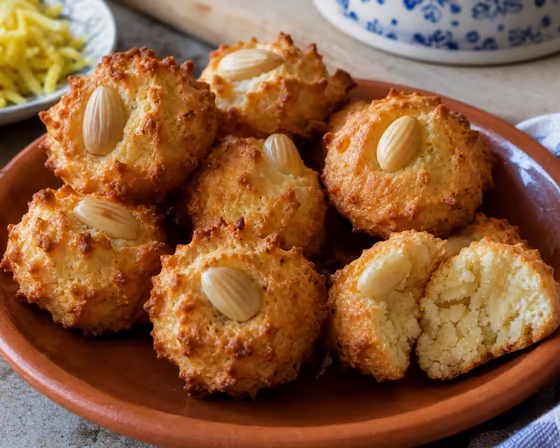 Catalogue image
 Almond Spiky Biscuits
Bristling peaks of almond, lemon and egg white, crisp outside and soft at the centre.
The Algarve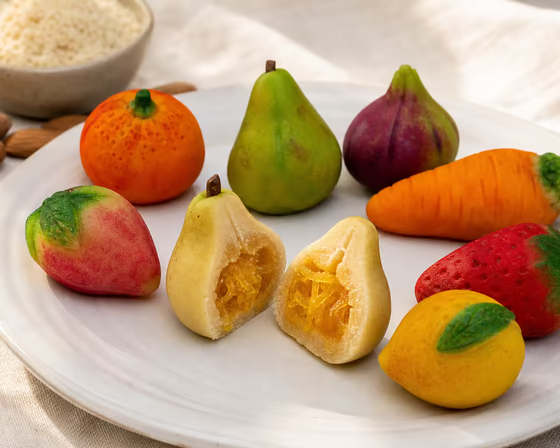 Catalogue image
 Silves Almond Sweets
Algarve figures hand-shaped and painted in almond paste.
The Algarve Catalogue image
 Algarve Nut Sweet Bread
An upland sweet bread enriched with olive oil, spices and walnuts or almonds.
The Algarve