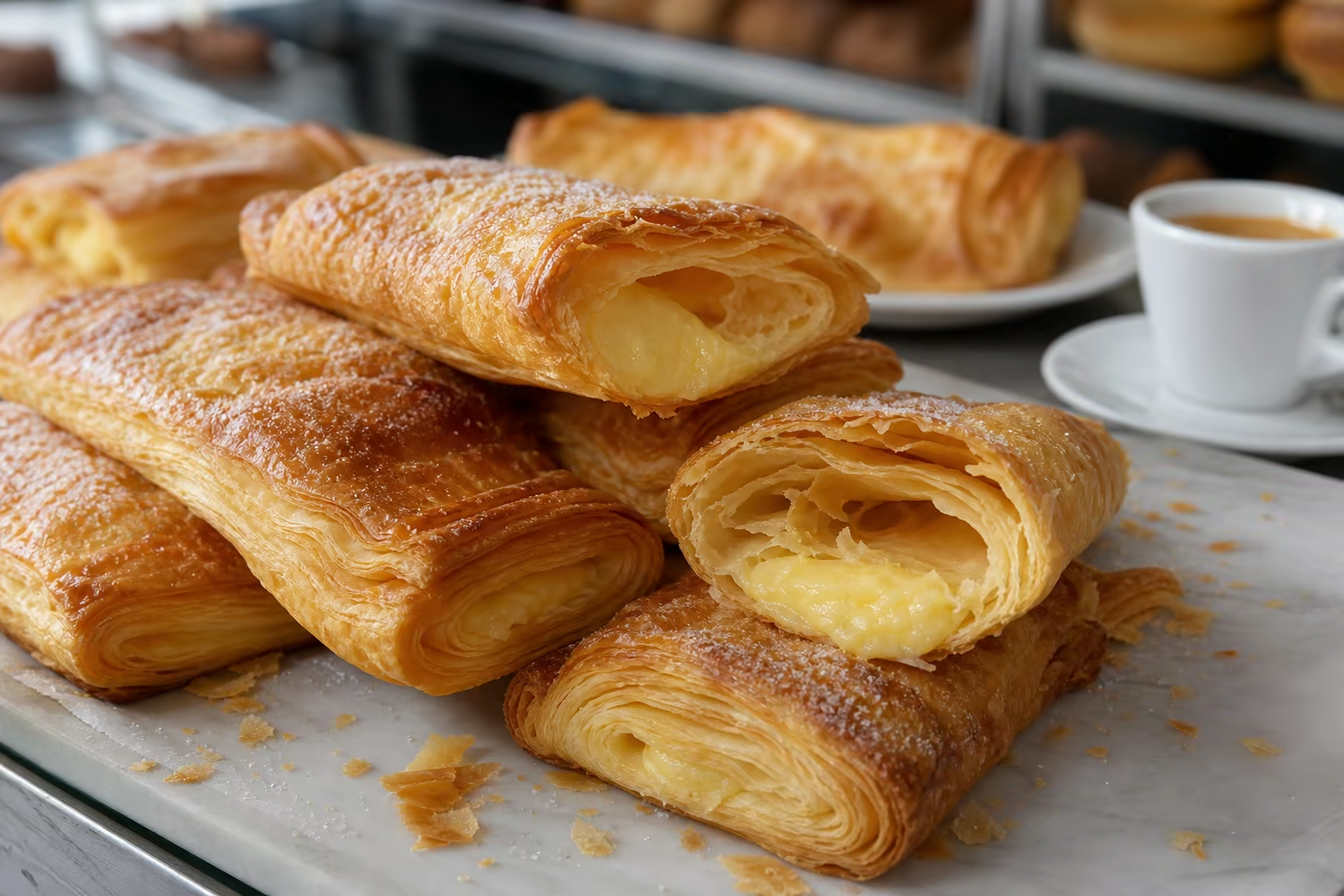
Loulé Puff Pastry
Also known as: Loulé Folhados
One Loulé folhado, they say, and you're happy for the rest of the week.
- Origin
- 20th century · Loulé, Algarve
- Place
- Loulé
- Region
- The Algarve
- Category
- Laminated & Fine Pastries
- Season
- Year-round
- Dough family
- Laminated puff pastry Layers created through repeated folds of dough and fat.
- Evidence
- Well documented
The folhado de Loulé is a small parcel of puff pastry, golden and crisp, filled with an egg custard perfumed with lemon and vanilla and dusted with sugar. Folded in half over the filling, it emerges from the oven light and hollow, the layers of pastry springing apart in the finest flakes the moment it is touched.
It is an unpretentious sweet, tea-break-sized, seen piled in the windows of the village's cafés. It is not overly sweet: the cream is soft and citrus-bright, contrasting with the hot, crunchy pastry.
By tradition it is served still warm, with an espresso at the counter — the way Loulé has been eating it for generations.
- Puff pastry
- Eggs
- Milk
- Sugar
- Vanilla sugar
- Cornflour (cornstarch)
- Lemon zest
- Sugar for dusting
Exceptionally flaky, light and crisp pastry that shatters at the first bite, wrapped around a silky, gently sweet egg custard scented with lemon and vanilla.
Miniature versions exist, served for instance at the historic Café Calcinha, alongside larger formats for sharing. The custard ratio and sweetness vary from one pastelaria to another.
The Loulé Doce pastelaria is the authority on the folhado and supplies cafés across town; you will also find it at Café Calcinha and at festivities such as Carnival and the MED Festival.
An espresso or a milky coffee, Loulé-style, with the folhado still warm from the oven.
The story of the folhado begins in the early decades of the 20th century with Maria Pires, a domestic servant who is said to have learnt to work puff pastry while in service in Figueira da Foz. On her return to Loulé she began making them, and later, finding herself without work, joined forces with her sisters to produce the folhados through the night, bake them in the communal oven and sell them in the afternoon to the village cafés, where they were eaten hot with coffee.
With the death of their creators, the tradition nearly vanished. It was the Loulé Doce pastelaria, founded by Fernando Santos in the 1980s and now run by his daughter Andreia, that rescued the recipe and fixed the town's name to it. The folhado gained new life again through municipal cultural initiatives — such as the MED Festival — that returned it to the collective memory of the village. In 2019 it was one of the Algarvian candidates for the 7 Sweet Wonders of Portugal competition.
Well documented
Identity supported by institutional, specialist or corroborating sources.
- gastroportugal.com/folhado-de-loule/ (opens in a new tab)
- farmaciasportuguesas.pt/blog/folhado-de-loule-o-bolo-dos-momentos-felizes (opens in a new tab)
- regiao-sul.pt/sociedade/folhado-de-loule-pode-ser-maravilha-de-portugal/470667 (opens in a new tab)
- e-cultura.pt/artigo/24171 (opens in a new tab)
Pastries from here — The Algarve
 Catalogue image
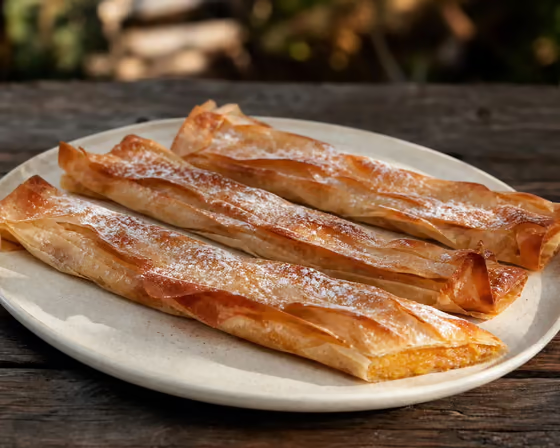
 Aljezur Sweet-Potato Pillows
A long pillow of crisp pastry leaves wrapped around Aljezur sweet potato.
The Algarve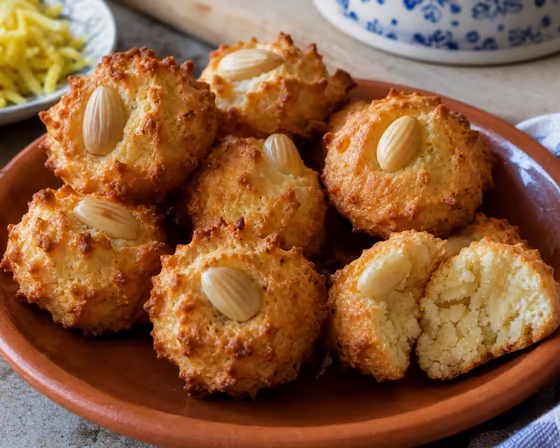 Catalogue image
 Almond Spiky Biscuits
Bristling peaks of almond, lemon and egg white, crisp outside and soft at the centre.
The Algarve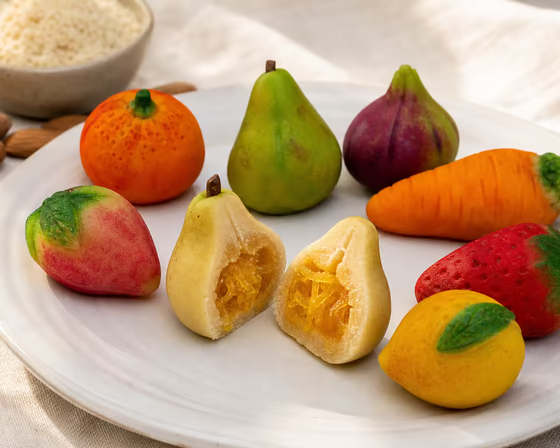 Catalogue image
 Silves Almond Sweets
Algarve figures hand-shaped and painted in almond paste.
The Algarve Catalogue image
 Algarve Nut Sweet Bread
An upland sweet bread enriched with olive oil, spices and walnuts or almonds.
The Algarve