Lagoa Florado
Also known as: Florados de Lagoa · Florados · Floradas
The almond blossom turned convent sweet.
- Origin
- 18th–19th century · Convent of São José, Lagoa
- Place
- Lagoa
- Region
- The Algarve
- Category
- Convent Sweets
- Season
- Year-round · highlighted at the Lagoa Convent Sweets Fair
- Evidence
- Well documented
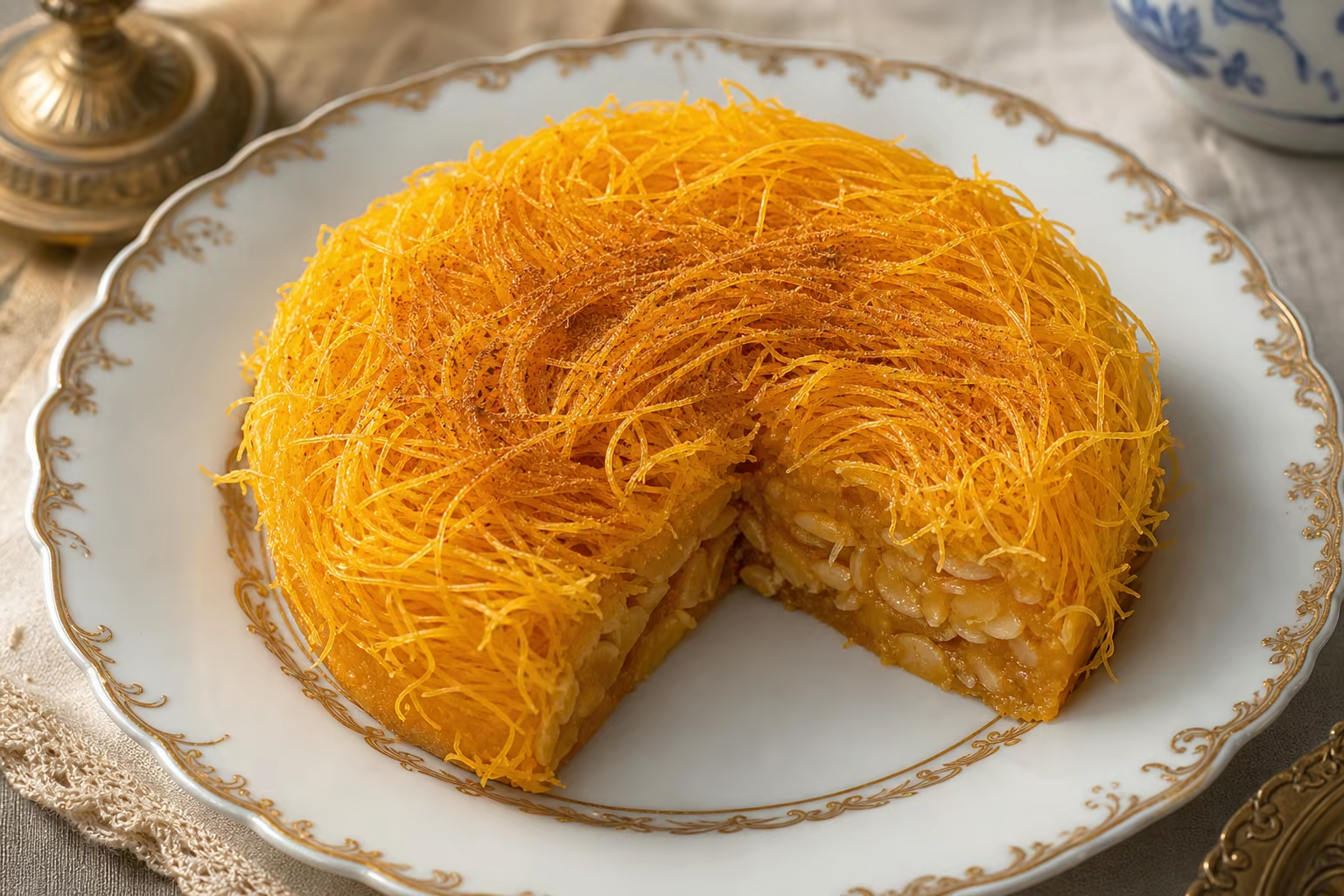
The Florado de Lagoa is a convent sweet from the western Algarve, a small, round, shallow disc that evokes, in its shape and its tones of cream and gold, the almond trees in blossom that carpet the Algarvian hills at the end of winter. On a base of sliced almonds and egg sweet (doce de ovos) sits a crown of fios de ovos — the finest, most lustrous egg threads — and a veil of ground cinnamon that crowns the whole like the golden dust of a flower's corolla.
It is a showy sweet, dense and fragrant, of the kind served on plates and platters at festive occasions. It is eaten by the spoonful or in small portions, letting the almond, sugar and yolk melt together in the mouth.
Long kept within convent walls and, later, in the careful hands of Lagoa's confectioners, it has returned to the town's shop windows to establish itself as a defining mark of the municipality.
- Sliced almonds
- Sugar
- Egg sweet (doce de ovos)
- Fios de ovos (egg threads)
- Egg yolks
- Ground cinnamon
- Water
Intensely sweet and rich in egg yolk, with sliced almond lending bite and fragrance and the fios de ovos melting into silky threads; cinnamon adds an aromatic warmth that cuts the sweetness.
Some arrange the fios de ovos looser or denser over the base, and some omit or heighten the cinnamon; older versions, linked to Berta Rosa Limpo and to local confectioners such as Cremilde Paias, differ in proportion and finish.
You will find them in pastry shops across the Lagoa municipality that joined the 2022 commercial revival — in Lagoa, Parchal, Ferragudo and Carvoeiro — and, prominently, at the Lagoa Convent Sweets Fair (Mostra do Doce Conventual).
It calls for a short espresso or an Algarve medronho spirit; a fortified wine or a Moscatel will likewise balance its sweetness.
The origin of the Florado is linked to the Convent of São José de Lagoa, built in the early 18th century (between 1710 and 1713) and inhabited successively by Carmelites and then by Dominican nuns of Santa Catarina de Sena. The attribution to these religious communities is strong but not fully documented: if the root is Carmelite, the sweet will date to the 18th century; if it arose during the transition between communities, to the 19th. The first known written reference appears as "Floradas" in the 1946 edition of O Livro de Pantagruel, by Berta Rosa Limpo.
For decades the recipe remained almost secret, made only for weddings, christenings and other festive occasions, and at one point fell out of use. The Municipal Council of Lagoa recovered it as gastronomic heritage, bringing it to convent-sweet fairs and, in 2022, launching its commercial sale through partner pastry shops.
Well documented
Identity supported by institutional, specialist or corroborating sources.
- cm-lagoa.pt/conhecer/produtos-locais/gastronomia/docaria (opens in a new tab)
- ncultura.pt/florados-de-lagoa-docaria-conventual/ (opens in a new tab)
- cozinhatradicional.com/florados-de-lagoa-algarve/ (opens in a new tab)
- algarvevivo.pt/florados-de-lagoa-em-destaque-na-17a-mostra-do-doce-conventual-de-lagoa/ (opens in a new tab)
Pastries from here — The Algarve
 Catalogue image
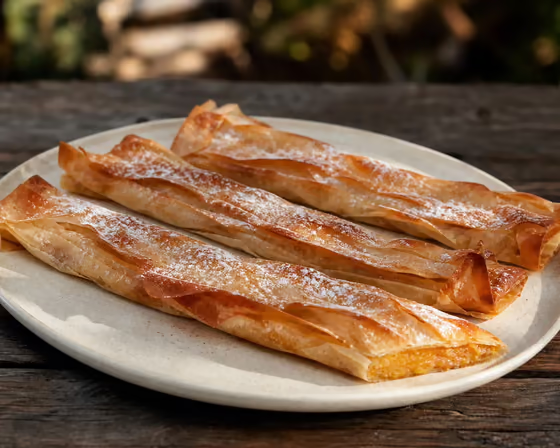
 Aljezur Sweet-Potato Pillows
A long pillow of crisp pastry leaves wrapped around Aljezur sweet potato.
The Algarve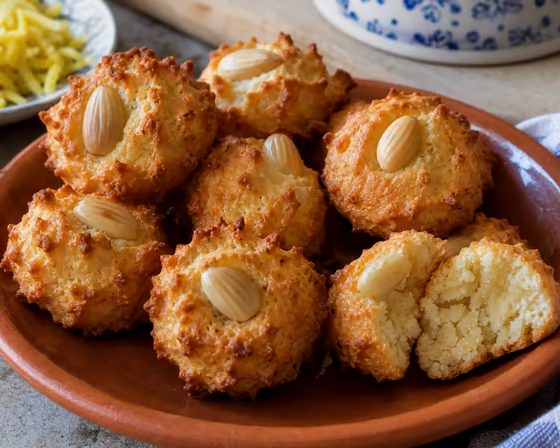 Catalogue image
 Almond Spiky Biscuits
Bristling peaks of almond, lemon and egg white, crisp outside and soft at the centre.
The Algarve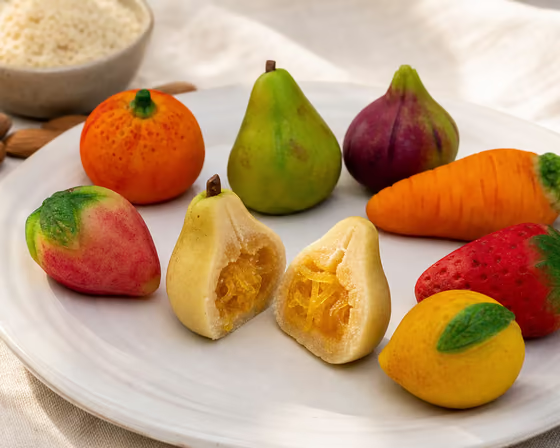 Catalogue image
 Silves Almond Sweets
Algarve figures hand-shaped and painted in almond paste.
The Algarve Catalogue image
 Algarve Nut Sweet Bread
An upland sweet bread enriched with olive oil, spices and walnuts or almonds.
The Algarve