Christmas Broinhas
Also known as: Broas de Natal · Christmas broas · Sweet potato broinhas
The little cakes that smell of Christmas before they even leave the oven.
- Origin
- Rural Portuguese tradition, tied to the festive baking of late autumn and Christmas.
- Place
- Nationwide
- Region
- Nationwide
- Category
- Festive & Seasonal
- Season
- Christmas
- Evidence
- Well documented
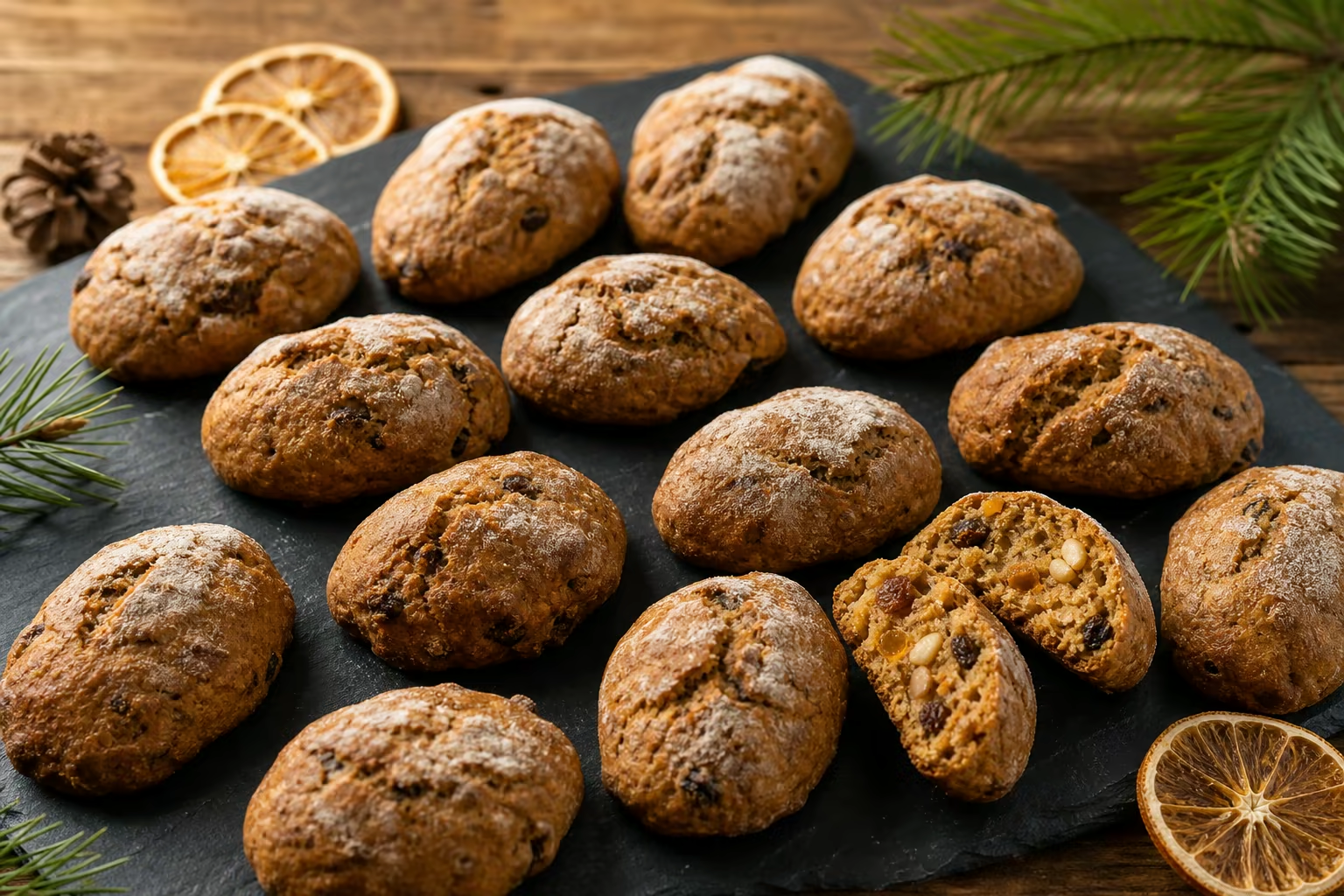
Broinhas de Natal are small rustic Christmas cakes made with sweet potato and maize flour, scented with cinnamon, anise, orange and lemon zest and studded with walnuts, almonds and dried fruit. Hand-shaped into little mounds and brushed with yolk, they bake to a golden crust around a dense, moist centre.
They are a whole family of sweets rather than one fixed formula: households vary the balance of sweet potato and pumpkin, fruit and spices. Made in large batches from late autumn, they are inexpensive, plentiful and designed to fill trays for everyone who visits during the festive season.
- Sweet potato
- Cornmeal
- Wheat flour
- Sugar
- Walnuts and almonds
- Cinnamon and anise
- Orange and lemon zest
- Egg yolk (for glazing)
Sweet without being cloying, the earthy sweetness of the sweet potato balancing the sugar. The crumb is dense and moist, almost cake-like, and every bite carries the crunch of nuts and the warmth of cinnamon and anise. The egg-glazed crust adds a fine, toasty contrast.
Some use only sweet potato, only pumpkin, or a blend of both; some swap walnuts for almonds, pine nuts, raisins or candied fruit; some splash in a glass of Port or aguardente. The broas dos Santos, baked around All Saints' Day in early November, are the closest relative, while Lisbon's broas castelares are the more refined cousin, shaped into elongated ovals and scented with orange and almond.
You will find them baked at home across the country through Advent, and in neighbourhood bakeries from late autumn. In Lisbon, broas castelares appear in old confectioneries and markets through the Christmas season. Look for the handmade, knobbly ones packed with nuts, and avoid the too-smooth, dry industrial versions.
They call for a glass of Port or Moscatel, or a strong coffee in the middle of the afternoon. On a Christmas table they sit happily alongside filhós, sonhos and rabanadas.
These sweet maize broas unite two traditions: rural cornbread, widespread after American maize reached Europe, and festive baking that made use of winter sweet potatoes or pumpkin, harvested nuts and warming spices.
They belong to the cycle of broas baked for All Saints' Day and Pão-por-Deus in early November, naturally continuing into Christmas. Lisbon's best-known urban relative is the broa castelar, popularised by the Castelar brothers' Confeitaria Francesa, founded in 1860, but home-baked broinhas are older, more widespread and passed down through families.
Well documented
Identity supported by institutional, specialist or corroborating sources.
- pt.wikipedia.org/wiki/Broa_Castelar (opens in a new tab)
- cozinhatradicional.com/broas-de-natal/ (opens in a new tab)
- vortexmag.net/broas-de-natal-a-moda-antiga-aprenda-a-faze-las-como-a-sua-avo-fazia/ (opens in a new tab)
- iclp.letras.ulisboa.pt/2023/10/31/um-passeio-pelas-tradicoes-portuguesas-em-dia-de-todos-os-santos/ (opens in a new tab)
- pingodoce.pt/receitas/broas-de-abobora-e-batata-doce/ (opens in a new tab)
Pastries from here — Nationwide
 Catalogue image
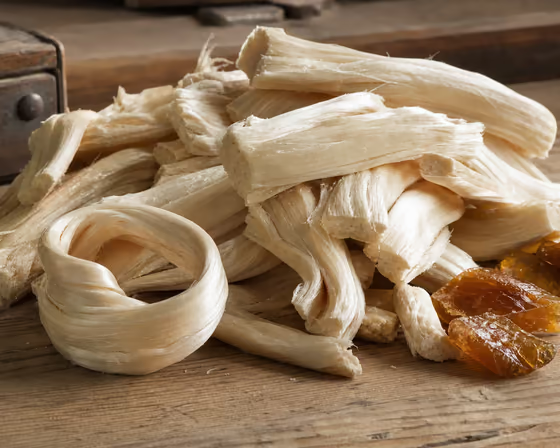
 Alféloa
Sugar or molasses cooked to a hard stage and worked until pale.
Nationwide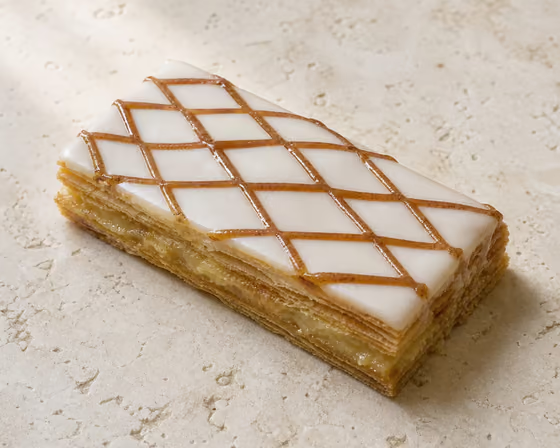 Catalogue image
 Portuguese Gila Allumette
A rectangular puff pastry with cream, gila and cinnamon beneath diamond-patterned royal icing.
Nationwide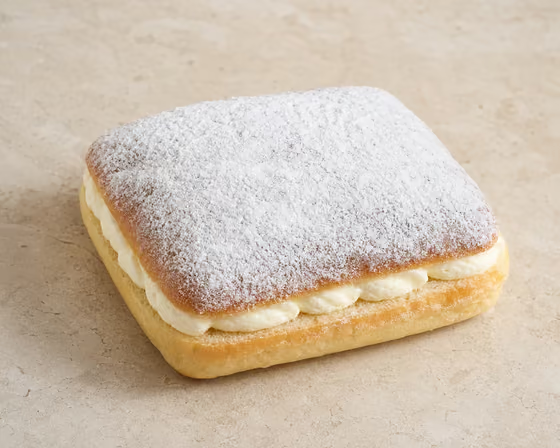 Catalogue image
 Portuguese Brioche Almofada
Light brioche dough, fresh buttercream and icing sugar.
Nationwide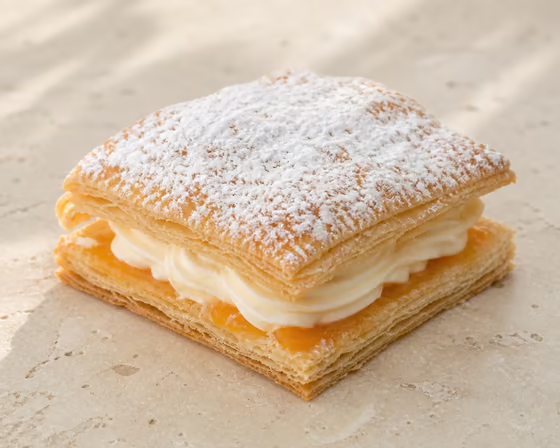 Catalogue image
 Portuguese Puff-Pastry Almofada
Puff pastry with white cream, egg sweet and icing sugar—the laminated Almofada variant.
Nationwide