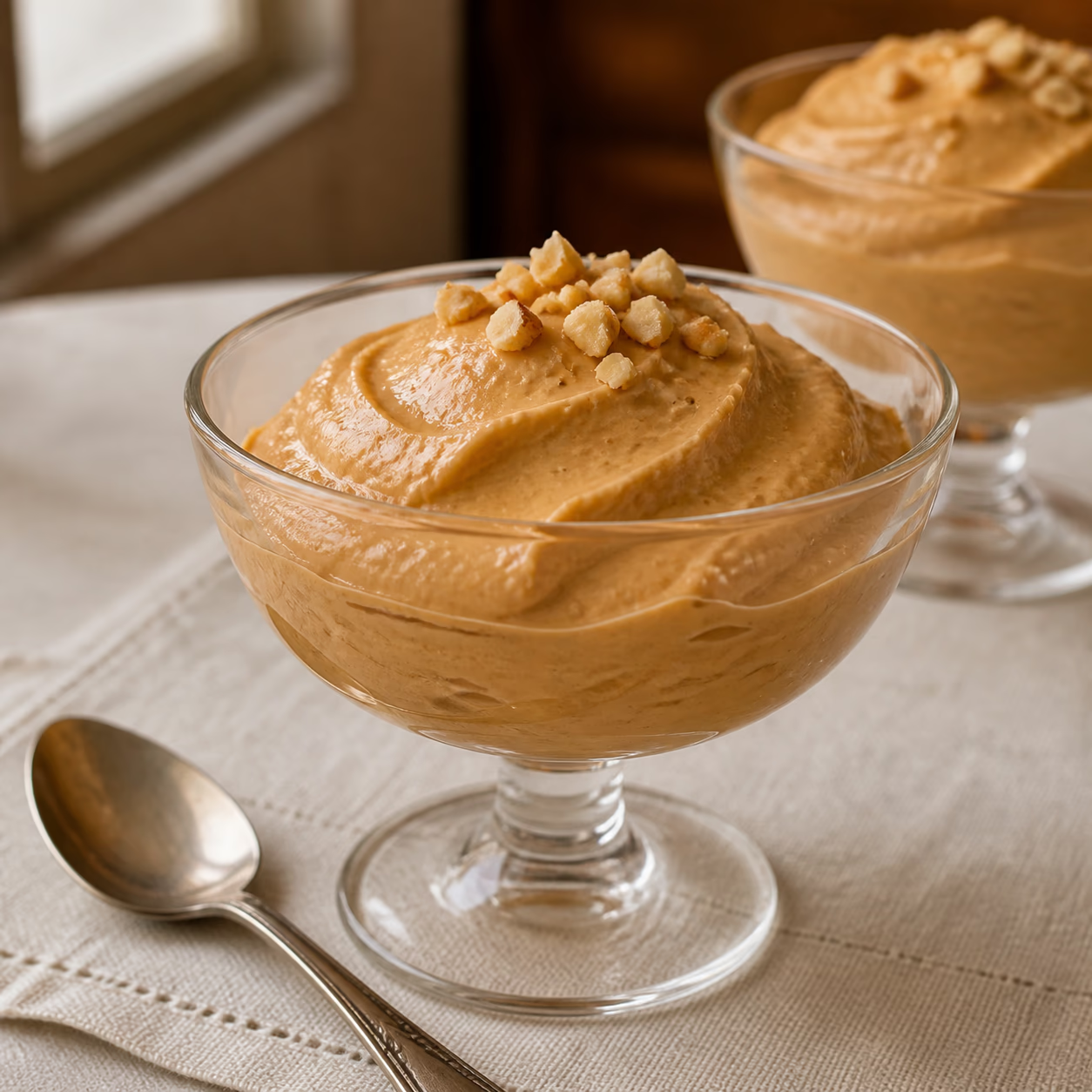
Portuguese Caramel Mousse
Also known as: Portuguese Caramel Mousse · Baba de Camelo
Cooked condensed milk and eggs folded into a light, creamy, intensely caramelised mousse.
- Origin
- Portugal · nationwide home and restaurant dessert
- Place
- Nationwide
- Region
- Nationwide
- Category
- Puddings & Spoon Sweets
- Season
- Year-round · served well chilled
- Evidence
- Well documented
Baba de Camelo is a Portuguese spoon dessert made, in its most recognisable form, with only cooked condensed milk and eggs. The yolks enrich the caramel cream while beaten whites give it an airy mousse texture. It is served well chilled, in a large bowl or individual glasses, often topped with toasted almonds.
Despite its playful name—literally “camel drool”—the dessert contains nothing exotic: the light-brown colour and creamy consistency invite the comparison. It is a familiar sight in Portuguese restaurants and one of the quickest home desserts when ready-cooked condensed milk is used.
- Cooked condensed milk
- Eggs
- Optional toasted almonds
Sweet caramel and milk flavour, rich yet lightened by egg whites, with a creamy airy texture.
It may be topped with chopped or flaked almonds, walnuts or chocolate shavings. The traditional base remains cooked condensed milk and eggs.
In Portuguese restaurants, tascas, traditional eateries and family homes throughout the country.
Unsweetened espresso or medium-dry Madeira wine.
Baba de Camelo belongs to Portugal's modern repertoire, formed after condensed milk became widely available. Contemporary culinary sources consistently describe it as a traditional or classic Portuguese dessert and repeat the essential formula of cooked condensed milk, yolks and whipped egg whites. A University of Lisbon study of egg-consumption safety cites Baba de Camelo among Portuguese preparations commonly made in large batches with raw egg, confirming contemporary practice and a risk that calls for refrigeration and safe eggs.
Stories circulate about who invented the name, but no adequate primary documentation establishes a creator, date or restaurant of origin. Recognising its consolidation in twentieth-century home and restaurant cooking is more accurate than repeating an unsupported legend.
Well documented
Identity supported by institutional, specialist or corroborating sources.
- feed.continente.pt/receitas/baba-de-camelo (opens in a new tab)
- teleculinaria.pt/receitas/baba-de-camelo-tradicional/ (opens in a new tab)
- teleculinaria.pt/receitas/baba-de-camelo/ (opens in a new tab)
- repositorio.ulisboa.pt/server/api/core/bitstreams/e6d0c5a6-d131-4a82-ab6d-385c80099d3e/content (opens in a new tab)
Pastries from here — Nationwide
 Catalogue image
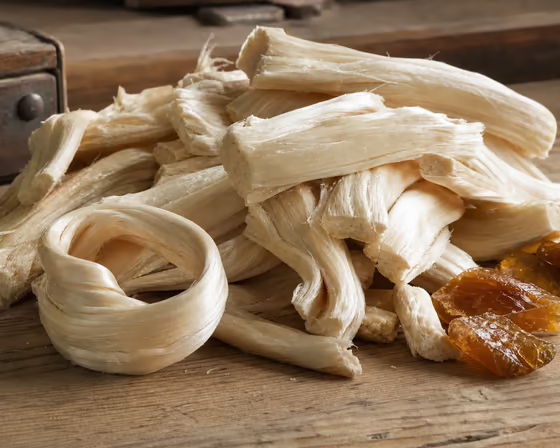
 Alféloa
Sugar or molasses cooked to a hard stage and worked until pale.
Nationwide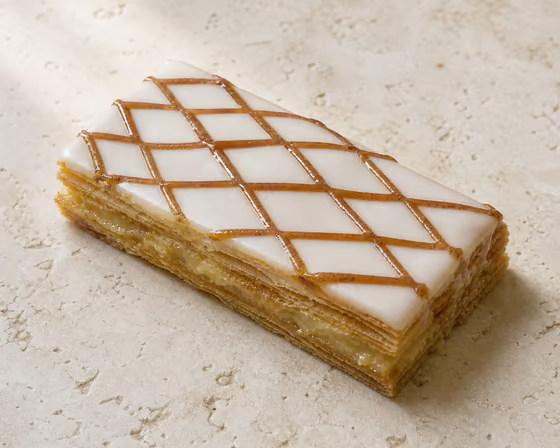 Catalogue image
 Portuguese Gila Allumette
A rectangular puff pastry with cream, gila and cinnamon beneath diamond-patterned royal icing.
Nationwide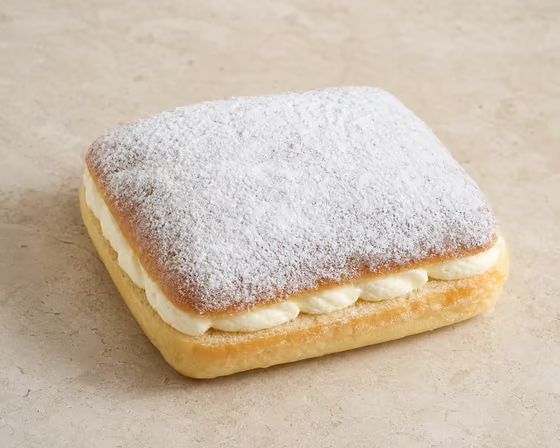 Catalogue image
 Portuguese Brioche Almofada
Light brioche dough, fresh buttercream and icing sugar.
Nationwide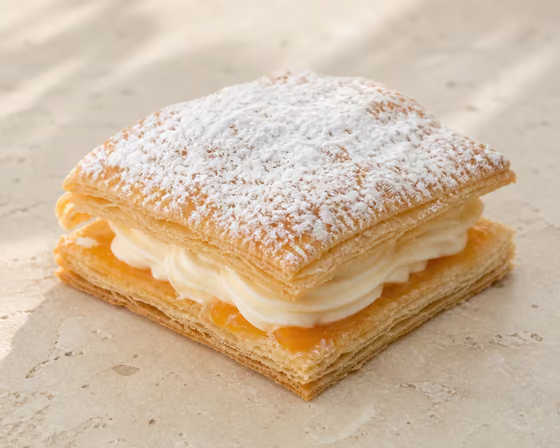 Catalogue image
 Portuguese Puff-Pastry Almofada
Puff pastry with white cream, egg sweet and icing sugar—the laminated Almofada variant.
Nationwide