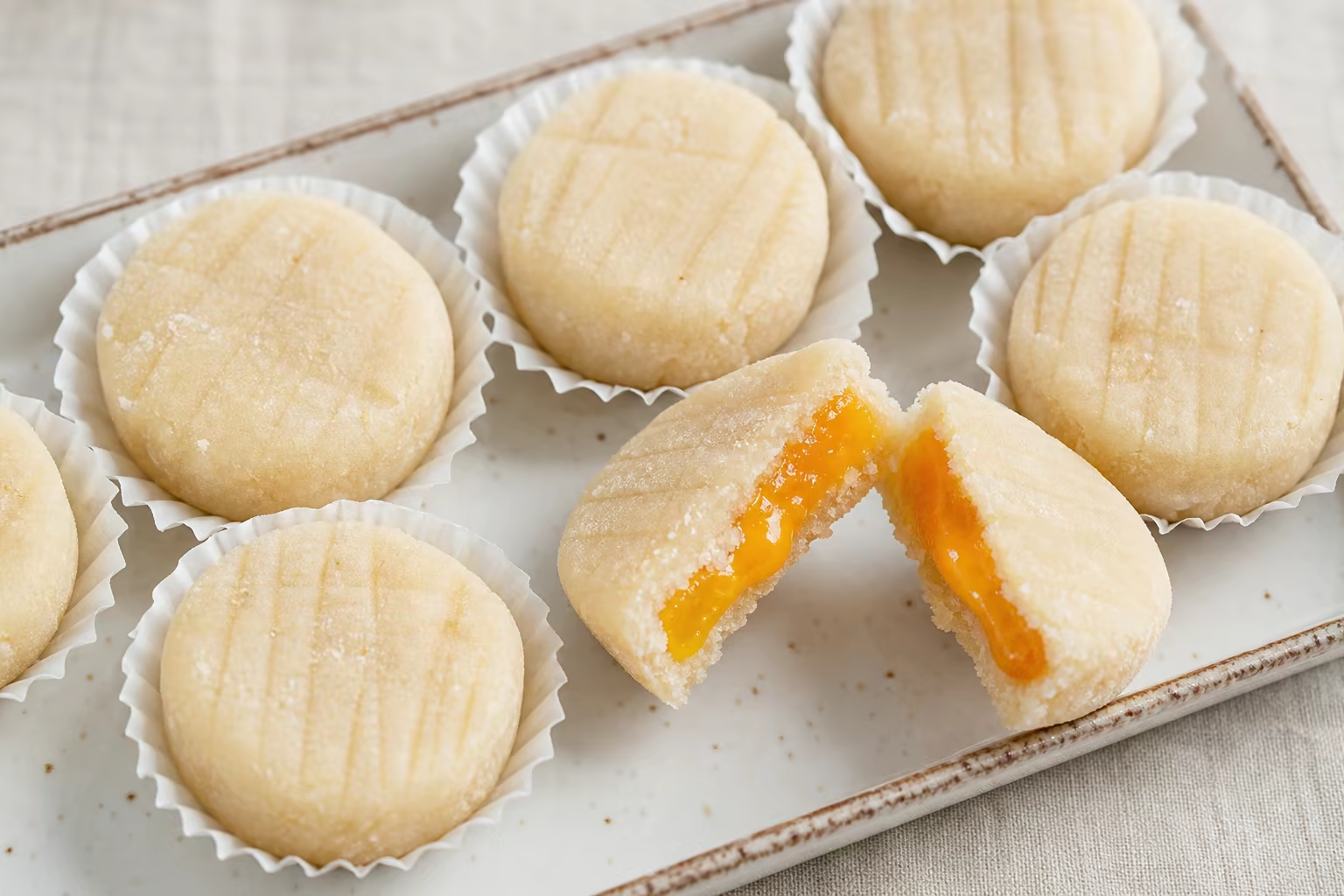
Algarve Almond Cheeselets
Also known as: Almond cheeselets
Tiny make-believe cheeses, true sweetness within.
- Origin
- Algarve · Moorish and conventual origins proposed by the sources; creation date unknown
- Place
- Algarve
- Region
- The Algarve
- Category
- Convent Sweets
- Season
- Seasonal availability not stated by the cited sources
- Evidence
- Well documented
DGADR includes the cheeselets within Algarve Fine Confectionery: pieces about 4–5 cm / 1.6–2 in across and approximately 50 g / 1.8 oz, off-white and visually granular. The paste uses equal parts ground almond and sugar bound with one or two whites; a cavity is opened for ovos moles and the whole is shaped as a small cheese.
The same paste may represent cheeses, hams, sausages, fruits, vegetables and baskets, with paste decorations, colouring or chocolate. In the documented method, the pieces are finished in icing sugar and placed in fluted paper cases.
The Algarve Gastronomes' Guild publishes a specific formula using 250 g / 8.8 oz almonds, 250 g / 8.8 oz sugar, one white and one cup of ovos moles. It gives no yield, temperature, heating duration or exact resting time; those gaps remain explicit in the recipe.
- Blanched ground almonds
- Sugar
- Egg whites
- Egg yolks (doce de ovos moles filling)
- Water
- Icing sugar for finishing
- Colouring or chocolate only for other decorated forms
The documented composition combines equal parts almond and sugar, egg white and an ovos moles filling. The consulted sources publish no comparative tasting assessment; flavour and texture vary with grinding, moisture and filling proportion.
The Guild documents a small cooked potato purée as a variant and allows the Morgado de Amêndoa paste to be used. DGADR records other decorative fine-confectionery shapes but retains ovos moles as the filling of the small cakes.
DGADR records sales across the Algarve and a particular historical connection with Portimão, but publishes no current list of makers or shops. Confirm ingredients, availability and storage directly.
The cited sources publish no traditional or required pairing.
DGADR says these small cakes are ‘thought’ to have Moorish origins and are ‘believed’ to derive from convent confectionery, connecting their regional establishment with Algarve almond production. This is cautious attribution, not proof of creation in a convent or a particular century; the creation date remains unknown.
The record documents fame associated with an old Algarve pastry shop and says the sweets were already mentioned in 1918. It also notes the specialist work required for modelling. It does not, however, identify a first recipe, nun, convent or demonstrated chain of transmission. The previously published story about surplus yolks, wine clarification and starching habits is absent from the cited sources and has been removed.
Well documented
Identity supported by institutional, specialist or corroborating sources.
- tradicional.dgadr.gov.pt/pt/cat/doces-e-produtos-de-pastelaria/174-docaria-fina-do-algarve (opens in a new tab)
- cgalgarve.com/receitas/algarve009.html (opens in a new tab)
- iguaria.com/sobremesa/doce/queijinhos-de-amendoa/ (opens in a new tab)
Pastries from here — The Algarve
 Catalogue image
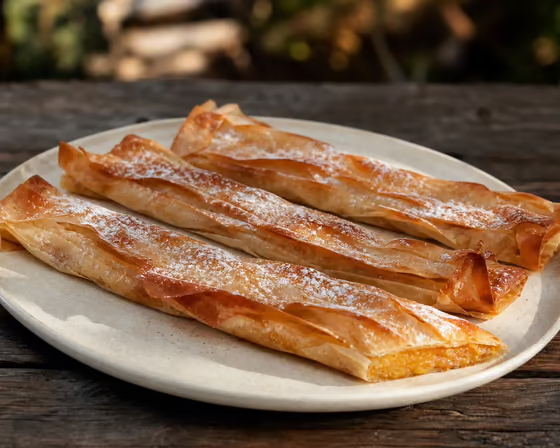
 Aljezur Sweet-Potato Pillows
A long pillow of crisp pastry leaves wrapped around Aljezur sweet potato.
The Algarve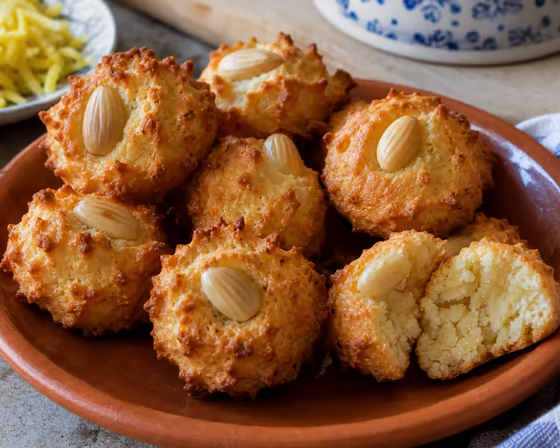 Catalogue image
 Almond Spiky Biscuits
Bristling peaks of almond, lemon and egg white, crisp outside and soft at the centre.
The Algarve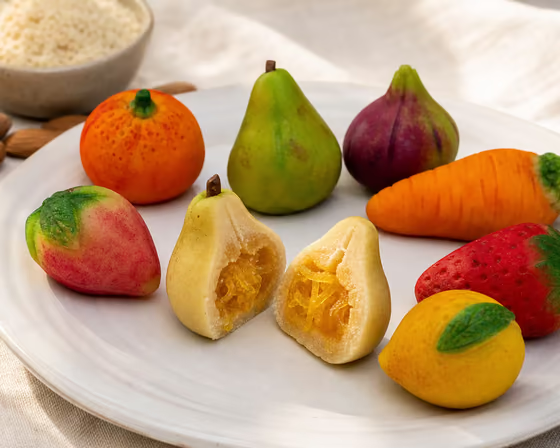 Catalogue image
 Silves Almond Sweets
Algarve figures hand-shaped and painted in almond paste.
The Algarve Catalogue image
 Algarve Nut Sweet Bread
An upland sweet bread enriched with olive oil, spices and walnuts or almonds.
The Algarve